



Summary
- What Is gingival recession?
- Why do gums recede? Understanding the root causes
- What happens If gingival recession is left untreated?
- Diagnosing gingival recession: What to expect at the specialist
- Treatment options for gingival recession
- Can gingival recession be prevented?
- Gingival recession treatment with Turquie Santé
Sometimes, you notice your teeth looking a bit longer than before or your gums slowly changing shape. These small changes can be an early sign of gingival recession, a condition where the gum tissue gradually moves away from the tooth surface.
This condition is quite common, especially in adults, and is often linked to factors such as brushing habits, gum disease, genetics, or lifestyle choices. It usually develops slowly and without pain, which is why many people don’t notice it at first. Even if it seems minor, gingival recession can lead to tooth sensitivity, root damage, and other dental problems if it is not treated early. The good news is that in many cases, it can be controlled and its progression slowed with proper care.
In this guide, we will explain what causes gum recession, how to recognize it, and the most effective treatment options available today.
What Is gingival recession?
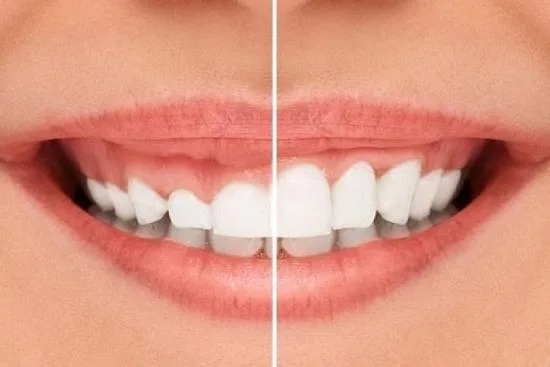
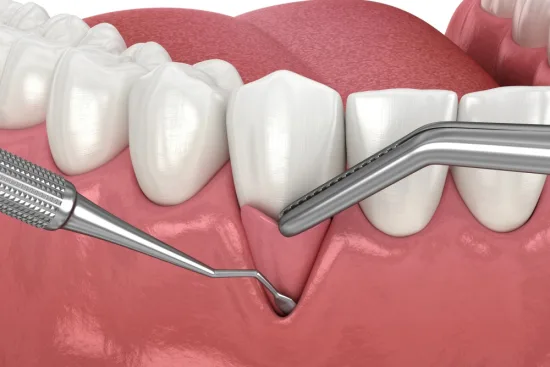
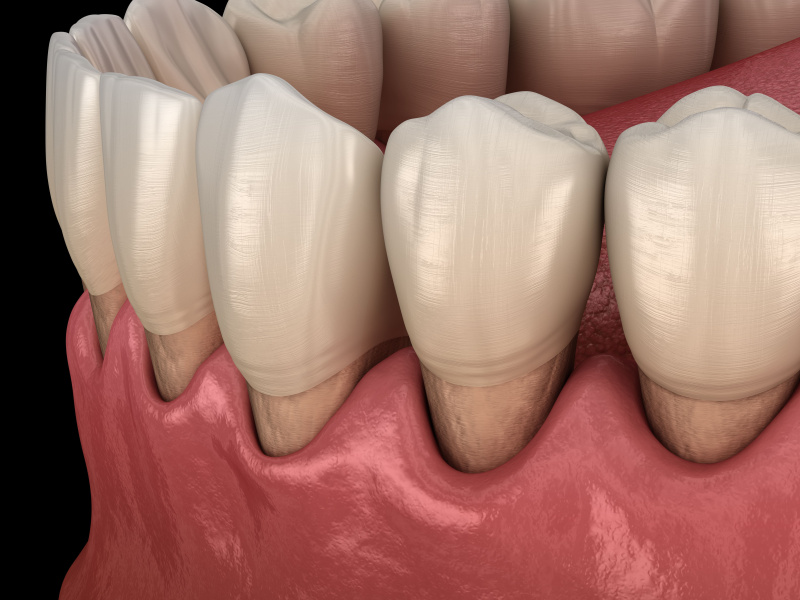
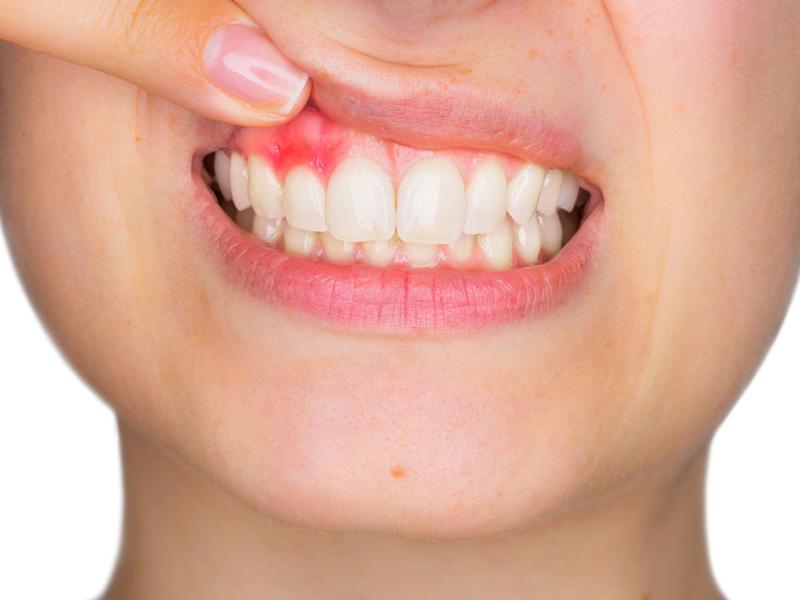
Gingival recession refers to the gradual apical migration of the gum margin, progressively exposing the root surface of the tooth. In plain terms: your gums pull back, leaving more of the tooth, and eventually the root, visible.
Unlike enamel, tooth roots are not protected by a hard outer layer. Once exposed, they become vulnerable to bacterial plaque, acid erosion, and physical wear. This is why recession, even when painless at first, requires prompt attention.
Key warning signs to watch for:
- Increased tooth sensitivity, particularly to cold, hot, or acidic foods, one of the earliest and most common symptoms.
- Teeth that appear visibly longer than they used to.
- Small dark triangles or gaps visible between teeth, caused by loss of interdental gum tissue.
- Gum tissue that bleeds easily when brushing or flossing.
- A visible notch or groove at the gum line.
- Occasional tenderness or discomfort around the gum area.
Why do gums recede? Understanding the root causes
Gingival recession rarely has a single cause. In most patients, it results from a combination of biological predisposition and lifestyle or mechanical factors. Identifying the underlying cause is essential before any treatment can be planned.
Periodontal disease (Gingivitis and periodontitis)
The leading cause of recession worldwide, periodontal disease is a chronic bacterial infection of the gum and bone tissues. Gingivitis, the early, reversible stage, causes inflammation and bleeding. If untreated, it progresses to periodontitis, where the gums begin to detach from the teeth and recede. Studies estimate that periodontitis affects roughly 45% of adults in Western countries.
Aggressive or incorrect brushing
A paradox of oral hygiene: brushing too hard can damage the very tissue you are trying to protect. Using a hard-bristle toothbrush or applying excessive pressure causes mechanical abrasion of the gum margin. Dentists frequently see recession localized to specific teeth, a clear sign that brushing technique is the culprit.
Genetic predisposition
Some individuals are born with a thin periodontal biotype, naturally thin, delicate gum tissue that is inherently more susceptible to recession. If recession runs in your family, early monitoring by a periodontist is strongly advisable.
Bruxism (Teeth grinding)
Chronic grinding or clenching, often occurring at night and frequently unnoticed, places enormous lateral and compressive forces on teeth. Over time, this accelerates bone resorption and gum recession. Patients with bruxism often show generalized recession across multiple teeth.
Tobacco use
Smokers are significantly more likely to develop gingival recession and to experience faster progression. Tobacco impairs blood flow to gum tissue, suppresses the immune response, and reduces healing capacity, making both prevention and recovery more challenging.
Orthodontic treatment and dental malposition
Teeth that are positioned outside the arch, or that have been moved rapidly through orthodontics, can end up with insufficient bone and gum support on the outer surface, making recession more likely. This underscores the importance of coordinating orthodontic and periodontal care.
Hormonal changes
Pregnancy and menopause both cause hormonal shifts that increase gum sensitivity and inflammatory response. Women may notice increased gum bleeding and recession during these periods, yet another reason why routine dental check-ups are especially important at these life stages.
What happens If gingival recession is left untreated?
Many patients make the mistake of waiting until symptoms become severe before seeking care. Unfortunately, recession does not stabilize on its own, it worsens over time. Here is what progressive, untreated recession can lead to:
- Root caries: Exposed tooth roots lack the enamel protection of the crown. This makes them highly susceptible to decay, often rapid and difficult to treat.
- Dentinal hypersensitivity: As more root surface is exposed, the dentinal tubules connecting to the nerve become sensitized. Simple actions like drinking cold water or eating citrus can become genuinely painful.
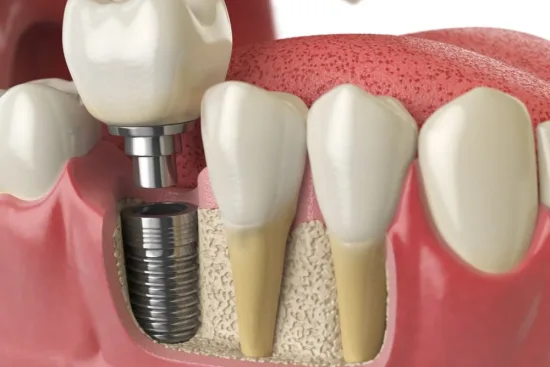
- Bone loss: In periodontitis-driven recession, the underlying jawbone is progressively destroyed. Once bone support is lost, teeth become mobile and may ultimately need to be extracted.
- Aesthetic consequences: A dramatically altered gum line can significantly affect the appearance of the smile, with psychological and social consequences that patients often underestimate.
- Increased treatment complexity: Early recession treated conservatively (planing, habit correction) costs far less, financially and biologically, than advanced recession requiring surgery or implants.
Clinical insight: A patient who presents with 2mm of recession treated promptly with a gingival graft can expect a full outcome in 1–2 sessions. The same patient, returning two years later with 5mm of recession and bone involvement, will require multiple surgical procedures and a longer recovery. Early intervention is always the better option.
Diagnosing gingival recession: What to expect at the specialist
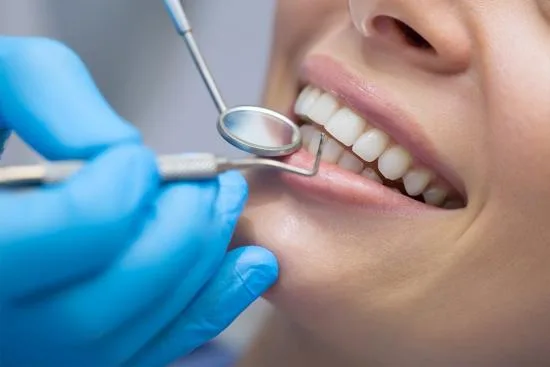
Diagnosis is performed by a periodontist, a specialist in gum and supporting tissue health. A comprehensive evaluation typically includes:
- Periodontal charting: measurement of the distance from the gum margin to the base of the sulcus (pocket depth) around every tooth.
- Assessment of gum tissue thickness and biotype.
- Dental X-rays or a CBCT scan to evaluate bone levels.
- Review of oral hygiene habits, medical history, medications, and lifestyle factors.
- Classification of recession using the Miller or Cairo classification systems to guide treatment planning.
This thorough assessment is what allows the clinician to determine whether a conservative approach will suffice, or whether surgical correction is indicated.
Treatment options for gingival recession
Treatment depends on the severity of recession, its underlying cause, and the patient's overall periodontal health. There are two broad categories: conservative management and surgical reconstruction.
Conservative (non-surgical) approaches
When recession is mild to moderate and the causative factors have been addressed, non-surgical treatment can halt progression and protect remaining tissue.
- Root planing and scaling: A deep cleaning procedure that removes calculus deposits and bacterial biofilm from below the gum line, reducing inflammation and preventing further tissue loss.
- Antibiotic therapy: In cases of active bacterial infection, localized or systemic antibiotics may be prescribed alongside mechanical debridement.
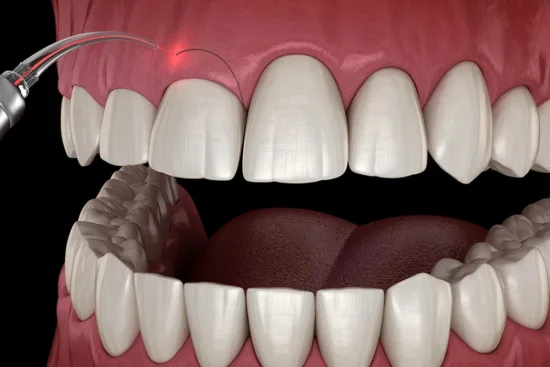
- Laser-assisted periodontal therapy: A minimally invasive option that uses laser energy to disinfect periodontal pockets and stimulate tissue healing without the trauma of traditional instrumentation.
- Brushing technique correction: Switching to an ultra-soft toothbrush and a gentle, circular technique (the Bass or modified Bass method) can prevent further mechanical recession.
- Night guard (occlusal splint): For patients with bruxism, a custom-fitted appliance worn at night reduces the destructive forces on teeth and gum tissue.
Surgical treatments: Gingival grafting and tissue regeneration
When recession is advanced or the gum tissue is insufficient to protect the root, surgery is the most reliable path to restoring gum coverage. Modern periodontal surgery is performed under local anesthesia and is generally well tolerated.
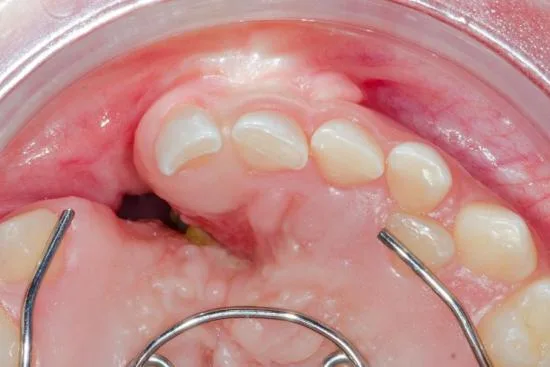
- Connective tissue graft (CTG): The gold standard for root coverage. A small piece of tissue is harvested from under the palatal mucosa and sutured around the receded area. Studies consistently show complete root coverage rates above 80% for well-selected cases.
- Free gingival graft: A strip of surface tissue from the palate is used to thicken a thin gum zone. Particularly effective for increasing the width of attached gingiva.
- Allograft or collagen matrix: A donor-tissue alternative for patients who prefer to avoid a second surgical site. Acellular dermal matrices (e.g., AlloDerm) have shown predictable outcomes and reduce post-operative discomfort.
- Guided tissue regeneration (GTR): A specialized technique using resorbable or non-resorbable membranes to stimulate the regrowth of both bone and gum tissue simultaneously. Particularly useful in cases with concurrent bone loss.
- Tunnel technique (modified flap): A minimally invasive approach where a tunnel is created under the gum and a graft is threaded through, avoiding incisions and reducing healing time.
Can gingival recession be prevented?
Prevention is not just possible, it is the most cost-effective strategy available. With consistent daily habits and regular professional care, the vast majority of patients can keep their gum tissue healthy for life.
Evidence-based prevention strategies:
- Brush twice daily using a soft or extra-soft toothbrush and a gentle, circular technique. Electric toothbrushes with pressure sensors are an excellent option.
- Use interdental cleaning tools, dental floss, interdental brushes, or a water flosser, at least once daily.
- Schedule professional cleanings every 6 months (or every 3–4 months if you are already being treated for gum disease).
- Avoid tobacco in all forms. If you smoke, cessation is the single most impactful decision you can make for your periodontal health.
- If you grind your teeth at night, ask your dentist for a custom occlusal splint.
- Maintain a balanced diet and stay well-hydrated. A dry mouth increases bacterial activity and gum inflammation.
- Do not delay treatment at the first sign of gum bleeding or sensitivity, these are early warning signals, not inevitable side effects of aging.
Gingival recession treatment with Turquie Santé
At Turquie Santé, every patient benefits from personalized support, from the initial assessment to post-treatment follow-up. Our mission is to offer you effective, humane care tailored to your needs.
What our partner clinics offer:
- A comprehensive periodontal assessment with experienced specialists to identify the exact origin of the recession.
- Quality care, ranging from conservative treatments to advanced surgical techniques, depending on your case.
- The use of modern technologies, such as dental laser and pain-free grafting, for maximum comfort and lasting results.
- A multilingual welcome, a private airport transfer and, above all, a fast, free estimate so you can plan your budget with complete peace of mind.

"Medical writer specialized in scientific communication, I make medical complexity clear and accessible. Each article is written in collaboration with specialist doctors and is based on reliable recommendations, such as those from the World Health Organization (WHO) and the French National Authority for Health (HAS). My goal is to provide patients with accurate and trustworthy information so they can make health decisions with confidence."
Need a personalized medical opinion?
Our partner doctors reply online within 24h, free of charge.