






Summary
- What is a thread lift?
- What are lifting threads made of?
- Types of PDO threads
- Who is a good candidate for a thread lift?
- Regulatory status: What you should know
- The thread lift procedure, step by step
- Recovery and aftercare
- Results: What to realistically expect
- Risks and possible side effects
- Thread lift vs. surgical facelift
- How much does a thread lift cost in Turkey?
- Aesthetic procedures in Turkey
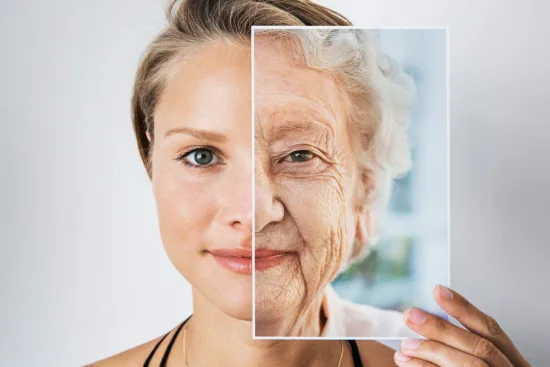
Skin naturally loses firmness with age, sun exposure, and lifestyle factors such as smoking or a poor diet. For patients who notice early sagging along the jawline, cheeks, brows, or neck but aren't ready for a surgical facelift, a thread lift, also called thread lifting or a "lunchtime facelift," is a commonly requested minimally invasive option in aesthetic medicine today.
This guide explains, in plain language, how a thread lift works, which patients are realistically good candidates, what the procedure involves, the risks you should know about, and how much it costs in Turkey compared with other countries, so you can have an informed conversation with your doctor before deciding.
What is a thread lift?
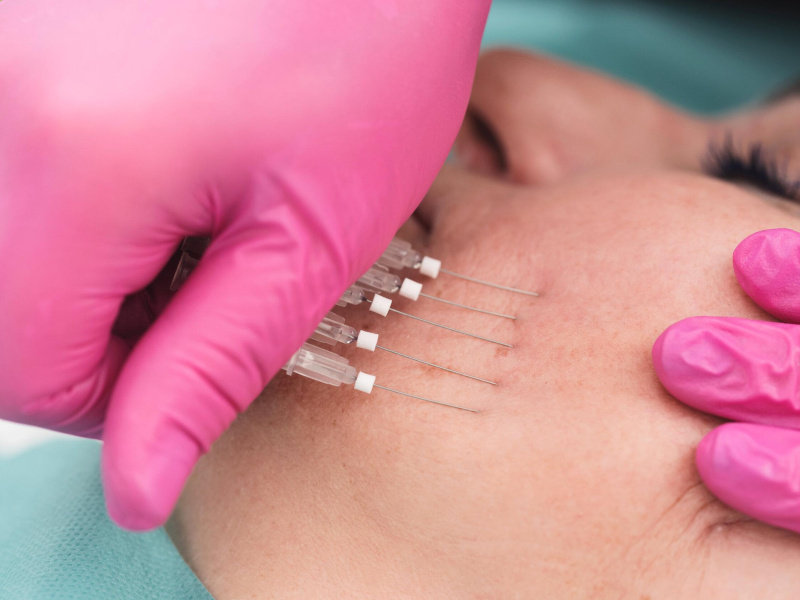
A thread lift is a minimally invasive cosmetic procedure in which thin, dissolvable medical threads are inserted under the skin using a fine needle or cannula, without traditional surgical incisions. The threads act in two ways:
- Immediate mechanical effect: barbed threads grip the underlying tissue and gently reposition it, producing a subtle lifting effect that is visible right after treatment.
- Biological effect over time: as the thread material is gradually absorbed, it can stimulate tissue remodeling and collagen production around the treated area, which may contribute to improved skin firmness over time.
The procedure is usually performed under local anesthesia and often takes around 30 to 60 minutes, depending on the treatment area and the number of threads used. Most patients do not require an overnight hospital stay.
What are lifting threads made of?
Not all threads are the same, and the material affects how long results last.
| Material | Absorption time | Typical use |
| PDO (polydioxanone) | typically absorbed within 6 to 9 months, depending on the specific product and thread design. | Most common; lifting and skin quality |
| PLLA (poly-L-lactic acid) | gradually absorbed over 12 to 18 months, depending on the specific product and formulation. | Longer-lasting collagen stimulation |
| PCL (polycaprolactone) | gradually absorbed over 18 to 24 months; the duration varies according to the specific product and formulation. | Longest-lasting collagen response |
These materials are synthetic and designed to be biocompatible and absorbable. The rate and extent of absorption depend on the specific material, product, and thread design.
Types of PDO threads
Within PDO threads, the design determines the effect your doctor is trying to achieve:
- Mono threads: smooth, without barbs. They stimulate collagen and slightly improve skin texture but provide very little mechanical lift. Best for fine lines and overall skin quality.
- Cog (barbed) threads: small hooks along the thread anchor into the tissue, allowing the practitioner to reposition sagging skin. These provide the visible "lift" patients are looking for, most often in the midface, jawline, and jowls.
- Screw threads: one or two threads twisted together, mainly used to restore volume in hollow or deflated areas rather than to lift.
A treatment plan often combines several thread types depending on the areas and degree of sagging involved.
Who is a good candidate for a thread lift?
A thread lift is designed for early to moderate skin laxity. It is not a substitute for a surgical facelift in patients with significant excess skin.
Good candidates generally:
- Have mild to moderate skin laxity and suitable skin quality, regardless of age
- Have mild-to-moderate sagging of the cheeks, jawline, brows, or neck
- Have reasonably good skin elasticity, not extensive loose skin
- Want a subtle improvement with minimal downtime
- Understand that results are temporary, not permanent
A thread lift may not be suitable for:
- Active skin infections in the treatment area
- Certain autoimmune or connective tissue disorders
- Bleeding or clotting problems
- Pregnancy or breastfeeding
- Any medical condition that may affect healing or increase the risk of complications
A useful way to think about it: a patient in their late 30s with slightly heavy jowls and good skin elasticity is often an excellent candidate. A patient in their 60s with significant loose skin and volume loss will usually get a more satisfying, longer-lasting result from a facelift, sometimes with a thread lift added later as a touch-up. Your suitability can only be properly assessed during an in-person or photo-based consultation with a qualified physician, since facial anatomy and the degree of laxity vary considerably from one patient to another.
Regulatory status: What you should know
In the United States, PDO thread devices are cleared by the FDA under the 510(k) pathway for soft-tissue approximation (bringing tissue edges together, as in wound closure) rather than specifically approved for cosmetic facial lifting. This is a nuance worth understanding: many practitioners use these devices off-label for aesthetic lifting based on accumulated clinical experience, which is common in aesthetic medicine but is different from a dedicated cosmetic-lift approval. It's a fair question to raise with your doctor before treatment.
The thread lift procedure, step by step
- Consultation: the doctor examines your skin, discusses your goals, and determines which thread types and how many are appropriate.
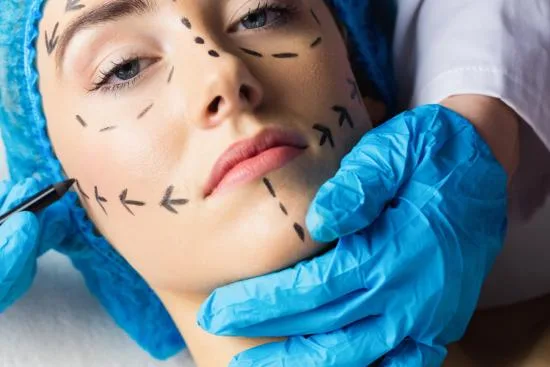
- Marking and cleansing: the treatment zones and thread insertion points (vectors) are marked on the skin.
- Local anesthesia: a local anesthetic is applied or injected to numb the area.
- Thread insertion: threads are introduced through the skin with a fine needle or blunt cannula, following the premarked lines.
- Lifting and trimming: for barbed threads, gentle traction repositions the tissue before the excess thread is trimmed at the entry point.
Most patients return to their hotel or home the same day.
Recovery and aftercare
Downtime is generally short compared with surgery, but it is not zero.
- First 48–72 hours: mild swelling, tenderness, or bruising at insertion points is common.
- First week: avoid vigorous facial massage, strenuous exercise, and sauna use, as these activities may increase swelling. Follow your physician’s specific aftercare instructions, including advice on sun exposure.
- 2–3 weeks: most visible bruising and swelling resolve; some patients may experience a temporary pulling sensation or mild skin puckering that typically settles as swelling subsides.
- Sleeping position: sleeping on your back with your head elevated for the first few nights may help limit swelling.
- Return to work: many patients can resume desk-based activities within a few days, although visible bruising may take up to a week to resolve.
Many patients can return to desk-based activities within a few days, although the timing varies depending on swelling, bruising, the treatment performed, and individual recovery.
Results: What to realistically expect
- A subtle lifting effect may be noticeable immediately after the procedure, although early swelling and tissue tension can temporarily affect the appearance of the result.
- Over the following weeks and months, tissue remodeling and collagen production may contribute to gradual improvements in skin firmness and texture.
- The duration of results varies considerably between patients and depends on the thread type, treatment area, technique, and individual factors. Published studies have reported effects lasting from 12 to 24 months, or even longer depending on the thread type, but long-term evidence remains limited and heterogeneous.
- A thread lift softens and delays visible signs of sagging; it does not stop the skin from continuing to age, and some patients choose to repeat the procedure when the aesthetic effect diminishes, although the timing and suitability of any additional treatment should be assessed individually.
Results vary from patient to patient based on skin quality, degree of initial laxity, thread type, and the technique used. No aesthetic doctor can guarantee an identical outcome to photos seen online, and a thread lift will not replicate the results of a surgical facelift in a patient with advanced skin laxity.
Risks and possible side effects
Thread lifting is considered minimally invasive, but it is a medical procedure with real risks that should be discussed before treatment. Published studies report a range of complications following thread lifting, with rates varying considerably between studies and techniques. Most reported complications are mild and temporary, but more significant complications can also occur.
Common, generally mild and temporary:
- Swelling, redness, or tenderness at insertion points
- Bruising or small hematomas
- Mild pain or a sensation of tightness/pulling
Less common:
- Visible or palpable skin dimpling ("puckering") along the thread path
- Thread migration or premature extrusion through the skin
- Infection at the insertion site
- Asymmetry between the two sides of the face
- Temporary numbness or, rarely, injury to a small sensory or motor nerve branch
- Under-correction (insufficient lift) or the need for a touch-up
Rare but reported in the medical literature:
- Chronic localized inflammatory reaction or granuloma formation around the thread
- Injury to the parotid gland or its duct when threads are placed too deeply near the ear
- Palpable or visible thread under thin skin, requiring removal
Choosing a qualified and appropriately trained practitioner with a thorough understanding of facial anatomy can help reduce the risk of complications. If you notice unusual pain, spreading redness, or a lump that doesn't resolve, contact your treating clinic promptly.
Thread lift vs. surgical facelift
To better understand where a thread lift fits compared with traditional facelift surgery, the following table highlights the key differences in terms of invasiveness, recovery, and results:
| Thread lift | Surgical facelift | |
| Invasiveness | Minimally invasive, no incisions | Surgical, incisions and general/local anesthesia |
| Downtime | 1–7 days |
Usually several weeks, depending on the extent of surgery and individual recovery |
| Duration of results | 12–24 months (varies by thread) |
Long-lasting, but not permanent |
| Best for | Mild-to-moderate sagging | Moderate-to-advanced sagging, excess skin |
| Cost | Lower | Higher |
A thread lift can be considered an intermediate option between non-surgical treatments and surgical lifting procedures, particularly for patients with mild to moderate skin laxity who are not seeking or do not currently require surgery.
Some patients later transition to a facelift once skin laxity becomes more advanced; others repeat thread lifts periodically to maintain a refreshed look.
How much does a thread lift cost in Turkey?
The cost of a thread lift in Turkey generally ranges from $500 to $2,500 (€450 to €2,300), depending on the treatment area, number and type of threads, and the clinic and surgeon.
A treatment targeting one area, such as the jawline, is usually less expensive than a full face treatment combining several areas and thread types. Longer lasting materials such as PLLA and PCL may also cost more than PDO threads.
Aesthetic procedures in Turkey
Turkey is an established destination for international patients seeking a range of aesthetic and cosmetic procedures, including thread lifts, facial rejuvenation, and surgical facelift procedures. However, choosing the right treatment should always begin with a medical assessment rather than a decision based solely on price or destination.
With Turquie Santé, patients can receive support throughout the process, from identifying suitable clinics and qualified doctors to organizing consultations, treatment, and follow-up in Turkey.
Depending on your facial anatomy, skin laxity, medical history, and aesthetic goals, a physician may recommend a thread lift or discuss other options, such as dermal fillers, skin rejuvenation treatments, or a surgical facelift. The most appropriate procedure varies from one patient to another and should be determined following an individual medical evaluation.

"Medical journalist specializing in science communication, I put my expertise at the service of clear and accessible information. For Turquie Santé, I create content based on up-to-date medical data, in collaboration with specialists from partner clinics. My commitment is to provide reliable, transparent information that complies with international medical standards."
Need a personalized medical opinion?
Our partner doctors reply online within 24h, free of charge.


"Main Specialty : Plastic, Reconstructive and Aesthetic Surgery. Years of Experience : 11 years. Notable Training : Osmangazi University Faculty of Medicine (1995-2003); Plastic, Reconstructive and Aesthetic Surgery specialization, Celal Bayar University (2009-2015); Basic Microsurgery Course, Hacettepe University Reconstructive Microsurgery Association. Professional Experience : Kartal Dr. Lütfi Kırdar Training and Research Hospital (2015-2021); Bahçeşehir University Faculty of Medicine Medical Park Göztepe Hospital (2021); Lokman Hekim Istanbul Hospital (2022-present). Memberships : Turkish Plastic, Reconstructive and Aesthetic Surgery Association; Aesthetic Plastic Surgery Association; Wound Care Association; ACELEMDER – Emergency Hand Surgery and Microsurgery Association. Languages Spoken : Turkish."
Sources & references
- Rezaee Khiabanloo S., Jebreili R., Aalipour E., Saljoughi N., Shahidi A. Outcomes in thread lift for face and neck: A study performed with Silhouette Soft and Promo Happy Lift double needle, innovative and classic techniques. Journal of Cosmetic Dermatology. 2019;18(1):84–93. PMID: 30105878.
- Ali YH. Two years' outcome of thread lifting with absorbable barbed PDO threads: Innovative score for objective and subjective assessment. Journal of Cosmetic and Laser Therapy. 2018;20(1):41–49. PMID: 28863268.
- Kang SH., Byun EJ., Kim HS. Vertical lifting: A new optimal thread lifting technique for Asians. Dermatologic Surgery. 2017;43(10):1263–1270. PMID: 28430736.
- Hong GW., Kim SB., Park SY., Wan J., Yi KH. Basic concepts in facial and neck thread lifting procedures. Skin Research and Technology. 2024;30(4):e13673. PMID: 38584590.
- Hügül H., Özkoca D., Kutlubay Z. Thread lifting: Does patient satisfaction change according to age, type of threads used, number of threads used and treatment area? Journal of Cosmetic Dermatology. 2022;21(5):1936–1939. PMID: 35246938.
- U.S. Food and Drug Administration (FDA). 510(k) Summary: Polydioxanone Synthetic Absorbable Monofilament Surgical Suture. 510(k) K082097.
- International Society of Aesthetic Plastic Surgery (ISAPS). Global Survey 2024: Global Statistics on Aesthetic/Cosmetic Procedures.
- American Society of Plastic Surgeons (ASPS). Lifting the veil on face and neck lifts: Rediscover youthful contours.



Among our clinics