





Summary
- What is fat grafting (lipofilling)?
- How is the procedure performed?
- The main uses of lipofilling
- Who can benefit? Selection criteria and contraindications
- Preparing for surgery
- Recovery and aftercare
- Results: When will you see them, and how long do they last?
- Possible risks and complications
- Lipofilling or alternatives: how to choose?
Reshaping the breasts, restoring volume to the face, or contouring the buttocks with your own fat: that is the promise of lipofilling, also known as fat grafting. This plastic surgery technique appeals to a growing number of patients because it uses natural tissue, involves no foreign material, and often delivers two benefits at once: slimming one area while restoring volume to another.
It is neither trivial nor suitable for everyone, however. The result depends on the area treated, the technique used, the quality of the fat, and the surgeon's experience. Some of the injected fat is always reabsorbed, and certain areas, such as the buttocks, require strict safety precautions.
What is fat grafting (lipofilling)?
Fat grafting, also called lipofilling, lipomodeling, or autologous fat transfer, is a plastic surgery technique. "Autologous" means the fat comes from your own body, so there is no risk of rejection and no allergy to a foreign product.
It serves two purposes:
- Restoring or increasing volume (breasts, cheekbones, buttocks, etc.).
- Improving tissue quality: scars or skin damaged or weakened by radiation therapy.
It offers a double advantage: it reshapes one area while slimming the area where the fat is harvested.
How is the procedure performed?
The procedure is done in a single session and always follows the same three-step logic.
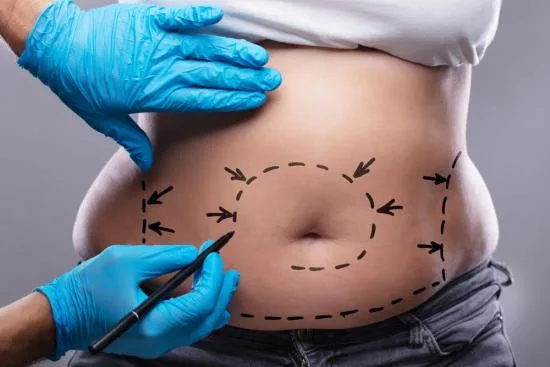
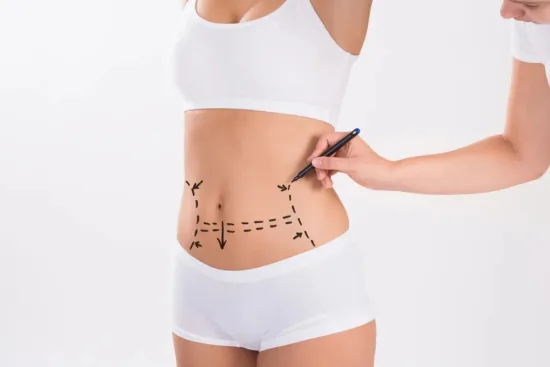
- Harvesting: The surgeon removes fat by liposuction from an area where there is an excess: abdomen, flanks ("love handles"), hips, or thighs. Thin cannulas are inserted through tiny incisions of a few millimeters.
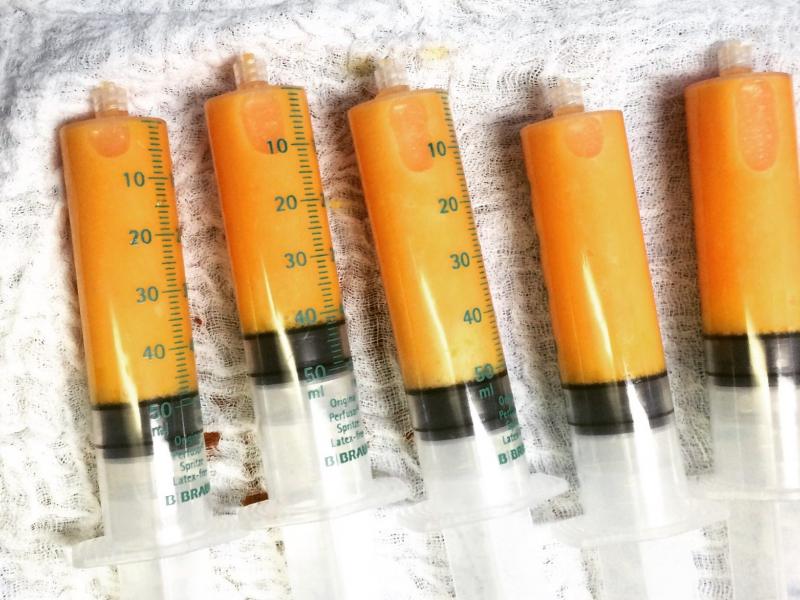
- Processing: The harvested fat is purified, usually by centrifugation, decantation, or filtration. This step removes blood, oil, and fluids, keeping only viable fat cells.
- Reinjection: The fat is injected in very small amounts, through multiple passes, into the area being treated. This injection method promotes graft "take," because each small deposit must be in contact with well-vascularized tissue to survive.
Anesthesia and duration: Depending on the area and the volume, the procedure is performed under local anesthesia with sedation or under general anesthesia. It generally takes 1 to 3 hours. The hospital stay is often short, or even outpatient for small volumes.
To better understand the difference between harvesting and reshaping, see our article on the difference between liposuction and liposculpture.
The main uses of lipofilling
Lipofilling can be applied to many parts of the body for both cosmetic and reconstructive purposes. Here are its five main areas of use.
Breast augmentation without implants
Breast lipofilling can modestly increase breast volume and improve shape without implants. It suits patients who want a very natural result or who don't want implants. The increase achieved remains moderate: generally about one cup size, sometimes a little more over several sessions.
Hybrid technique: implants plus fat grafting
Lipofilling can also accompany implants, in what is called the "composite" or "hybrid" technique. The fat softens the edges of the implant, conceals visible rippling, and improves coverage when the tissues are thin. A systematic review concluded that primary composite augmentation is a safe procedure, with small fat volumes concentrated along the inner edges of the breast. In that review, the cumulative reoperation rate was 3.7%, most often to repeat the fat grafting. Lipofilling can also complement a breast lift to restore volume in the upper breast.
Breast reconstruction after cancer
After a mastectomy or lumpectomy, lipofilling plays a role in breast reconstruction. It is used to:
- Fill in hollows and correct deformities after lumpectomy;
- Correct breast asymmetry;
- Improve the suppleness of irradiated or scarred tissue;
- Refine a reconstruction done with an implant or a flap;
- Treat certain capsular contractures around breast implants.
Regarding oncologic safety, a meta-analysis concluded that fat transfer is a safe technique for reconstruction after breast cancer surgery, with no effect on overall survival, disease-free survival, or local recurrence. However, fat can cause calcifications, cysts, or fat necrosis, which sometimes complicate the reading of mammograms, so appropriate radiological follow-up is essential.
Facial rejuvenation
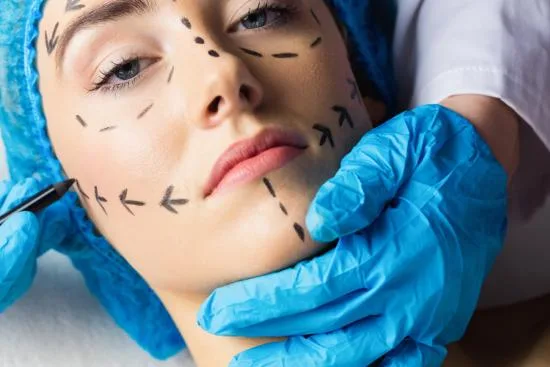
Facial lipofilling restores volume lost with age: cheekbones, hollow under-eye areas (tear trough), nasolabial folds, temples, lips, and chin. Fat also contains regenerative cells that may improve skin texture, radiance, and quality, as well as the appearance of certain scars.
Compared with injectable fillers, lipofilling has the advantage of being long-lasting and entirely natural, but it requires a surgical harvest. To compare the two options, read our article on fillers versus lipofilling for the face.
Buttock augmentation (gluteal lipofilling, or "BBL")
Gluteal lipofilling reshapes the buttocks (more volume, more roundness, better contour) without implants, often combined with liposuction of the waist, back, and flanks. It is one of the most requested cosmetic procedures in Turkey.
It is also the area where safety is most critical. The main risk is fat embolism, which occurs when fat enters a gluteal vein during injection into the muscle. International professional societies (ASPS, ASAPS, ISAPS, IFATS, ISPRES) recommend injecting only into the subcutaneous tissue and never into the muscle. We detail this point in the "Risks" section.
Other indications
Beyond cosmetic purposes, fat grafting meets reconstructive needs:
- Retracting or adherent scars (post-surgical, post-traumatic, burns);
- After-effects of radiation therapy on the skin and soft tissues;
- Congenital malformations or after-effects of cleft lip;
- Localized asymmetries or depressions (hands, legs, chest, etc.);
- Post-mastectomy pain: Some studies suggest a beneficial effect of lipofilling, but the evidence remains to be confirmed.
Who can benefit? Selection criteria and contraindications
Not every patient is a good candidate for lipofilling. The surgeon assesses your general health, body shape, and expectations during the consultation. Here are the main criteria considered.
The ideal profile
The ideal candidate meets several conditions:
- healthy adult;
- stable weight, with enough harvestable fat;
- realistic expectations: lipofilling increases volume modestly and naturally;
- non-smoker, or willing to quit before and after the procedure.
Thin patients
Very thin patients often lack enough fat to harvest. The result is then limited or requires several sessions. Another technique may be preferable.
Contraindications
Some situations make the procedure inadvisable or require postponing it. They are assessed during the consultation. The main ones are:
- current pregnancy or breastfeeding;
- uncontrolled general medical conditions (poorly controlled diabetes, heart disease, severe hypertension);
- clotting disorders or anticoagulant treatment that cannot be interrupted;
- active infection in the treatment area or harvest site;
- heavy smoking (it slows healing and reduces graft survival);
- unrealistic expectations or an untreated body image disorder;
- for the breasts: active or recent breast cancer, which must be evaluated with the oncology team before any grafting, along with imaging.
Preparing for surgery
Good preparation improves graft survival and reduces the risk of complications. Exact instructions come from your surgeon. Here are the usual steps:
- Consultation: clinical examination, photographs, discussion of goals, and the harvesting plan.
- Preoperative workup: blood tests, an electrocardiogram depending on age, and breast imaging (mammogram or ultrasound) for breast lipofilling.
- Medications: Your surgeon will ask you to stop aspirin, anti-inflammatories, and certain supplements (vitamin E, omega-3s, ginkgo, etc.) about one to two weeks beforehand. Never stop them without their approval.
- Tobacco and alcohol: stop smoking and nicotine use several weeks beforehand and until healing is complete.
- Stable weight: avoid significant weight loss or gain before and after the procedure.
- Day of surgery: fast according to instructions, bring a compression garment, and arrange your ride home and help at home.
Recovery and aftercare
Recovery from lipofilling is generally straightforward, but it requires discipline for a few weeks to protect the graft. Here is what to expect.
- Swelling and bruising: These are normal and last a few weeks. They are more pronounced at the harvest sites than at the grafted areas.
- Pain: It is generally moderate and managed with simple pain relievers.
- Compression garment: It is worn over the harvest area, usually for several weeks, to limit swelling and help the skin retract.
- Buttocks: For about 2 to 3 weeks, you must avoid sitting directly on your buttocks (stand, lie on your stomach or side, and use a suitable cushion as instructed) so as not to crush the graft.
- Breasts and face: Avoid pressure, massage, and intense exertion according to instructions.
- Return to activity: Desk work generally resumes after a few days to two weeks. Intense exercise waits about 4 to 6 weeks, with medical approval.
- Follow-up: Keep your follow-up appointments and notify your team promptly if you have a fever, increasing pain, redness, or shortness of breath.
Recovering abroad. If you have surgery outside your home country, plan a long enough stay for the postoperative check before you travel home, and arrange follow-up with a local doctor.
Results: When will you see them, and how long do they last?
Lipofilling does not give an immediate result: the fat must integrate into the tissues, and part of it is eliminated by the body. Here is the timeline and what to know.
- First results: as soon as the swelling subsides, within a few weeks.
- Final result: generally after 3 to 6 months, once the fat that did not integrate has been eliminated by the body.
- Some fat is reabsorbed: the surgeon therefore injects slightly more than the desired volume. For the breast, systematic reviews report retention rates of roughly 40 to 85%, with an average close to 59% in one of them. Results vary widely from person to person.
- Longevity: Fat that has "taken" is durably integrated into the tissues. It behaves like the rest of your fat, so it varies with your weight. Significant weight gain or loss will change the result. Natural aging also continues to have an effect.
- Touch-ups: A second session is sometimes offered to refine the volume, especially for the breasts and buttocks.
Possible risks and complications
Like any surgery, lipofilling carries risks, which should be explained during the consultation. Some are common to all areas, while others depend on the region treated.
General risks (harvesting and injection)
These complications can occur regardless of the area:
- hematomas, prolonged bruising, swelling;
- infection (rare);
- contour irregularities or asymmetries, particularly at the harvest site;
- sensory changes, most often temporary;
- insufficient results due to fat reabsorption;
- anesthesia-related risks.
Risks specific to grafted fat
Fat that does not integrate can cause local complications:
- Fat necrosis and oil cysts: Non-integrated fat can form hard nodules or cysts, especially in the breasts.
- Calcifications: They may appear on mammograms, and the radiologist must be informed of the history of lipofilling. A systematic review of fat-based breast augmentation nevertheless reports low complication rates in most series.
Facial-specific risk
Overall complications of facial lipofilling are estimated at around 2%. Serious but very rare complications have been described, related to accidental injection of fat into a blood vessel: vision problems, skin damage, stroke. They are why this procedure should be entrusted to a highly experienced surgeon.
Buttock-specific risk
Gluteal lipofilling is the procedure with the best-documented risk to life. According to the Multi-Society Task Force alert, mortality has been as high as approximately 1 in 3,000, with a cause uniformly linked to fat embolism, and fat should be placed only in the subcutaneous tissue. A survey of board-certified Brazilian plastic surgeons following these recommendations estimates mortality at 1 in 20,117. Intraoperative ultrasound guidance, strictly subcutaneous injection, and adherence to volume limits reduce the risk.
When to seek emergency care
Contact your medical team or the emergency room immediately if you experience fever, worsening pain, spreading redness, discharge, shortness of breath, chest pain, fainting, confusion, or vision problems.
Lipofilling or alternatives: how to choose?
Lipofilling is not always the best option: depending on your goal, other techniques may be more suitable. The table below summarizes the main alternatives.
| Goal | Lipofilling | Possible alternatives |
| Breasts | Modest augmentation, natural look. | Breast implants, hybrid technique. |
| Face | Long-lasting volume and improved skin quality. | Hyaluronic acid (limited duration), facelift. |
| Buttocks | Natural volume with no foreign material. | Buttock implants, liposculpture. |
| Scars, radiation therapy | Improved suppleness. | Laser, scar care, surgery. |
The right choice depends on your anatomy, your expectations, and your health, which is the purpose of the consultation.

"Medical journalist specializing in science communication, I put my expertise at the service of clear and accessible information. For Turquie Santé, I create content based on up-to-date medical data, in collaboration with specialists from partner clinics. My commitment is to provide reliable, transparent information that complies with international medical standards."
Need a personalized medical opinion?
Our partner doctors reply online within 24h, free of charge.