







Summary
- What is a medical coordinator?
- What does a medical coordinator actually do?
- Why a medical coordinator is essential for treatment abroad?
- How does Turquie Santé's medical coordination work?
- The concrete benefits of having a medical coordinator
- How much does a medical coordinator in Turkey cost?
- Which procedures benefit most from a medical coordinator?
- How long should you plan to stay in Turkey?
- What are the risks of traveling without a medical coordinator?
Choosing to receive medical care in another country is a significant decision, one you'll be making in an unfamiliar environment, with a different language and a healthcare system you've likely never navigated before. A medical coordinator is the professional who turns that complex journey into a smooth, secure experience.
In practical terms, they handle everything you can't manage on your own: communicating with your surgical team, cutting through administrative red tape, arranging transfers, and ensuring your post-operative recovery stays on track. For international patients traveling to Turkey, this kind of support isn't an optional add-on; it's often the difference between a successful medical trip and a stressful one. Here's what you need to know before you book.
What is a medical coordinator?
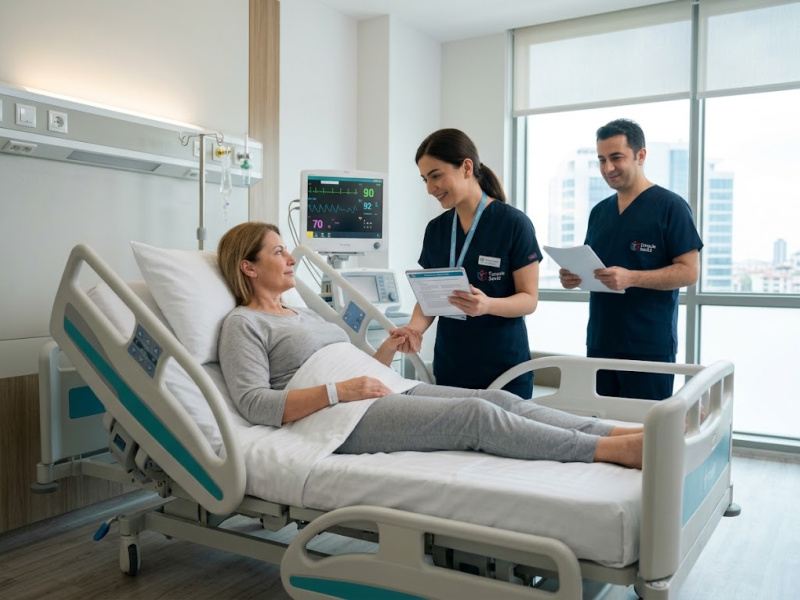
A medical coordinator, also known as a patient navigator, patient coordinator, or medical facilitator, is a trained professional who guides patients through every stage of their healthcare journey abroad.
Their role goes well beyond that of an interpreter or a driver. They act as your primary link between you, your doctors, the hospital, and all logistical providers. They anticipate problems before they arise, resolve unexpected situations as they occur, and make sure you fully understand every step of your treatment.
Within the context of international medical travel, particularly in Turkey, your coordinator may be:
- A paramedical professional (nurse or healthcare technician) for cases requiring close clinical monitoring
- A bilingual patient coordinator trained in medical and cultural specifics
- A dedicated case manager assigned by a specialist platform, such as Turquie Santé, available before, during, and after your stay
Important: A medical coordinator is not a treating physician. They do not prescribe medication or make diagnoses. Their role is to facilitate, coordinate, and reassure, not to replace clinical decision-making.
What does a medical coordinator actually do?
Before your trip: Getting everything right from the start
Proper coordination begins long before you board your flight. A good medical coordinator will:
- Review your medical records and forward the relevant documents to the appropriate specialists.
- Verify the qualifications and credentials of your chosen surgeon or physician.
- Request detailed quotes from partner clinics on your behalf.
- Arrange transport, including flights, airport transfers and suitable accommodation.
- Prepare administrative documentation: informed consent forms, prescriptions, pre-operative assessments.
- Provide a clear, translated explanation of your planned treatment protocol.
This preparatory stage is frequently underestimated. Yet a large share of post-operative complications and disappointments can be traced back to inadequate assessment at this early phase.
During your stay: A constant presence at every step
On the ground, your medical coordinator becomes your main point of contact with the local healthcare system:
- Live medical interpretation during consultations and throughout your procedure.
- Attendance at pre-operative appointments to ensure all your questions receive clear answers.
- Liaison with the medical team to ensure the agreed protocol is followed, and clinical instructions are respected.
- Managing the unexpected: schedule changes, additional tests, accommodation adjustments.
- Psychological and logistical support, for you and, if applicable, any companion travelling with you.
After your procedure: The follow-up that makes all the difference
The post-operative phase is critical, and it's precisely where many patients find themselves without proper support. Your medical coordinator ensures:
- Monitoring of your initial recovery days, in close liaison with the surgical team.
- Wound care management, prescription handling, and arranging follow-up appointments.
- Coordinating your return home: medical clearance for air travel, flight recommendations.
- Transmitting your surgical report to your GP back home.
- Remote follow-up support during the first weeks after your return.
Why a medical coordinator is essential for treatment abroad?
Seeking care in another country involves far more than the medical procedure itself. Scheduling appointments, understanding clinical information, managing the logistics of your stay and dealing with administrative requirements are all integral parts of the international patient journey.
The language barrier: A risk that is routinely underestimated
In a medical setting, a single misunderstanding can carry serious consequences. Research published in the Journal of General Internal Medicine found that patients facing a language barrier are significantly more likely to experience medical errors, poor treatment adherence and lower satisfaction with care.
A professional medical coordinator doesn't simply translate words, they convey medical meaning, accounting for clinical terminology, cultural nuances, and the practical implications those words carry for the patient.
The administrative complexity of international healthcare
Travelling abroad for treatment generates a list of requirements that most patients haven't anticipated:
- Formatting medical records to meet each clinic's specific requirements
- Understanding insurance coverage and reimbursement conditions
- Obtaining medical clearance for long-haul travel
- Navigating between multiple professionals, surgeon, anaesthetist, hospital, recovery hotel
An experienced coordinator knows how all of this works. They prevent delays, avoid costly mistakes, and spare you from unpleasant surprises.
Enhanced safety when the unexpected happens
Even in the world's finest clinics, complications can arise. Having a medically trained coordinator on hand, someone who knows the local system, speaks the language, and has direct access to the right people, is a safety net you simply cannot improvise on arrival.
How does Turquie Santé's medical coordination work?
Turquie Santé is a multi-language platform specializing in medical travel to Turkey, with direct partnerships with the country's leading clinics, particularly in Istanbul.
Their coordination model is built around four pillars:
- A dedicated case manager from day one: From your very first enquiry, you are assigned a single, named contact, not a call center operative, but a specialist who knows your file and follows your case from start to finish.
- Rigorous selection of medical partners: Turquie Santé works exclusively with clinics and surgeons assessed against strict criteria, JCI or ISO accreditation, complication rates, verified reviews from English-speaking patients, and available equipment. Patient reviews are published transparently on the platform.
- Active on-the-ground presence: The Turquie Santé team accompanies patients in person in Istanbul and across all covered cities. This is not a simple referral service, it is full, end-to-end support, including airport reception, attendance at consultations, and post-operative monitoring.
- 7-day-a-week support, 8am to 8pm: A dedicated helpline is available to patients and their families throughout their stay. In the event of a medical or logistical emergency, immediate responsiveness is guaranteed.
The concrete benefits of having a medical coordinator
| Benefit | Without a medical coordinator | With a medical coordinator |
| Communication with doctors | Difficult, with real risk of misunderstanding | Real-time medical interpretation, safe and accurate |
| Trip organisation | Left entirely to the patient | End-to-end coordination handled for you |
| Managing unexpected situations | Patient left to cope alone | Immediate support with local expertise |
| Post-operative follow-up | Often inadequate once back home | Structured handover to your GP upon return |
| Stress levels | High | Significantly reduced |
| Overall safety | Depends on individual preparation |
Maximized through local medical knowledge |
How much does a medical coordinator in Turkey cost?
As a general benchmark, all-inclusive packages in Turkey, covering the procedure, accommodation, coordination and transfers, typically run 50 to 70% lower than equivalent treatment in France, Belgium or Switzerland, with coordination already included.
How is pricing structured?
The cost of medical coordination varies depending on several factors:
- Length of stay (from 3 to 15 days depending on the procedure)
- Type of procedure (bariatric, cosmetic, dental, ophthalmological, etc.)
- Level of service (remote coordination vs. full in-person accompaniment)
- Provider chosen (specialist platform, generalist agency, or independent service)
What is typically included in an all-inclusive package?
With Turquie Santé and other reputable providers in this sector, medical coordination is generally built into the overall package. This typically covers:
- A dedicated patient coordinator assigned to your case.
- Airport, clinic, and hotel transfers.
- Medical interpretation during consultations and throughout the procedure.
- Suitable post-operative accommodation.
- On-site medical monitoring.
Practical tip: Be wary of offers that advertise a "procedure price only" without specifying what coordination is included. A transparent quote should clearly itemize every component: medical acts, accommodation, transport, interpretation, and follow-up.
Which procedures benefit most from a medical coordinator?
Every medical procedure abroad benefits from professional coordination, but certain interventions make it particularly critical:
- Bariatric surgery (sleeve gastrectomy, gastric bypass): intensive nutritional and medical monitoring in the post-operative period.
- Cosmetic surgery (rhinoplasty, abdominoplasty, facelift): wound care management, edema monitoring, follow-up appointments.
- Hair transplants: adherence to the washing protocol and post-transplant instructions.
- Complex dental work (multiple implants, full-mouth crowns): multiple sessions to coordinate within a short stay.
- Orthopedic surgery: early rehabilitation and mobility management during the stay.
How long should you plan to stay in Turkey?
Duration depends on the procedure. Here are indicative guidelines:
| Type of procedure | Recommended length of stay |
| Minor cosmetic surgery | 5 to 7 days |
| Rhinoplasty or abdominoplasty | 7 to 10 days |
| Bariatric surgery | 7 to 10 days |
| Hair transplant | 3 to 5 days |
| Dental care (implants) | 5 to 10 days (depending on number of sessions) |
| Full medical check-up | 2 to 3 days |
Your medical coordinator remains available throughout your stay and continues to provide remote support in the weeks following your return home.
What are the risks of traveling without a medical coordinator?
Seeking care abroad without structured support carries real and documented risks:
- Poor understanding of informed consent: You may sign documents without fully grasping their implications.
- Isolation in the event of a complication: Without a trained local contact, accessing the right help quickly becomes very difficult.
- Poor selection of the medical provider: Without rigorous evaluation criteria, the risk of ending up with an under-qualified facility is real.
- Disrupted post-operative follow-up: Returning home without clear instructions significantly increases the risk of avoidable complications.
- Psychological impact: Convalescence in a foreign country without support carries a measurable cost to recovery.

"Medical journalist specializing in science communication, I put my expertise at the service of clear and accessible information. For Turquie Santé, I create content based on up-to-date medical data, in collaboration with specialists from partner clinics. My commitment is to provide reliable, transparent information that complies with international medical standards."
Need a personalized medical opinion?
Our partner doctors reply online within 24h, free of charge.
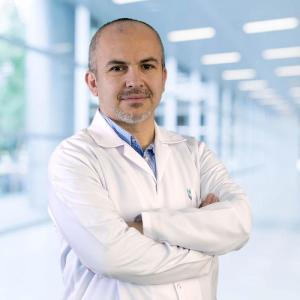

"Main Specialty : Plastic, Reconstructive and Aesthetic Surgery. Years of Experience : 11 years. Notable Training : Osmangazi University Faculty of Medicine (1995-2003); Plastic, Reconstructive and Aesthetic Surgery specialization, Celal Bayar University (2009-2015); Basic Microsurgery Course, Hacettepe University Reconstructive Microsurgery Association. Professional Experience : Kartal Dr. Lütfi Kırdar Training and Research Hospital (2015-2021); Bahçeşehir University Faculty of Medicine Medical Park Göztepe Hospital (2021); Lokman Hekim Istanbul Hospital (2022-present). Memberships : Turkish Plastic, Reconstructive and Aesthetic Surgery Association; Aesthetic Plastic Surgery Association; Wound Care Association; ACELEMDER – Emergency Hand Surgery and Microsurgery Association. Languages Spoken : Turkish."
Among our clinics