

Turquie Santé
Last update : 07/11/2026

Allergology treatment in Turkey | Prices & Best allergologist doctor

Access internationally recognized healthcare from specialist doctors in Turkey.

Free Medical Opinion
Allergology treatment Turkey
794+
patient reviews
across all procedures

Allergology treatment is the diagnosis and management of allergic conditions by an allergist (allergologist),a doctor who identifies what triggers your immune system to overreact to normally harmless substances such as pollen, dust mites, foods or animal dander. In Turkey, allergy centers in Istanbul, Ankara and other cities offer skin and blood testing and personalized treatment plans, from trigger avoidance and medication to allergen immunotherapy (desensitization).

During a consultation, targeted tests identify your specific sensitivities, and the specialist builds a management plan to control symptoms and improve your quality of life. Results vary from person to person and cannot be guaranteed.

Allergy treatment : Best prices in Turkey

Turquie Santé connects you with allergists at partner clinics in Turkey and helps you compare options.

  • Specialist care: your allergist selects tests and a treatment plan based on your history, symptoms and results.
  • Indicative costs: initial consultations are generally estimated at about 150–300 USD, and testing or treatment programs at about 500–2,000 USD depending on complexity and duration. These are non-binding estimates; many clinics give prices on request, so ask for a written quote that lists what is included and excluded (tests, medicines, immunotherapy courses, follow-up).
  • Teleconsultation: a free remote assessment gives you personalized recommendations before you decide to travel.

The final price is confirmed after your medical file has been reviewed. Request a free teleconsultation to get started.

Risks and Side Effects

  • Allergic reactions during skin testing or immunotherapy, including, rarely, severe reactions (anaphylaxis) that need emergency treatment.
  • Local swelling, redness and itching at injection or test sites.
  • Medication side effects (for example drowsiness with some antihistamines, or effects of corticosteroids).
  • Treatment may not fully control symptoms, and some people stop responding or relapse.

Tell the allergist about asthma, heart disease, pregnancy, and medicines such as beta-blockers before testing or immunotherapy, as these may change the plan.


Why choose Allergology treatment with Turquie Santé ?

Médecin icon

Specialist doctors and internationally certified hospitals

Avis icon

Free medical opinion before you travel

Organisation icon

Medical stay organized from A to Z

Prix icon

Detailed quote (included / not included) before your stay

Résultat icon

Free review of your file

All about your Allergology treatment in Turkey
Overview
Alternative care
Benefits
Payment

Intervention or treatment's duration :

Testing usually takes from under an hour (skin prick tests) to several visits (patch tests). Immunotherapy (desensitization) is a long course, typically lasting several years, set by your allergist.

Recovery time :

There is usually no recovery period after testing. Mild redness or itching at test sites typically settles within hours to days. Symptom control with immunotherapy builds gradually over months.

Alternative treatments
  • Avoidance of triggers and environmental measures.
  • Medication only (antihistamines, nasal corticosteroids, inhalers, leukotriene antagonists).
  • Allergen immunotherapy by injection (SCIT) or sublingual tablets or drops (SLIT),where suitable.

Highly qualified professionals in accredited institutions.


We assist you before, during, and after your trip


A detailed quote is presented to you before your stay. Our support is free for the patient and any fees are specified in advance.

You will pay your clinic directly using these available methods:
Transfer

Verified testimonials from our patients

Elena M.
Verified review

My thyroid biopsy in Türkiye went perfectly I did it under local anesthesia, I did not feel anything and after the intervention, I was watched a few hours before I could return. The results are on time and everything was clearly explained to me. I re..Read more


07/08/2025
This patient was treated for Allergology treatment
Emily White : Medical Content Team Manager at Turquie Santécheck

Written by

Emily White

This content complies with the editorial policy of Turquie Santé. It was written by Emily White, Head of the Editorial Team, who has over 11 years of experience in scientific research and clinic management in Turkey. She ensures the reliability of medical information while making complex data accessible to everyone.

Prof. Dr. Bülent BOZKURTcheck

Medically reviewed by : Prof. Dr. Bülent BOZKURT

Specialty : Respiratory medicine & pulmonology

Medical review does not replace an individual consultation.

How it works ?

2
Services
We look for the best option for your case & budget
3
Hospital
Evaluating a care plan with the best quote
4
airplane
Making appointments & Organization of your trip
5
Health care
Ongoing support until you return home

Get a free medical opinion on Allergology treatment with our recognized clinics

Certifications :

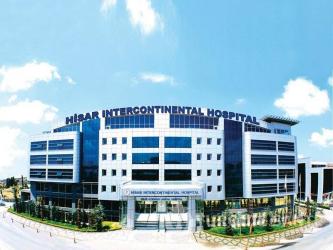
International Organization for Standardization (ISO) HISAR INTERCONTINENTAL
JCI - Joint Commission International HISAR INTERCONTINENTAL
HISAR INTERCONTINENTAL
Istanbul, Turkey
Ömer Necip AYTUĞ

Ömer Necip AYTUĞ

46 years of experience
Nurettin Demirkol

Nurettin Demirkol

43 years of experience
4.4 / 5
4.4(222 Reviews)

Certifications :

International Organization for Standardization (ISO) LIV Vadistanbul
JCI - Joint Commission International LIV Vadistanbul
LIV Vadistanbul
Istanbul, Turkey
Prof. Dr. Gülşen Köse

Prof. Dr. Gülşen Köse

45 years of experience
Prof. Dr. G. Dilek Arman

Prof. Dr. G. Dilek Arman

41 years of experience
4.4 / 5
4.4(11 Reviews)

Certifications :

International Organization for Standardization (ISO) LIV Ulus
JCI - Joint Commission International LIV Ulus
LIV Ulus
Istanbul, Turkey
Spec. MD. Ramazan Ersoy

Spec. MD. Ramazan Ersoy

27 years of experience
Dr. Ramazan Ersoy is an allergist with 18 years of experience in allergy treatment. He completed specialized training in Allergy & Clinical Immunology at Ege University Faculty of Medicine. His expertise encompasses allergy skin testing, provocation tests, ... Read more
4.7 / 5
4.7(1 Reviews)

Certifications :

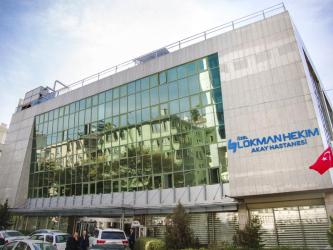
International Organization for Standardization (ISO) LOKMAN HEKIM Üniversitesi
LOKMAN HEKIM Üniversitesi
Ankara, Turkey
Prof. Dr. Reha Şükrü KİŞNİŞÇİ

Prof. Dr. Reha Şükrü KİŞNİŞÇİ

39 years of experience
Prof. Dr. Nurullah ZENGİN

Prof. Dr. Nurullah ZENGİN

36 years of experience
4.7 / 5
4.7(1 Reviews)

Certifications :

JCI - Joint Commission International MEMORIAL Şişli
International Organization for Standardization (ISO) MEMORIAL Şişli
MEMORIAL Şişli
Istanbul, Turkey
MD Ahmet ARPACI

MD Ahmet ARPACI

46 years of experience
Prof. Dr. Ahmet Nevzat Nayır

Prof. Dr. Ahmet Nevzat Nayır

41 years of experience
4.5 / 5
4.5(34 Reviews)

Certifications :

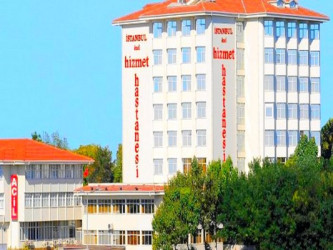
International Organization for Standardization (ISO) HIZMET By Memorial
JCI - Joint Commission International HIZMET By Memorial
HIZMET By Memorial
Istanbul, Turkey
Dr. Gülsüm ÇEBİ

Dr. Gülsüm ÇEBİ

Doç. Dr. Arzu Yurci

Doç. Dr. Arzu Yurci

4.0 / 5
4.0(2 Reviews)

Certifications :

JCI - Joint Commission International ACIBADEM
International Organization for Standardization (ISO) ACIBADEM
ACIBADEM
Istanbul, Turkey
Dr. Ayşe Sagduyu Kocaman

Dr. Ayşe Sagduyu Kocaman

30 years of experience
Dr.Ender Semiz

Dr.Ender Semiz

30 years of experience
4.6 / 5
4.6(183 Reviews)

You have consulted 7 / 31 Hospitals

🩺 Medical note — The content of this page is provided for information purposes and in accordance with our medical charter. It does not constitute medical advice and does not replace a consultation with a healthcare professional. Prices are indicative and will be specified in a personalized quote after reviewing your file. Any treatment must be assessed and approved by a qualified doctor.

Different types of allergies

An allergy is a response. The human body reacts in ways that healthy individuals typically don't experience. Reactions manifest across multiple systems: the skin develops dermatitis, the lungs can trigger asthma, eyes show conjunctivitis, or the nasal passages become inflamed with rhinitis. Over recent decades, the prevalence of allergic conditions has steadily grown, affecting an increasingly larger proportion of populations worldwide.

Several distinct types of allergies exist, each with different triggers and manifestations:

  • Food allergy: Clinical symptoms emerge following consumption of particular foods. This type can develop early, during childhood, or surface later in adulthood, significantly disrupting daily routines and food choices for affected individuals.
  • Dust mite allergy: Produces nasal discharge, conjunctival redness, persistent coughing, and respiratory difficulty as characteristic signs.
  • Cat Allergy: Cats trigger roughly two-thirds of all reported animal allergies. The reaction stems from allergens that cats naturally produce. Respiratory manifestations dominate.
  • Pollen allergy: Known colloquially as "hay fever," this condition involves sensitization to pollen released by wind-pollinated or insect-pollinated plants. Sufferers experience sudden sneezing fits, nasal discharge, and ocular tearing, sometimes all simultaneously.
  • Allergic rhinitis and asthma: This condition targets the respiratory tract. Individuals with this form exhibit heightened sensitivity compared to the general population. Potential triggers range widely: influenza, tobacco smoke, animal allergens, or dust mites.

Symptoms requiring allergist consultation

Consulting an allergist becomes necessary when:

  • Certain symptoms appear, rashes or respiratory difficulties, that persist or worsen.
  • Allergies develop alongside sinusitis, nasal obstruction, or long-standing breathing trouble in adults (a combination that generally requires specialist evaluation).
  • Children show sustained symptoms: continuous nasal discharge, blocked passages, nasal itching, red and watery eyes, or repeated sneezing episodes throughout the day.
  • Fever or related symptoms recur for several consecutive months each year, disrupting normal function and quality of life.
  • Antihistamine therapy, even when taken consistently over extended periods, fails to provide relief or symptom control.

Allergy test: which one to choose?

Identifying the specific trigger, whether pollen, pet dander, dust mites, or another allergen, marks the first step in effective allergy management. Once identified, avoidance or targeted treatment becomes possible.

The allergological test selected depends entirely on the individual patient's clinical picture. Each test choice reflects the body's specific reaction pattern, the exposure route (skin contact, inhalation, ingestion),and the allergen's chemical nature, what works for pollen-triggered rhinitis differs markedly from testing for contact dermatitis.

Test selection aims at pinpointing causative factors and establishing the most suitable therapeutic approach. Two primary methods dominate practice across specialist clinics:

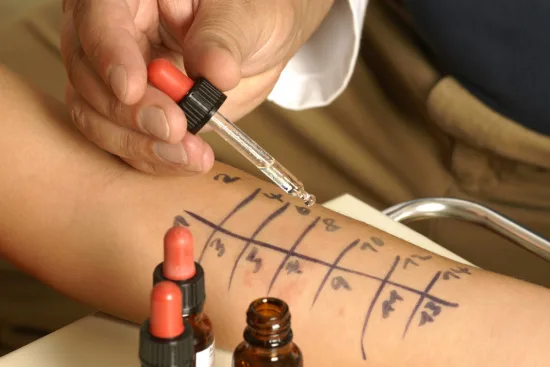
  • Prick test: A lancet lightly punctures the forearm skin; a drop of allergen solution is applied at each site. Positivity emerges rapidly, within minutes, a small, raised, itchy bump forms at the location. Results are immediate.
  • Patch test: Multiple patches containing suspected allergens adhere to the skin, usually on the back. After 48 hours, the doctor evaluates the area. Itching, redness, or blister formation indicates a positive reaction to that substance.

Allergy treatment options

An allergist in Turkey may prescribe various treatment approaches tailored to individual patient needs:

  • Dietary avoidance of identified triggers
  • Pharmacological interventions
  • Allergen immunotherapy (AIT)

Immunotherapy treatment (AIT)

Immunotherapy, commonly called desensitization, represents the gold standard for pollen allergy management. The approach involves administering gradually increasing allergen doses, delivered either through subcutaneous injection or sublingual tablets, over months or years. The immune system gradually becomes conditioned. Rather than mounting a strong allergic reaction, the body develops protective tolerance, which reduces or eliminates symptom recurrence. Success is measured by symptom reduction or complete cessation.

Medication treatments

Additional pharmacological agents address specific allergy symptoms. Antihistamines work by blocking histamine receptors, preventing blood vessel dilation and thereby suppressing sneezing and itching. Corticosteroids, hormones naturally produced by the body, reduce asthma flares and breathing obstruction. Leukotriene receptor antagonists suppress inflammatory mediators by blocking leukotrienes, effectively stopping nasal discharge and sneezing. Mast cell stabilizers prevent cellular degranulation, reducing symptom severity. The choice between these options depends on symptom type and severity.

Allergology treatment FAQ

Do I have to stop taking antihistamines before the allergological tests?
Before skin prick tests or intradermal tests, antihistamines should usually be stopped because they suppress the skin reaction and can cause false-negative results. Typical washout periods are about 2 to 3 days for older (first-generation) antihistamines and about 5 to 7 days for newer (second-generation) ones such as cetirizine or loratadine. Ketotifen needs at least about 5 days, and some long-acting or sedating agents may need longer. Some other medicines, such as tricyclic antidepressants, also interfere, and omalizumab can affect results for several weeks. It is generally not necessary to stop antihistamines before a patch test or a specific IgE blood test. Never stop a prescribed medicine without instructions from your doctor or allergist.
Are allergy tests painful?

Allergological tests carried out either by prick test, intradermal skin test, patch or blood test are not painful, but are rather uncomfortable for some people.

Can allergies disappear with treatment?

Some allergies can lessen or disappear, especially with immunotherapy, but this depends on the type of allergen and the patient.

How long do allergy tests procedure last at our partner clinics in Turkey?
The duration of allergy testing depends on the type of test and the number of allergens tested. Skin prick tests: applying the allergens takes about 5 to 10 minutes and the reaction is read after about 15 to 20 minutes, so the whole visit usually lasts 30 to 60 minutes. Intradermal tests: the immediate reaction is also read after about 15 to 20 minutes, and some protocols include a delayed check after 24 to 72 hours. Patch tests: the patches stay on the skin for 48 hours, then they are removed and a first reading is done, followed by a second reading usually 24 to 48 hours later (3 to 5 days after application),so several visits are needed. Specific IgE blood tests: the blood draw takes a few minutes and results usually take from a few days to about a week, depending on the laboratory. For skin tests you may need to stop antihistamines several days beforehand, as advised by your doctor.
Share this page

Our assistants help you to get the best options in Allergology treatment