

Summary
- What is a dental implant, and why have it done abroad?
- Country comparison: Prices, quality, and timelines in 2026
- Why has Turkey become the world's leading dental tourism destination?
- Beyond the price: 7 criteria for evaluating a dental clinic abroad
- What does the treatment journey actually look like?
- What are the real risks of dental implants abroad?
- How does Turquie Santé work?
Thinking about getting dental implants abroad and wondering how to choose the right destination without fixating on the price alone? That is probably the most important question to ask before making any decision.
From one country to the next, the cost of a single dental implant can vary fivefold, but the real decision comes down to surgeon expertise, clinic accreditations, the materials used, and how post-operative follow-up is organized.
This guide gives you the tools to assess top destinations, understand the drivers of price differences, and make a confident, informed choice.
Because a dental implant is a lifetime investment, not just an expense to be minimized.
What is a dental implant, and why have it done abroad?
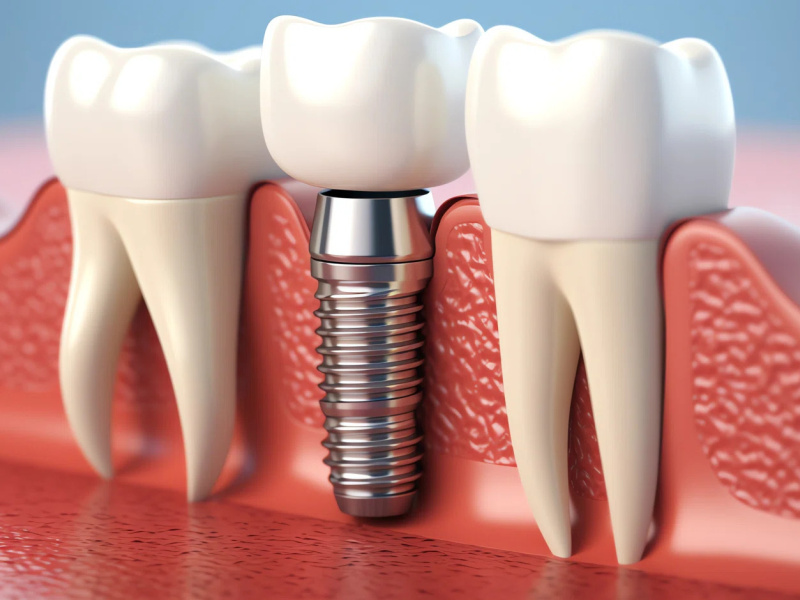
A dental implant is an artificial root, typically made of titanium, placed directly into the jawbone to replace a missing tooth. Once it fuses with the bone, it supports a crown, bridge, or fixed denture.
The goal is to restore chewing function, the aesthetic appearance of your smile, and the stability of your dental arch, while limiting the bone loss that naturally occurs after tooth extraction.
The procedure generally unfolds in two stages:
- Surgical placement of the implant.
- Fitting of the final prosthesis after osseointegration, a process that typically takes 3 to 6 months.
In many Western European countries, a complete implant (implant body, abutment, and crown) represents a significant financial outlay. Added to that are sometimes lengthy waiting times and limited reimbursement from health insurance.
That is why more patients today are comparing multiple destinations before making their choice. Their goal is not simply to cut costs, but to access modern technology, experienced clinicians, and comprehensive care packages designed for international patients.
Country comparison: Prices, quality, and timelines in 2026
The table below compares the cost of a single implant (implant body + abutment + crown) across the main destinations:
| Country | Avg. Price | Accreditation | Technologies | Lead Time | Key Strength |
| France | $1,800 - 2,500 | National Dental Council | Guided surgery, CAD/CAM, 3D scan | 2 visits / 6 mo. | Proximity, local follow-up |
| Germany | $1,600 - 2,200 | KZBV | Advanced digital technologies | 2 visits / 6 mo. | Technical precision |
| Spain | $900 - 1,400 | Consejo General Dentistas | Intra-oral scanner, guided surgery | 2 visits / 6 mo. | EU quality, accessibility |
| Hungary | $700 - 1,200 | ISO, EU standards | Digital implantology | 2 visits / 3 - 6 mo. | Historic leader |
| Turkey | $400 - 800 | JCI, ISO, Ministry of Health | Intra-oral scanner, 3D planning, CAD/CAM, guided surgery | 2 visits / 3 - 6 mo. | Best quality/price ratio |
| Romania | $500 - 900 | EU standards | Common digital technologies | 2 visits / 3 - 6 mo. | Competitive prices, EU |
| Tunisia | $450 - 750 | Tunisian Ministry of Health | Modern implantology (varies by clinic) | 2 visits / 3 - 6 mo. | French-speaking, accessible |
| Thailand | $600 - 1,000 | JCI (major clinics) | Modern medical facilities | 2 visits / 3 - 6 mo. | High quality |
Note: Prices are indicative ranges for 2026. They vary depending on the implant brand, case complexity, and the clinic selected. Always request a detailed, line-by-line quote. Turkey is highlighted based on its documented quality/price ratio and international accreditations.
Why has Turkey become the world's leading dental tourism destination?
Over the past several years, Turkey has firmly established itself as one of the most sought-after destinations for dental care abroad. This appeal is built on a combination of economic, technological, and logistical factors.
The main advantages most frequently cited by international patients include:
- Lower operating costs than in most Western European countries.
- Intense competition among private clinics, which drives investment in cutting-edge equipment.
- Widespread use of digital technologies: intra-oral scanners, 3D cone beam CT imaging (CBCT), and computer-aided design and manufacturing (CAD/CAM).
- Short appointment lead times.
- Dedicated international patient services with language assistance, airport transfers, and full trip coordination.
The most reputable dental clinics in Istanbul and other major Turkish cities use the same technologies as leading European centers. Several are also accredited by the Joint Commission International (JCI), the global benchmark for hospital safety and clinical standards.
Several Turquie Santé partner clinics rank among the highest-rated dental facilities in Europe on verified review platforms.
Beyond the price: 7 criteria for evaluating a dental clinic abroad
Comparing numbers alone is a mistake. Below are the criteria that truly determine the quality and the safety of your dental treatment.
1. Accreditations and certifications
Accreditations are the first objective filter. Look for:
- JCI (Joint Commission International): the world's most demanding standard, covering 350 criteria including infection prevention, patient safety, and clinical protocols.
- ISO 9001: An internationally recognized quality management system.
- Ministry of Health registration: In Turkey, every clinic must be registered and regularly audited by the Ministry of Health.
Any clinic that cannot present its certifications, or displays them without being able to substantiate them, should be ruled out immediately.
2. Surgeon experience and qualifications
The practitioner is the single most important variable. Check:
- Their degree and specialty (dental surgeon, oral and maxillofacial surgeon, certified implantologist).
- The number of implants placed per year (an experienced practitioner places several hundred annually).
- Additional training, including international qualifications.
- Verifiable presence on professional databases.
At Turquie Santé, every listed surgeon has been selected against these criteria and has passed a rigorous competency framework.
3. The brand and quality of implants used
Established brands with over 20 years of clinical data include:
- Straumann (Switzerland): The absolute benchmark, 10-year success rate above 97%.
- Nobel Biocare (Sweden/USA): Used in the majority of global clinical studies.
- Osstem (South Korea): Excellent performance/price ratio, widely used across Asia and Europe.
- Dentsply Sirona: Global presence, proven quality.
A recognized brand guarantees not only initial quality, but also the worldwide availability of replacement parts, years after placement. Be cautious of clinics that do not specify the brand used or that offer generic implants from unknown manufacturers.
4. Available technology
Current standards include:
- CBCT scanner (cone beam CT) for 3D bone analysis.
- Digital implant planning software (Simplant, coDiagnostiX).
- Computer-guided surgery (3D-printed surgical guides).
- Integrated dental laboratory (faster turnaround, direct quality control).
- CAD/CAM technology for same-day ceramic crown fabrication.
A clinic with an in-house lab can often finalize your crown in 4 to 7 days, reducing the number of trips required.
5. Quote transparency
A serious quote breaks down every line item:
- The implant (brand, reference number).
- The abutment.
- The crown (material: zirconia, ceramic, metal-ceramic).
- Panoramic X-rays and CBCT scan.
- Pre- and post-operative consultations.
- Any bone grafts or sinus lifts if required.
- Transport and accommodation (where included in the package).
Any quote that does not itemize these elements makes genuine comparisons impossible and raises legitimate concerns.
6. Verified patient reviews
Patient testimonials are useful, provided they can be verified. Prioritize:
- Reviews on independent platforms (Google Reviews, Trustpilot).
- Testimonials accompanied by before-and-after photos.
- Recent feedback (within the last 24 months).
- Consistency between the volume of reviews and the clinic's overall reputation.
7. Post-operative follow-up and complication management
An implant treatment does not end at the clinic. Ask explicitly:
- A written follow-up plan covering all key milestones.
- How to reach the team remotely in case of pain or complications.
- The policy for serious complications (management, reimbursement).
- Whether coordination with your local dentist for ongoing follow-up is possible.
Turquie Santé offers a medical guarantee and an integrated complication management protocol, with coordinators available 7 days a week, so you are never left to manage an unexpected situation alone.
What does the treatment journey actually look like?
Step 1: Remote consultation and personalized quote
Before booking anything, you send your panoramic X-rays, intra-oral photos, and medical history. The surgeon assesses your case and proposes a detailed treatment plan. Turquie Santé coordinates the referral process and verifies the clinical consistency of the quote at this stage.
Step 2: First trip - Implant placement (3 to 5 days recommended)
- Full assessment on arrival (3D scan, consultation with the surgeon).
- Surgical placement of implants under local anesthesia or sedation.
- Fabrication and fitting of a temporary prosthesis if required.
- Immediate post-operative monitoring.
The day after the procedure, you are mobile. Most patients resume normal activity within 48 to 72 hours.
Step 3: Osseointegration (3 to 6 months at home)
After implant placement, a healing period is required. During this phase, the implant gradually fuses with the jawbone, a process called osseointegration. You return home and can have routine check-ups with your local dentist if needed. Remote follow-up is maintained throughout by the medical team.
Step 4: Second trip - Final crown fitting (3 to 5 days)
- Clinical and radiological check-up.
- Digital impression taking.
- Crown fabrication (zirconia or ceramic, depending on the case).
- Final adjustment and fitting.
Total time in-country across both trips: approximately 6 to 10 days, spread over 3 to 6 months. Some accelerated protocols allow certain cases to be completed in a single extended visit.
What are the real risks of dental implants abroad?
It would be dishonest not to address them: risks do exist, but they are clearly identified and generally manageable.
Most common medical complications
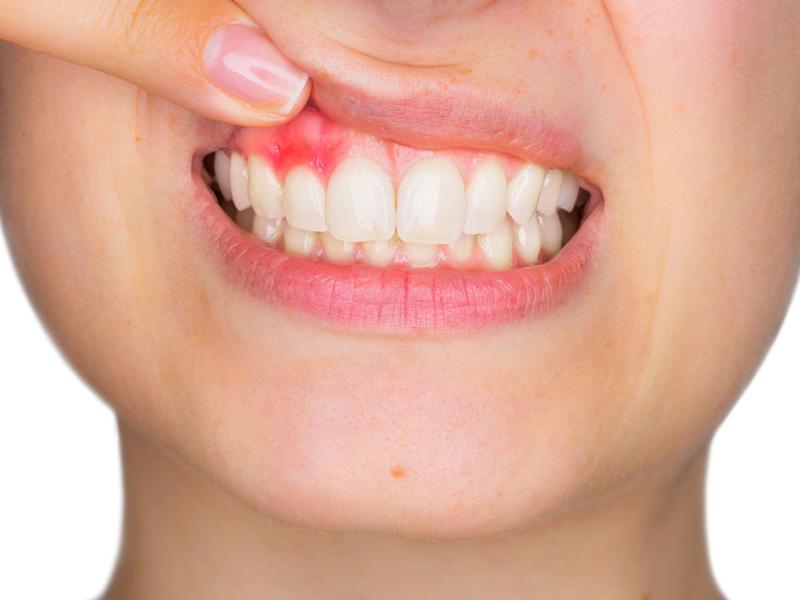
- Post-operative infection (low incidence with proper hygiene).
- Osseointegration failure (2 to 5% in published studies, linked to general health, smoking, and oral hygiene).
- Prosthetic complications: loosening, adjustment issues, or crown fracture in some cases.
In the vast majority of situations, these complications can be managed without significantly affecting the final outcome.
Risks specific to dental tourism
- No on-site follow-up if a late complication arises.
- Difficulty getting a local dentist to manage complications when implants are from an unknown brand.
- Treatment timelines rushed to the point of compromising osseointegration.
How to minimize these risks
- Choose an accredited clinic with a documented guarantee policy.
- Use implants from an internationally recognized brand (ensuring global interoperability).
- Plan your post-treatment follow-up with your local dentist before you travel.
- Work through a medical coordination platform like Turquie Santé, which has a formal complication management protocol in place.
How does Turquie Santé work?
Turquie Santé is not a travel agency. It is a medical platform specializing in the coordination of care for international patients, with over 879 verified patient reviews and a 95% recommendation rate.
What Turquie Santé handles on your behalf:
- Selection and referral to Istanbul and Antalya's best certified dental clinics.
- Coordination of your personalized quote and clinical consistency check.
- Full trip organization: flights, VIP transfers, and accommodation.
- Medical translation and multilingual support.
- Remote post-operative follow-up with coordinators available 7 days a week.
- Medical guarantee and complication management protocol.
You will receive a free quote within 24 hours. No hidden fees, no undisclosed commissions built into your treatment cost.
"Medical journalist specializing in science communication, I put my expertise at the service of clear and accessible information. For Turquie Santé, I create content based on up-to-date medical data, in collaboration with specialists from partner clinics. My commitment is to provide reliable, transparent information that complies with international medical standards."
Need a personalized medical opinion?
Our partner doctors reply online within 24h, free of charge.