

Turquie Santé
Last update : 18/11/2026

Tympanoplasty in Turkey: eardrum repair, costs, risks and recovery

Access care from specialist doctors in Turkey, at prices generally lower than those in Europe.

Free Medical Opinion
Tympanoplasty Turkey
795+
patient reviews
across all procedures

If a perforated eardrum keeps causing ear infections, discharge or hearing loss, tympanoplasty repairs it with a graft of your own tissue, and the ossicular chain is rebuilt when needed. Many small perforations heal on their own, so surgery is usually considered when the hole persists for about three months or infections keep coming back.

The indicative price in Turkey is between $1,800 and $5,000, depending on the clinic and on whether ossicular reconstruction is needed. It usually covers the hospital stay, anesthesia and surgeon's fees; tests, follow-up visits and medication may be extra. Only a personalized quote is binding.

Turquie Santé sends your file to an ENT surgeon in a partner hospital and prepares the quote. Send your audiogram and ear examination report to check whether you are eligible. Results depend on the perforation and the health of the middle ear; the graft can fail in a minority of cases and a second operation may be needed.

Price of eardrum repair in Turkey

The cost of tympanoplasty in Turkey depends on the complexity of the procedure. A tympanoplasty combined with ossicular reconstruction is generally more expensive than a simple tympanoplasty.

In general, the price of a tympanoplasty in Turkey is between $1,800 and $5,000, depending on the clinic and the procedure. This price includes the hospital stay, anesthesia and the surgeon's fees. Ask your quote to specify whether pre-operative tests, follow-up visits and medications after discharge are included.

Risks and Side Effects

  • Graft failure with a persistent or recurrent perforation, sometimes needing revision surgery.
  • Infection, bleeding, temporary dizziness, tinnitus or altered taste.
  • No improvement in hearing, or in rare cases permanent hearing loss.
  • Rare: facial nerve weakness, perilymph fistula, anesthesia complications.
  • Smoking, an active ear infection and poor Eustachian tube function increase the risk of graft failure.


Why choose Tympanoplasty with Turquie Santé ?

Chirurgien icon

Accredited surgeons and hospitals (JCI, ISO)

Économie icon

Indicative prices, often lower than in Western Europe depending on the case

Organisation icon

Medical stay organized from A to Z

Prix icon

Detailed quote (included / not included) before your stay

Résultat icon

Free review of your file

All about your Tympanoplasty in Turkey
Overview
Alternative care
Benefits
Payment

Intervention or treatment's duration :

  • The operation typically lasts between 1 and 3 hours, depending on the technique and on whether the ossicles also need repair.
  • It is often done as a day case or with a short hospital stay; your surgeon tells you before the operation.

Recovery time :

  • Recovery varies with the technique and the patient. Your surgeon tells you when you can return to work, sports and flying.
  • Complete healing of the eardrum can take several weeks to a few months.

Alternative treatments
  • Watchful waiting: many small perforations heal on their own within weeks or months.
  • Treating infection with ear drops or antibiotics before any surgery.
  • Myringoplasty (repair of the eardrum alone) when the middle ear bones are intact.
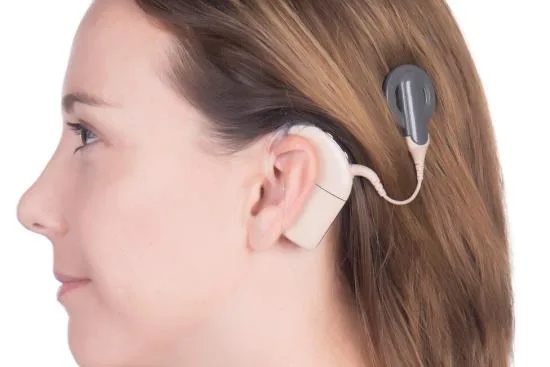
  • A hearing aid when surgery is not suitable or not wanted.
  • Mastoidectomy is a related or combined operation for more extensive chronic ear disease or cholesteatoma, not a substitute for eardrum repair.

Highly qualified professionals in accredited institutions.


We assist you before, during, and after your trip


A detailed quote is presented to you before your stay. Our support is free for the patient and any fees are specified in advance.

You will pay your clinic directly using these available methods:
Transfer
Emily White : Medical Content Team Manager at Turquie Santécheck

Written by

Emily White

This content complies with Turquie Santé's editorial policy. It was written by Emily White, Head of the Editorial Team, who coordinates content creation and updates. She has 11 years of experience in medical communications and supporting international patients in Turkey.

How it works ?

2
Services
We look for the best option for your case & budget
3
Hospital
Evaluating a care plan with the best quote
4
airplane
Making appointments & Organization of your trip
5
Health care
Ongoing support until you return home

Get a free medical opinion on Tympanoplasty with our recognized clinics

Certifications :

International Organization for Standardization (ISO) LOKMAN HEKIM ISTANBUL
JCI - Joint Commission International LOKMAN HEKIM ISTANBUL
LOKMAN HEKIM ISTANBUL
Istanbul, Turkey
Prof. Dr. Celil GÖÇER

Prof. Dr. Celil GÖÇER

30 years of experience
Main Specialty : Otorhinolaryngology (ENT)Years of Experience : 30 years.Notable Trainings : Hacettepe University (Bachelor of Medicine),Ankara Training and Research Hospital (Ear Nose and Throat Diseases),Yıldırım Beyazıt University (Ear Nose and ... Read more
Prof. Dr. Ümit TUNÇEL

Prof. Dr. Ümit TUNÇEL

34 years of experience
Main specialty : Otorhinolaryngology (ENT)Years of experience : 28 years.Notable training : Faculty of Medicine, Ankara University (1986 – 1992),Otorhinolaryngology Specialization, SBÜ Ankara Numune Eğitim ve Araştırma Hastanesi (1993 – 1998)Mastered ... Read more
4.7 / 5
4.7(70 Reviews)

Certifications :

International Organization for Standardization (ISO) HISAR INTERCONTINENTAL
JCI - Joint Commission International HISAR INTERCONTINENTAL
HISAR INTERCONTINENTAL
Istanbul, Turkey
Assoc. Prof. Selman SARICA, MD

Assoc. Prof. Selman SARICA, MD

20 years of experience
Main specialty: Otorhinolaryngology (ENT) Years of experience: Over 19 years Notable training: Medical degree, University of Istanbul (2006); specialization in ENT, Kahramanmaraş Sütçü İmam University (2012) Notable achievements: International ... Read more
PROF. TAYFUN APUHAN

PROF. TAYFUN APUHAN

28 years of experience
Main specialty: Otorhinolaryngology (ENT) and cervicofacial surgery Years of experience: Over 27 years Notable training: Graduate of the Faculty of Medicine of İnönü (1998); specialization in ENT, Haseki Training and Research Hospital, Istanbul (2003); ... Read more
4.4 / 5
4.4(222 Reviews)

Certifications :

JCI - Joint Commission International MEMORIAL Şişli
International Organization for Standardization (ISO) MEMORIAL Şişli
MEMORIAL Şişli
Istanbul, Turkey
Grand Hospital founded in 1999 200 Beds 53,000 square meters  
4.5 / 5
4.5(34 Reviews)

Certifications :

JCI - Joint Commission International LIV Vadistanbul
International Organization for Standardization (ISO) LIV Vadistanbul
LIV Vadistanbul
Istanbul, Turkey
Prof. Dr. Ahmet Hakan Birkent

Prof. Dr. Ahmet Hakan Birkent

24 years of experience
Main specialty : Otorhinolaryngology (ENT) Years of experience : 24 years. Techniques mastered : Aesthetic voice surgery, rhinoplasty, throat cancer surgery, treatment of airway stenosis, management of vocal cord paralysis, treatment of swallowing disorders, ... Read more
Prof. Dr. Arzu Yasemin Korkut

Prof. Dr. Arzu Yasemin Korkut

27 years of experience
Main Specialty : Otorhinolaryngology Years of Experience : 27 years. Notable Trainings : Istanbul University Cerrahpaşa Faculty of Medicine (1988-1995),Vakıf Gureba Training and Research Hospital, Otorhinolaryngology specialized education (1995-1999) ... Read more
4.4 / 5
4.4(11 Reviews)
Get a free expert opinion via our Medical Quiz
Have you ever undergone a Tympanoplasty ?

Certifications :

JCI - Joint Commission International LIV Ulus
International Organization for Standardization (ISO) LIV Ulus
LIV Ulus
Istanbul, Turkey
Assoc. Prof. Dr. Burak Karabulut

Assoc. Prof. Dr. Burak Karabulut

1 years of experience
Main Specialty : Otorhinolaryngology (ENT) Notable Trainings : Cerrahpaşa Faculty of Medicine (English Department),İstanbul Faculty of Medicine (Çapa) ENT Diseases, Turkish Ear Nose Throat Surgery Proficiency Certificate, Pittsburgh University ENT ... Read more
Dr. Mustafa Taştan

Dr. Mustafa Taştan

13 years of experience
Main specialty : Otorhinolaryngology (ENT) Years of experience : 13 years. Notable training : Kocaeli University Faculty of Medicine (2013),Ondokuz Mayıs University Faculty of Medicine, Ear Nose and Throat Diseases (2021) Notable achievements : Publications ... Read more
4.7 / 5
4.7(1 Reviews)

Certifications :

International Organization for Standardization (ISO) Estethica
Estethica
Istanbul, Turkey
Branch of a big hospital group with good reputation Turkish and international celebrities are received Modern cosmetic and dental procedures
4.7 / 5
4.7(3 Reviews)

Certifications :

JCI - Joint Commission International HIZMET By Memorial
International Organization for Standardization (ISO) HIZMET By Memorial
HIZMET By Memorial
Istanbul, Turkey
Multi-specialty hospital of good reputation 7 operating rooms Capacity of 77 beds
4.0 / 5
4.0(2 Reviews)

You have consulted 7 / 31 Hospitals

🩺 Medical note — The content of this page is provided for information purposes and in accordance with our medical charter. It does not constitute medical advice and does not replace a consultation with a healthcare professional. Prices are indicative and will be specified in a personalized quote after reviewing your file. Any treatment must be assessed and approved by a qualified doctor.

Causes of a perforated eardrum

There are many causes of eardrum perforation, including:

  • Scuba diving.
  • A sudden loud noise such as an explosion.
  • A hard blow to the ear.
  • Pushing a sharp object deep into the ear, such as cotton swabs.
  • Rapid changes in air pressure (Barotrauma),such as when flying.

Indications for tympanoplasty in Turkey

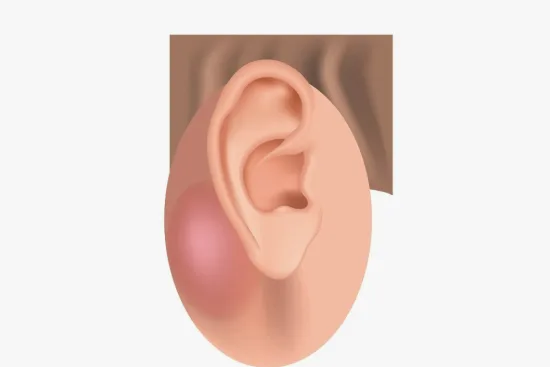
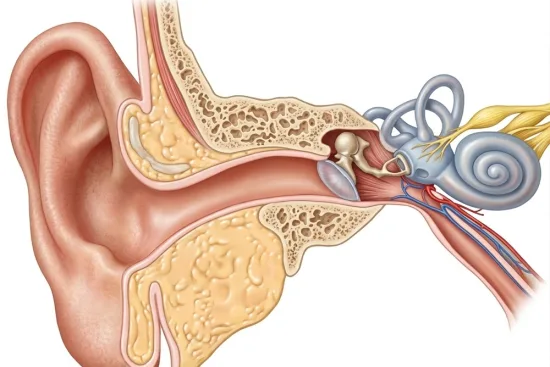
The eardrum is a delicate membrane susceptible to perforation from infection or trauma. Symptoms of a perforated eardrum include ear pain, fluid discharge, bleeding, and conductive hearing loss.

Tympanoplasty is indicated in several specific cases, including:

  • Chronic tympanic perforation: A tear or hole in the eardrum that fails to heal spontaneously and persists for more than 3 months.
  • Chronic otitis media: Persistent or recurring inflammation and infection of the middle ear with ongoing discharge.
  • Ossicular chain erosion or damage (associated with eardrum perforation): Rebuilding destroyed or fixed middle ear bones (ossiculoplasty) during eardrum repair to restore hearing.
  • Cholesteatoma: An abnormal skin growth behind the eardrum that can destroy surrounding bone and ossicles, requiring surgical removal combined with tympanic reconstruction.

Clinical note: Conductive hearing loss caused by otosclerosis (stapes fixation without eardrum perforation) is treated with a stapedectomy (or stapedotomy),not a standard tympanoplasty.

Tympanoplasty process in Turkey

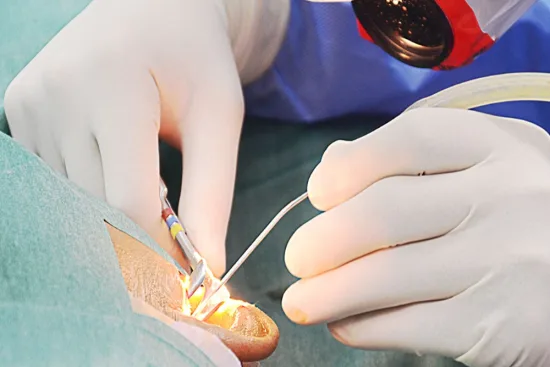
Tympanoplasty is performed step by step.

  1. Examining the ear: Using a surgical microscope, the surgeon assesses the eardrum and middle ear. If infection is suspected, swabs are taken before anything else, as operating on an infected ear is not advised.
  2. Creating access: The incision, behind the ear or through the ear canal, depends on the size and location of the perforation.
  3. Cleaning the area: Damaged or abnormal tissue is carefully removed.
  4. Harvesting the graft: The eardrum is rebuilt using the patient's own tissue, usually the temporal muscle fascia, perichondrium, or cartilage from behind the ear. Because it is the patient's own tissue, there is no rejection risk.
  5. Placing the graft: The graft is positioned over or under the perforation. Over the following weeks, new capillaries grow into it, closing the hole from within.
  6. Healing: Stitches are not needed in most cases. An absorbable sponge may be placed for support; it dissolves on its own.

The outcome varies from one patient to another. Your surgeon explains the expected result and the possible need for a second operation.

Postoperative recovery and care

After tympanoplasty, follow-up appointments are scheduled to monitor healing and detect any complications.

During recovery, patients may experience temporary discomfort, swelling, or discharge from the ear. Antibiotics may be prescribed to prevent infection.

Patients should carefully follow the post-operative instructions given by the otolaryngologist. These instructions may include:

  • Keep the ear dry.
  • Avoid loud noises and strenuous activities.
  • Take prescribed medications as directed.

Most perforated eardrums heal within a few weeks or months after tympanoplasty, resulting in a significant improvement in symptoms. In some cases, however, a second surgery may be needed to achieve optimal results.

Risks and side effects of tympanoplasty

Tympanoplasty is generally safe, and serious complications are uncommon. Like any surgery, it carries risks, which your surgeon should explain before the operation.

Common and usually temporary

  • Ear pain or discomfort, usually mild to moderate
  • Blocked-ear feeling, reduced hearing (due to packing in the ear),swelling and a small amount of blood-stained discharge during the first days or weeks
  • Dizziness or unsteadiness, usually short-lived
  • Ringing in the ears (tinnitus),which is usually temporary
  • Altered taste on one side of the tongue, usually temporary, because a small nerve runs close to the eardrum
  • Nausea after general anesthesia

Less common

  • Graft failure, with a persistent or recurrent perforation: According to published otolaryngological series, graft failure occurs in a small percentage of cases. The rate varies depending on perforation size, tissue health, and surgical technique, occasionally requiring a revision surgery.
  • Infection of the ear or the wound, which is usually treated with antibiotics
  • Bleeding or a collection of blood behind the eardrum or at the incision
  • No improvement in hearing, or an incomplete improvement
  • Narrowing of the ear canal or scar tissue (adhesions) in the middle ear
  • Residual or recurrent cholesteatoma, if one was present
  • Displacement or loss of an ossicular prosthesis, if one was used

Rare but serious

  • Permanent hearing loss in the operated ear
  • Persistent dizziness or tinnitus
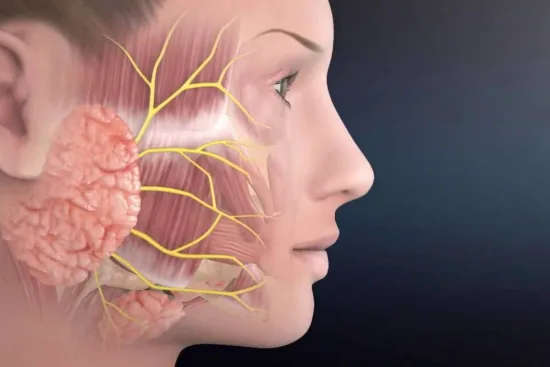
  • Weakness of the facial muscles (facial nerve injury)
  • Leakage of inner-ear fluid (perilymph fistula)
  • Complications of general anesthesia

Most side effects are temporary, but some may need further treatment or surgery. Smoking, an active ear infection and poor Eustachian tube function increase the risk of graft failure.

Before surgery, tell your surgeon if:

  • You have an ear infection, a discharging ear or a cold (it should be treated first, as operating on an infected ear is not advised)
  • You smoke, have allergies, or take blood thinners
  • The ear to be operated is your only hearing ear

Tympanoplasty FAQ

Does tympanoplasty require hospitalization?

Tympanoplasty is often performed as an outpatient procedure, which means many patients can leave the hospital the same day. If the surgery is more complex or the patient is very young, a short hospital stay may be needed. Hospitalization is different from the length of your stay in Turkey: plan a few extra days for the check-up before your flight home, as your surgeon advises.

What type of anesthesia is used for tympanoplasty?

Tympanoplasty is generally performed under general anesthesia, but in selected cases it can be done under local anesthesia with sedation, depending on the patient’s age and the complexity of the procedure.
What is the difference between myringoplasty and tympanoplasty?

Myringoplasty involves repairing only the perforated eardrum, whereas tympanoplasty includes repair of the eardrum and sometimes the middle ear ossicles to restore hearing and ear structure.

Does tympanoplasty leave visible scars?

The scar is usually discreet. Depending on the approach, the incision is made inside the ear canal (transcanal approach, no visible scar) or behind the ear (postauricular approach),where the scar is hidden and fades over time.

What are the possible side effects of tympanoplasty?

Common side effects include mild to moderate pain, temporary dizziness, ringing in the ears (tinnitus),slight ear discharge and swelling. A metallic or altered taste can appear for a few weeks. Less commonly, the graft does not take and the perforation persists, which may require a second operation. Rarely, hearing can worsen. Your surgeon explains these risks before the operation.

How should I sleep after tympanoplasty?

After tympanoplasty, it is recommended to sleep on the side opposite the operated ear, with the head slightly elevated, and to avoid any pressure on the ear to promote proper healing.

Other procedures in this specialty

Share this page

Our assistants help you to get the best options in Tympanoplasty