


Turquie Santé
Last update : 10/05/2026
Advertiser disclosure

Spina Bifida treatment in Turkey: Surgery, Fetal Repair & Costs

Find the best clinics
Spina Bifida treatment Turkey
96%
Recommendations
873+
patient reviews
Patient icon
600K+
Requests received since 2018
Clinique icon
39
Clinics
Trustpilot icon
4.6
Ville icon
5
Cities
Docteurs icon
2K+
Recognized doctors

Spina bifida aperta, including myelomeningocele, is a birth defect affecting the spine and nervous system that requires specialized surgical intervention, yet many families discover treatment outcomes vary significantly depending on timing and surgical expertise.
If you're searching for answers about your diagnosis, cost of surgery, or what recovery looks like, this guide provides the medical clarity you need to make informed decisions.

A spina bifida diagnosis can feel overwhelming, but modern fetal and neonatal surgery has transformed outcomes. The condition is treatable, and early intervention by experienced neurosurgeons significantly improves prognosis and quality of life.

The medical centers partnered with Turquie Santé specialize in comprehensive spina bifida care, from prenatal diagnosis through long-term multidisciplinary management. This guide covers treatment options, realistic outcomes, surgical timing, and what families should expect at every stage.

How much does spina bifida treatment cost in Turkey compared to other countries?

Spina bifida demands more than a single surgical intervention. The full care arc spans infancy through adulthood, encompassing multiple operations, diagnostic procedures, and ongoing rehabilitation.

The following table reflects current pricing at Turquie Santé's partner centers (Q1 2026):

Procedure / InterventionTurkeyUKGermanyUSA
Comprehensive initial evaluationfrom $800~$2,000~$2,200~$4,000
Neonatal myelomeningocele repairfrom $4,000~$15,000~$18,000~$35,000
Ventriculoperitoneal shunt implantationfrom $2,500~$8,000~$10,000~$20,000
In utero surgical closurefrom $12,000~$40,000~$50,000~$80,000–120,000
Tethered cord surgical releasefrom $3,500~$12,000~$14,000~$28,000
Orthopedic deformity correctionfrom $3,000~$10,000~$12,000~$25,000
Inpatient rehabilitation (4-week program)from $1,500~$5,000~$6,000~$12,000

All Turkish facility fees apply exclusively within JCI-certified or ISO 9001-accredited partner hospitals. Initial consultations incorporate multidisciplinary team assessment, pediatric neurologists, neurosurgeons, urologists, and orthopedic specialists contribute expertise. Standard hospital stays following neonatal procedures typically span 5 to 7 days; critical care and extended rehabilitation incur separate charges.

Risks and Side Effects

  • Incision healing.
  • Infection.
  • Hydrocephalus.
  • Chiari malformation.

Why choose Spina Bifida treatment with Turquie Santé ?

Chirurgien icon

Expert surgeons and JCI certified hospitals

Économie icon

Prices 35% to 50% cheaper than in Europe

Organisation icon

Medical stay organized from A to Z

Prix icon

Direct prices without commission

Résultat icon

Free assistance

All about your Spina Bifida treatment in Turkey
Overview
Benefits
Payment

Verified reviews : 803

Processed requests : 94

Highly qualified professionals in accredited institutions.


We assist you before, during, and after your trip


Book with full transparency, no hidden fees or commissions.

You will pay your clinic directly using these available methods:
Transfer

Verified testimonials from our patients

How it works ?

2
Services
We look for the best option for your case & budget
3
Hospital
Evaluating a care plan with the best quote
4
airplane
Making appointments & Organization of your trip
5
Health care
Ongoing support until you return home

Get a free medical opinion on Spina Bifida treatment with our 39 Recognized Clinics

Certifications :

AOSpine International — Global Spine Care Organization LIV Vadistanbul
SRC — Center of Excellence (Colorectal Surgery) LIV Vadistanbul
JCI - Joint Commission International LIV Vadistanbul
International Organization for Standardization (ISO) LIV Vadistanbul
LIV Vadistanbul
Istanbul, Turkey
Spec. Dr. Hatice Çil

Spec. Dr. Hatice Çil

Main specialty: Neurology Years of experience: 22 years. Significant training: Faculty of Medicine - Ondokuz Mayıs University - 2002, Neurology - Kırıkkale University - 2009 Mastered techniques: Disorders of movement and Parkinson’s ... Read more
Prof. Dr. Ayhan Öztürk

Prof. Dr. Ayhan Öztürk

Main specialty : General Surgery Years of experience : 36 years. Notable training : Kepirtepe Teacher High School, School of Medicine, Trakya University, General Surgery Residency Education, School of Medicine, Akdeniz University, Multi-organ ... Read more
4.4(10 Reviews)
Price on request

Certifications :

AOSpine International — Global Spine Care Organization LIV Ulus
TÜV SÜD ISO 9001:2008 - Quality Management Certification LIV Ulus
Eurocrine — Endocrine Surgery Quality Registry LIV Ulus
International Organization for Standardization (ISO) LIV Ulus
LIV Ulus
Istanbul, Turkey
Prof. Dr. Nimet Dörtcan

Prof. Dr. Nimet Dörtcan

Main Specialty : Neurology Years of Experience : 19 years. Significant Training : Marmara University Faculty of Medicine in English (1991-1998),PTT Training and Research Hospital Neurology Clinic (Specialty Student in Medicine) (2000-2004),... Read more
4.7(1 Reviews)
Price on request

Certifications :

JCI - Joint Commission International MEMORIAL Şişli
International Organization for Standardization (ISO) MEMORIAL Şişli
TÜV SÜD ISO 9001:2008 - Quality Management Certification MEMORIAL Şişli
MEMORIAL Şişli
Istanbul, Turkey
Selvinaz EDİZER

Selvinaz EDİZER

Main specialty : Pediatric Neurology Years of experience : 8 years. Significant training : Medical Doctor Training (2001 - 2007),Pediatric Specialty Training (2008 - 2013),Pediatric Neurology Subspecialty Training (2015 - 2019) Mastered ... Read more
Prof. Dr. Burcu Altunrende

Prof. Dr. Burcu Altunrende

Experienced neurologist with 23 years of practice, specialized in neurology. Graduated from the Faculty of Medicine of Cerrahpaşa University in Istanbul, with a specialization at Shishli Etfal Hospital. Member of the Turkish Medical Association ... Read more
4.5(34 Reviews)
Price on request

Certifications :

International Organization for Standardization (ISO) MEMORIAL ANKARA
JCI - Joint Commission International MEMORIAL ANKARA
TÜV SÜD ISO 9001:2008 - Quality Management Certification MEMORIAL ANKARA
MEMORIAL ANKARA
Ankara, Turkey
Op. Dr. İlker ÇÖMEZ

Op. Dr. İlker ÇÖMEZ

PROF.DR.SEMRA KAHRAMAN

PROF.DR.SEMRA KAHRAMAN

4.3(2 Reviews)
Price on request

Certifications :

Leed Platinium Certificate MEMORIAL Bahçelievler
International Organization for Standardization (ISO) MEMORIAL Bahçelievler
JCI - Joint Commission International MEMORIAL Bahçelievler
TÜV SÜD ISO 9001:2008 - Quality Management Certification MEMORIAL Bahçelievler
MEMORIAL Bahçelievler
Istanbul, Turkey
PROF.DR.MUSTAFA KÜRKLÜ

PROF.DR.MUSTAFA KÜRKLÜ

Prof. Dr. Erol SELİMOĞLU

Prof. Dr. Erol SELİMOĞLU

4.3(23 Reviews)
Price on request

Certifications :

JCI - Joint Commission International NP BRAIN
International Organization for Standardization (ISO) NP BRAIN
NP BRAIN
Istanbul, Turkey
Assoc. Prof. Dr. Barıs Metin

Assoc. Prof. Dr. Barıs Metin

Graduated from the Cerrahpaşa Faculty of Medicine (2004) and specialized in neurology (2009). PhD in psychology from Ghent University (2013),followed by postdoctoral research. Assistant professor at Üsküdar University and neurologist at ... Read more
4.7(4 Reviews)
Price on request

Certifications :

JCI - Joint Commission International Florence Nightingale
TÜV SÜD ISO 9001:2008 - Quality Management Certification Florence Nightingale
Florence Nightingale
Istanbul, Turkey
Dr. Barış Topçular

Dr. Barış Topçular

Main specialty: Neurology (neurodegenerative diseases, dementia, Parkinson's, migraine) Years of experience: Since 2006 (over 17 years) Notable training: Graduate of the Cerrahpaşa Faculty of Medicine, Istanbul University (2001); specialization ... Read more
Price on request

Certifications :

JCI - Joint Commission International AMERICAN HOSPITAL
International Organization for Standardization (ISO) AMERICAN HOSPITAL
TÜV SÜD ISO 9001:2008 - Quality Management Certification AMERICAN HOSPITAL
AMERICAN HOSPITAL
Istanbul, Turkey
Dr. Aylin Pelin Çil

Dr. Aylin Pelin Çil

Dr.Aylin Şimşek

Dr.Aylin Şimşek

Price on request

Certifications :

JCI - Joint Commission International MEMORIAL Antalya
TÜV SÜD ISO 9001:2008 - Quality Management Certification MEMORIAL Antalya
International Organization for Standardization (ISO) MEMORIAL Antalya
MEMORIAL Antalya
Antalya, Turkey
ASSOC PROF ISMAIL ONDER UYSAL

ASSOC PROF ISMAIL ONDER UYSAL

PROF DR DİLEK DEMİREZ

PROF DR DİLEK DEMİREZ

4.7(1 Reviews)
Price on request

Certifications :

TÜV SÜD ISO 9001:2008 - Quality Management Certification ACIBADEM
International Organization for Standardization (ISO) ACIBADEM
JCI - Joint Commission International ACIBADEM
ACIBADEM
Istanbul, Turkey
Dr. Ayşe Sagduyu Kocaman

Dr. Ayşe Sagduyu Kocaman

Main specialty: Neurology  Years of experience: Over 30 years Notable training: Graduate of Hacettepe Faculty of Medicine (1985),Neurology specialization Ege University (1991) Notable achievements: Full professor Ege University (2002),... Read more
4.6(167 Reviews)
Price on request

You have consulted 7 / 39 Hospitals

Among our doctors

Everything you will need for your medical trip

Medical opinion and estimates

Expert opinions and cost estimates

Pre-trip consultations

Understand your procedure before traveling.

Visa assistance

We assist our patients in obtaining their visas from the consulates.

Translation of your medical reports

We guarantee free and certified translation of your medical documents from all languages.

VIP Transport

Your transfers will be provided from the airport and your hotel.

Continuous Follow-up

You will be assisted by your attending doctor even after returning to your country, via videos or messages.

Experiences of our patients – Turquie Santé

Emily White : Editorial Team Lead at Turquie Santécheck

Written by

Emily White

This content complies with the editorial policy of Turquie Santé. It was written by Emily White, Head of the Editorial Team, who has over 11 years of experience in scientific research and clinic management in Turkey. She ensures the reliability of medical information while making complex data accessible to everyone.

What is spina bifida and what causes it?

Spina bifida emerges early. Very early, in fact, within the first month of pregnancy, often before a woman even recognizes she is pregnant. The neural tube, which eventually becomes the brain and spinal cord, fails to seal properly between weeks 3 and 4 of development, leaving portions of the spine exposed or malformed as a result.

Globally, it ranks among the most prevalent serious birth defects. Research from the US Centers for Disease Control indicates approximately 1,500 affected infants are born annually in the United States. Meanwhile, EUROCAT surveillance documents a prevalence spanning 3 to 4 cases per 10,000 births throughout Europe, though regional figures vary considerably, ranging from low incidence in some Scandinavian countries to higher rates in parts of Central Europe.

The underlying mechanisms combine genetic predisposition with environmental triggers, though scientists continue to unravel the precise interactions. Among modifiable risk factors, inadequate folic acid intake stands out as the most preventable cause. This B vitamin plays a foundational role in neural tube closure. Healthcare providers universally advise women planning conception to take 400–800 micrograms of folic acid daily, a simple measure that substantially reduces occurrence risk.

What are the different types of spina bifida?

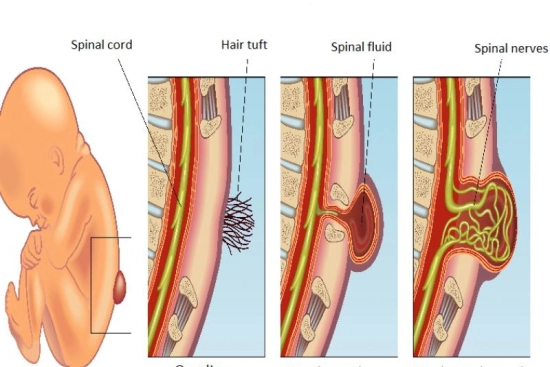
The spectrum of spina bifida encompasses distinct presentations, each carrying different implications for long-term function and medical requirements:

TypeDefinitionClinical FeaturesManagement Approach
OccultaIsolated vertebral gap without spinal cord involvement.Asymptomatic in most cases; incidental finding on imaging.Watchful monitoring; surgical intervention seldom necessary.
MeningoceleProtrusion of meningeal tissue through the spinal defect.Fluid collection visible at birth; neurological deficits typically absent or minimal.Prompt surgical repair; outcomes are ordinarily favorable.
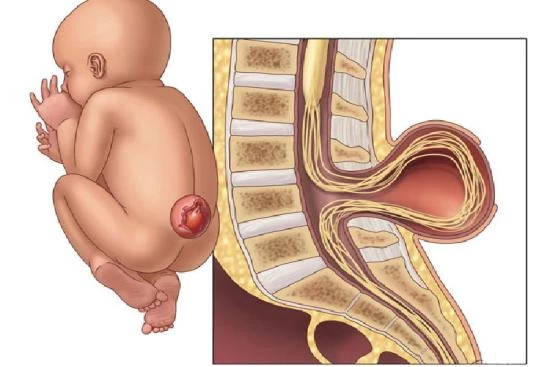
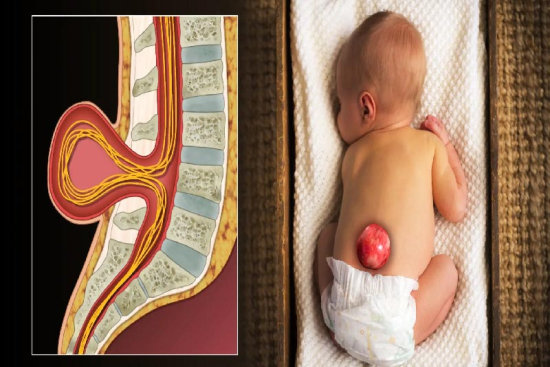
Myelomeningocele (open spina bifida)Neural tissue and meninges herniate through the vertebral opening.Paralysis or diminished motor control below the defect level; loss of bladder/bowel function; hydrocephalus frequently present; Chiari malformation common.Surgical intervention (prenatal or postnatal) coupled with multidisciplinary support throughout childhood and adulthood.
Closed spinal dysraphismSubdermal abnormalities including tethered spinal cord or fatty masses.Symptoms may emerge gradually during growth phases, back discomfort, leg weakness, urinary issues.Ongoing neuroimaging surveillance or surgical intervention if progressive symptoms develop.

Risk factors

Neural tube development depends on multiple variables. Researchers have identified several modifiable and non-modifiable factors that heighten susceptibility, though the complete picture remains incompletely understood.

Risk reduction hinges on adequate folate supplementation before conception and routine prenatal medical oversight.

What are the symptoms of spina bifida and how is it diagnosed?

Presentation varies significantly based on lesion type and anatomical extent. Detection may occur before delivery, at birth, or later during childhood development.

Prenatal detection

The majority of open myelomeningoceles surface during standard ultrasound imaging performed between 18 and 20 weeks gestation.

Characteristic sonographic findings include:

These indirect markers reflect Chiari II malformation, a frequent accompaniment of open myelomeningocele.

Complementary diagnostic modalities:

Signs visible at delivery or after birth

Open lesions announce themselves unmistakably:

Occulta: typically silent

Most individuals remain entirely asymptomatic. The condition is frequently stumbled upon incidentally during spinal imaging performed for unrelated reasons. A minority develop tethered cord, a condition where neural tissue becomes abnormally adhered, leading to symptoms that appear during later childhood: back pain, leg weakness, or changes in bladder function.

Spina Bifida treatment options in Turkey

Spina bifida management extends far beyond any single operation. It represents a coordinated, evolving care pathway spanning from birth through adulthood, with interventions adjusted as the child develops and circumstances change.
Turkish neuroscience centers accredited under international standards bring together fetal surgeons, pediatric neurosurgeons, pediatric urologists, orthopedic specialists, and rehabilitation medicine experts into unified teams.

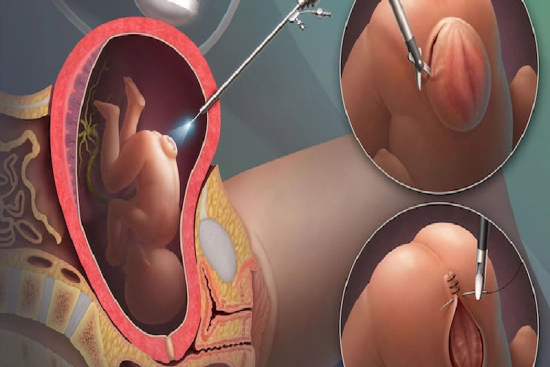
Fetal surgical repair (in utero closure)

Recent decades have witnessed a paradigm shift: prenatal surgical intervention now offers the possibility of closing myelomeningocele defects before birth, typically between 19 and 26 weeks of gestation. The landmark MOMS Trial demonstrated substantial benefits, shunt dependency dropped from 82% to approximately 40%, motor outcomes improved measurably at 2.5 years, and hindbrain herniation rates decreased notably. Yet fetal surgery demands highly specialized infrastructure and carries inherent maternal and fetal risks, including preterm labor.

Neonatal closure (postnatal repair)

When fetal intervention is unavailable or contraindicated, repair occurs urgently within 24 to 72 hours post-delivery. This procedure seals the open spinal sac, shields exposed nervous tissue, and prevents life-threatening bacterial meningitis. Earlier closure generally correlates with superior neurological preservation; speed matters critically.

Shunt placement for excess brain fluid

Ventriculoperitoneal shunting becomes necessary when hydrocephalus develops, affecting 70 to 90 percent of myelomeningocele cases. The device diverts cerebrospinal fluid away from brain ventricles into the abdominal cavity. An alternative technique, endoscopic third ventriculostomy, bypasses implantation altogether in suitable anatomical contexts, eliminating long-term foreign body concerns.

Release of tethered spinal cord

Growing children sometimes experience cord entrapment at the original repair site. This tethered cord can trigger progressive weakness, pain, or loss of function. Pediatric neurosurgeons perform delicate release procedures to prevent or reverse neurological decline as the spine lengthens during development.


Bladder and bowel management

Neurogenic bladder demands lifelong oversight; neglect causes permanent kidney scarring. Clean intermittent catheterization initiated from birth remains the foundational approach. Reconstructive urological procedures, bladder expansion, continent catheterizable pouches, emerge as adolescents mature and develop continence goals.

Orthopedic and physical rehabilitation

Children with myelomeningocele thrive through coordinated physiotherapy optimizing motor abilities, orthotic supports (braces, adaptive devices) enabling safer mobility, and surgical correction of structural deformities, hip displacement, spinal curvature, clubfoot. Intensive rehabilitation beginning in infancy dramatically enhances functional independence throughout life.

Each child's pathway differs. The clinics partnered with Turquie Santé tailor comprehensive care strategies to individual medical profiles and family circumstances. Consulting with an experienced pediatric neurosurgeon and multidisciplinary team ensures your child receives evidence-based, personalized planning.

Turquie Santé connects families with accredited specialists who design treatment plans reflecting your child's unique needs. Contact us to begin exploring therapeutic options suited to your situation.

Share this page

Our assistants help you to get the best options in Spina Bifida treatment