

Turquie Santé
Last update : 07/09/2026

Refractive surgery in Turkey | Cost-effective, High-quality techniques

Access internationally certified healthcare with substantial savings compared with European prices.

Get a free quote
Refractive surgery Turkey
95%
Recommendations
819+
patient reviews
Patient icon
600K+
Requests received since 2018
Clinique icon
38
Clinics
Trustpilot icon
4.6
Ville icon
5
Cities
Docteurs icon
1K+
Recognized doctors

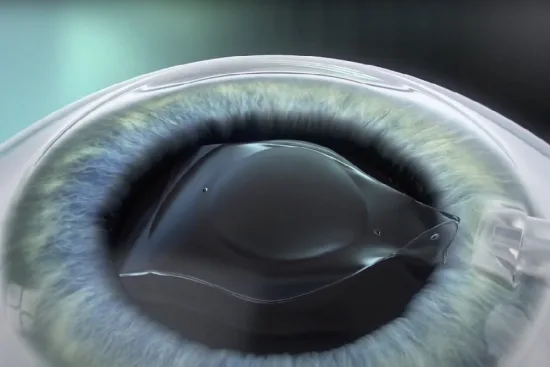
Refractive surgery in Turkey encompasses several advanced techniques, including ICL surgery, lens replacement, and PRK, each designed to correct different vision problems and restore clear sight without glasses or contact lenses. Unlike LASIK, ICL implants a lens inside the eye without reshaping the cornea, making it an option for patients with thin corneas or very high prescriptions who wouldn't otherwise qualify for laser correction.

Whether you're seeking treatment for myopia, hyperopia, astigmatism, or presbyopia, the clinics partnered with Turquie Santé offer comprehensive eye surgery options at significantly lower costs than Western Europe, with highly experienced ophthalmologists and state-of-the-art technology. A preoperative consultation determines which technique fits your specific vision profile, budget, and eligibility.

Cost of refractive surgery in Turkey

Turkey has emerged as a leading destination for affordable, high-quality eye surgery. Partner clinics in major cities like Istanbul, Ankara, and Izmir offer LASIK and other refractive procedures at a fraction of Western costs, typically ranging from $1,400 to $2,400 per eye. This all-inclusive fee covers comprehensive preoperative testing, the surgical procedure itself, and postoperative follow-up care through the critical healing phase.

Cost variations depend primarily on the technique selected (surface ablation versus implant-based correction),the complexity of your refractive error, and whether enhancements are needed. Many international patients combine surgery with a short medical tourism package, making the financial case even more compelling.

Risks and Side Effects

  • Eye dryness.
  • Lacrimation.
  • Degradation of night vision.

Why choose Refractive surgery with Turquie Santé ?

Chirurgien icon

Expert surgeons and internationally certified hospitals

Économie icon

Substantial savings compared with European prices

Organisation icon

Medical stay organized from A to Z

Prix icon

Direct prices without commission

Résultat icon

Free assistance

All about your Refractive surgery in Turkey
Overview
Important to know
Benefits
Payment

Verified reviews : 819

Intervention or treatment's duration :

  • 10 to 15 minutes.

Recovery time :

  • Resumption of most daily activities often occurs within 1 to 2 days for many procedures.
  • Initial vision improvement is rapid, with reduced or eliminated dependence on glasses or contact lenses.
  • Full visual stabilization typically occurs within one to three months, though subtle refinements may continue for up to six months depending on the technique.

Before treatment

  • Do not wear lenses for at least two days before the operation.
  • Do not wear makeup on the day of the operation.

During treatment

  • The operation is performed under local anesthesia.

After treatment

  • Use antibiotic and anti-inflammatory eye drops for the first 3 weeks.
  • Using artificial tears to prevent dry eyes.
  • Wearing tinted glasses (sunglasses) during the first weeks after the operation.
  • Do not use the shower jet in the eyes, and avoid the steam during the first weeks after the operation.
  • Do not wear make-up for 10 days after the operation.

Highly qualified professionals in accredited institutions.


We assist you before, during, and after your trip


Book with full transparency, no hidden fees or commissions.

You will pay your clinic directly using these available methods:
Transfer

Verified testimonials from our patients

How it works ?

2
Services
We look for the best option for your case & budget
3
Hospital
Evaluating a care plan with the best quote
4
airplane
Making appointments & Organization of your trip
5
Health care
Ongoing support until you return home

Get a free medical opinion on Refractive surgery with our 38 Recognized Clinics

Certifications :

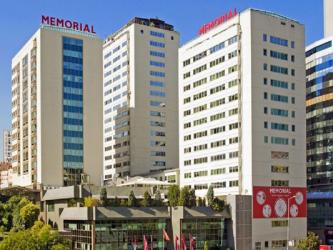
TÜV SÜD ISO 9001:2008 - Quality Management Certification MEMORIAL Şişli
JCI - Joint Commission International MEMORIAL Şişli
International Organization for Standardization (ISO) MEMORIAL Şişli
MEMORIAL Şişli
Istanbul, Turkey
4.5 / 5
4.5(34 Reviews)
Price on request

Certifications :

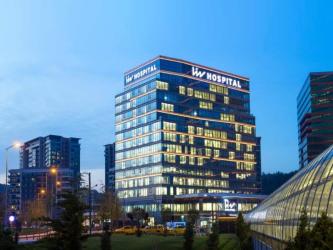
JCI - Joint Commission International LIV Vadistanbul
SRC — Center of Excellence (Colorectal Surgery) LIV Vadistanbul
Eurocrine — Endocrine Surgery Quality Registry LIV Vadistanbul
International Organization for Standardization (ISO) LIV Vadistanbul
LIV Vadistanbul
Istanbul, Turkey
Spec. MD. Deniz Marangoz

Spec. MD. Deniz Marangoz

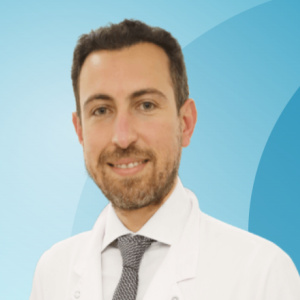
Main Specialty : Ophthalmology Notable Trainings : Uludag University, Bursa; Kartal Training and Research Hospital, Istanbul; Vance Thompson Vision Center, SD, USA; Beyoglu Eye Training and Research Hospital, Istanbul Mastered Techniques : Intraocular ... Read more
Prof. Dr. Rıfat Rasier

Prof. Dr. Rıfat Rasier

Main Specialty : Ophthalmology Years of Experience : 13 years. Notable Education : PhD in Biomedical Engineering, Master of Science in Biomedical Engineering, Doctorate of Medicine, Residency in Ophthalmology Mastered Techniques : Lasers, cataract and ... Read more
4.4 / 5
4.4(11 Reviews)
Price on request

Certifications :

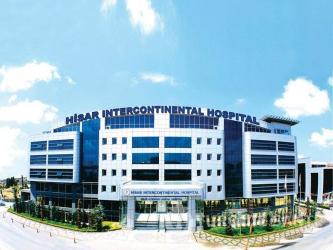
JCI - Joint Commission International HISAR INTERCONTINENTAL
International Organization for Standardization (ISO) HISAR INTERCONTINENTAL
TÜV SÜD ISO 9001:2008 - Quality Management Certification HISAR INTERCONTINENTAL
HISAR INTERCONTINENTAL
Istanbul, Turkey
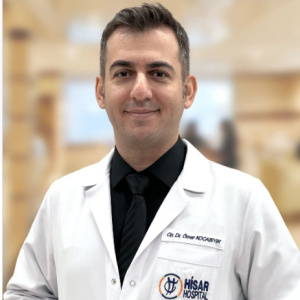
PROF. ÖMER KAMİL DOĞAN, M.D.

PROF. ÖMER KAMİL DOĞAN, M.D.

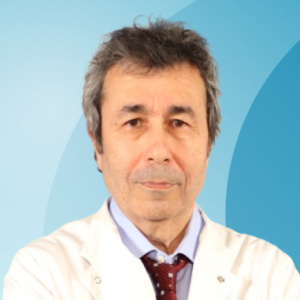
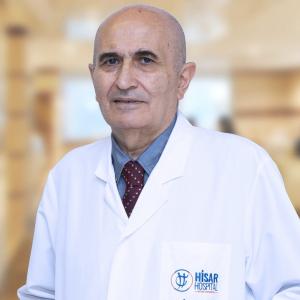
Main specialty: Ophthalmology (cataract surgery, glaucoma, corneal transplant, conjunctival diseases) Years of experience: Over 35 years Notable training: Degree in medicine and specialization in ophthalmology at Ankara University, Associate Professor ... Read more
Op. Doctor Yalçın İşcan

Op. Doctor Yalçın İşcan

Main Specialty : Ophthalmology Years of Experience : 18 years. Notable Education : Graduated from Istanbul Medical Faculty in 2005, specialization at Dr. Sadi Konuk Training and Research Hospital in Bakırköy in 2010. Mastered Techniques : Cataract ... Read more
4.4 / 5
4.4(221 Reviews)
Price on request

Certifications :

TÜV SÜD ISO 9001:2008 - Quality Management Certification LOKMAN HEKIM ISTANBUL
JCI - Joint Commission International LOKMAN HEKIM ISTANBUL
International Organization for Standardization (ISO) LOKMAN HEKIM ISTANBUL
LOKMAN HEKIM ISTANBUL
Istanbul, Turkey
Exp. Ömer Faruk ÖĞE M.D

Exp. Ömer Faruk ÖĞE M.D

Main Specialty : Ophthalmology Years of Experience : 17 years. Notable Training : İstanbul University (1994 – 2000),Beyoğlu Eye Training and Research Hospital (2001 - 2005) Mastered Techniques : Cataract, Refractive Surgery, Oculoplasty, Strabismus, ... Read more
4.7 / 5
4.7(67 Reviews)
Price on request

Certifications :

International Organization for Standardization (ISO) LIV Ulus
AOSpine International — Global Spine Care Organization LIV Ulus
Eurocrine — Endocrine Surgery Quality Registry LIV Ulus
SRC — Center of Excellence (Colorectal Surgery) LIV Ulus
LIV Ulus
Istanbul, Turkey
Prof. Dr. Betül Tuğcu

Prof. Dr. Betül Tuğcu

Main specialty : Ophthalmology Years of experience : 27 years. Significant training : MD, Istanbul University Cerrahpasa, Faculty of Medicine (English),1996; Ophthalmology specialist training at Haseki Training and Research Hospital and Bezmialem Valide ... Read more
Prof. Dr. Vedat Kaya

Prof. Dr. Vedat Kaya

Main Specialty : Ophthalmology Notable Training : Faculty of Medicine, Ankara University Mastered Techniques : Cornea, Anterior Segment Surgery, Refractive Surgery Notable Achievements : International papers: 30, National papers: 30+, Book in Turkish: 1 ... Read more
4.7 / 5
4.7(1 Reviews)
Price on request

Certifications :

TÜV SÜD ISO 9001:2008 - Quality Management Certification DERINDERE
DERINDERE
Istanbul, Turkey
4.0 / 5
4.0(2 Reviews)
Price on request

Certifications :

TÜV SÜD ISO 9001:2008 - Quality Management Certification DUNYAGOZ ETILER
JCI - Joint Commission International DUNYAGOZ ETILER
International Organization for Standardization (ISO) DUNYAGOZ ETILER
DUNYAGOZ ETILER
Istanbul, Turkey
Op. Dr. Zehra Karaagac

Op. Dr. Zehra Karaagac

Main specialty: Ophthalmology, oculoplastic surgery Years of experience: Over 9 years Notable training: Graduate of Akdeniz University, specialization in ophthalmology (2016) Professional background / Notable achievements: Former practitioner at ... Read more
Op. FEVZI AKKAN, MD

Op. FEVZI AKKAN, MD

Main specialty: Vitreoretinal surgery, cataract surgery, refractive surgery Years of experience: Over 23 years Notable training: Graduated in medicine from Istanbul University (1997),specialization in ophthalmology at Istanbul Training and Research ... Read more
4.1 / 5
4.1(31 Reviews)
Price on request

Certifications :

JCI - Joint Commission International HIZMET By Memorial
International Organization for Standardization (ISO) HIZMET By Memorial
TÜV SÜD ISO 9001:2008 - Quality Management Certification HIZMET By Memorial
HIZMET By Memorial
Istanbul, Turkey
4.0 / 5
4.0(2 Reviews)
Price on request

Certifications :

TÜV SÜD ISO 9001:2008 - Quality Management Certification Florence Nightingale
JCI - Joint Commission International Florence Nightingale
Florence Nightingale
Istanbul, Turkey
4.7 / 5
4.7(10 Reviews)
Price on request

Certifications :

JCI - Joint Commission International AMERICAN HOSPITAL
TÜV SÜD ISO 9001:2008 - Quality Management Certification AMERICAN HOSPITAL
International Organization for Standardization (ISO) AMERICAN HOSPITAL
AMERICAN HOSPITAL
Istanbul, Turkey
4.7 / 5
4.7(5 Reviews)
Price on request

Certifications :

JCI - Joint Commission International MEMORIAL Antalya
TÜV SÜD ISO 9001:2008 - Quality Management Certification MEMORIAL Antalya
International Organization for Standardization (ISO) MEMORIAL Antalya
MEMORIAL Antalya
Antalya, Turkey
Özlem Tök

Özlem Tök

Main Specialty : Ophthalmology Years of Experience : 25 years. Notable Training : Specialization in ophthalmology at the Ankara Education and Research Hospital (1999-2002),Medical training at Ankara University (1992-1998). Notable Achievements : ... Read more
4.7 / 5
4.7(1 Reviews)
Price on request

Certifications :

TÜV SÜD ISO 9001:2008 - Quality Management Certification MEDIPOL UNIVERSITY HOSPITAL
JCI - Joint Commission International MEDIPOL UNIVERSITY HOSPITAL
4.0 / 5
4.0(1 Reviews)
Price on request

Certifications :

JCI - Joint Commission International MEMORIAL ANKARA
International Organization for Standardization (ISO) MEMORIAL ANKARA
TÜV SÜD ISO 9001:2008 - Quality Management Certification MEMORIAL ANKARA
MEMORIAL ANKARA
Ankara, Turkey
4.3 / 5
4.3(2 Reviews)
Price on request

Certifications :

JCI - Joint Commission International MEMORIAL Bahçelievler
International Organization for Standardization (ISO) MEMORIAL Bahçelievler
Leed Platinium Certificate MEMORIAL Bahçelievler
TÜV SÜD ISO 9001:2008 - Quality Management Certification MEMORIAL Bahçelievler
MEMORIAL Bahçelievler
Istanbul, Turkey
Nesrin Tutaş Günaydın

Nesrin Tutaş Günaydın

Main Specialty : Ophthalmology Years of Experience : 15 years. Notable Education : Medical degree from Istanbul University, specialization in ophthalmology at Hacettepe University. Mastered Techniques : Cataract surgery, refractive surgery, treatment of ... Read more
4.3 / 5
4.3(23 Reviews)
Price on request

Certifications :

TÜV SÜD ISO 9001:2008 - Quality Management Certification ACIBADEM
International Organization for Standardization (ISO) ACIBADEM
JCI - Joint Commission International ACIBADEM
ACIBADEM
Istanbul, Turkey
Dr. Banu Coşar

Dr. Banu Coşar

Main specialty: Ophthalmology Years of experience: Over 28 years Notable training: Graduate of Hacettepe Faculty of Medicine (1996),ophthalmology specialization at Ankara Numune Hospital (2000),cornea fellowship at Wills Eye Hospital, USA ... Read more
4.6 / 5
4.6(171 Reviews)
Price on request

Certifications :

JCI - Joint Commission International Medistate Hospital
International Organization for Standardization (ISO) Medistate Hospital
ESMO Designated Centres
of Integrated Oncology and Palliative Care Medistate Hospital
TÜV SÜD ISO 9001:2008 - Quality Management Certification Medistate Hospital
Medistate Hospital
Istanbul, Turkey
Price on request

Certifications :

JCI - Joint Commission International DUNYAGOZ ANTALYA
International Organization for Standardization (ISO) DUNYAGOZ ANTALYA
TÜV SÜD ISO 9001:2008 - Quality Management Certification DUNYAGOZ ANTALYA
DUNYAGOZ ANTALYA
Antalya, Turkey
Op.Dr.Hakan Sivrikaya

Op.Dr.Hakan Sivrikaya

Main Specialty : Ophthalmology Years of Experience : 16 years. Notable Education : Istanbul University, Istanbul School of Medicine (1988-1994),Russian Medical Academy, Eye Hospital - Moscow (1994-1998) Mastered Techniques : Phacoemulsification, LASIK, ... Read more
Op. Dr. Mehmet Tahir Şam

Op. Dr. Mehmet Tahir Şam

Main Specialty : Ophthalmology Years of Experience : 27 years. Notable Education : Hacettepe University, Faculty of Medicine (English) 1996 Mastered Techniques : Artisan Iris, Claw Lens Application, EVRS Vitroretinal Surgery Applications, iSCRS, AAO Notable ... Read more
4.7 / 5
4.7(1 Reviews)
Price on request

Certifications :

International Organization for Standardization (ISO) MEMORIAL Ataşehir
JCI - Joint Commission International MEMORIAL Ataşehir
TÜV SÜD ISO 9001:2008 - Quality Management Certification MEMORIAL Ataşehir
National Committee for Quality Assurance (NCQA) MEMORIAL Ataşehir
MEMORIAL Ataşehir
Istanbul, Turkey
4.4 / 5
4.4(9 Reviews)
Price on request

Certifications :

JCI - Joint Commission International DUNYAGOZ ATAKOY
International Organization for Standardization (ISO) DUNYAGOZ ATAKOY
DUNYAGOZ ATAKOY
Istanbul, Turkey
Assoc. Prof. Zerrin Kapicioğlu

Assoc. Prof. Zerrin Kapicioğlu

Main specialty: Ophthalmology (glaucoma, eye surgery, pediatric care) Years of experience: 27 years Notable training: Graduate of Hacettepe University Faculty of Medicine, specialization in ophthalmology at 19 Mayıs University, academic training at ... Read more
Op. Dr. Gokay Gunay

Op. Dr. Gokay Gunay

Main Specialty : Ophthalmology Years of Experience : 22 years. Notable Training : 1997 - 2001 Istanbul University Çapa Faculty of Medicine Eye Department of Diseases, 1991 - 1997 Istanbul University Cerrahpaşa Faculty of Medicine Languages Spoken : ... Read more
4.6 / 5
4.6(9 Reviews)
Price on request

Certifications :

International Organization for Standardization (ISO) DUNYAGOZ ALTUNIZADE
JCI - Joint Commission International DUNYAGOZ ALTUNIZADE
DUNYAGOZ ALTUNIZADE
Istanbul, Turkey
Price on request

You have consulted 7 / 35 Hospitals

Related medical articles

Everything you will need for your medical trip

Medical opinion and estimates

Expert opinions and cost estimates

Pre-trip consultations

Understand your procedure before traveling.

Visa assistance

We assist our patients in obtaining their visas from the consulates.

Translation of your medical reports

We guarantee free and certified translation of your medical documents from all languages.

VIP Transport

Your transfers will be provided from the airport and your hotel.

Continuous Follow-up

You will be assisted by your attending doctor even after returning to your country, via videos or messages.

Experiences of our patients – Turquie Santé

Emily White : Medical Content Team Manager at Turquie Santécheck

Written by

Emily White

This content complies with the editorial policy of Turquie Santé. It was written by Emily White, Head of the Editorial Team, who has over 11 years of experience in scientific research and clinic management in Turkey. She ensures the reliability of medical information while making complex data accessible to everyone.

What is refractive surgery?

Refractive surgery refers to a range of laser-based eye procedures designed to reduce or eliminate dependence on glasses and contact lenses. The goal is straightforward: restore visual independence. By precisely reshaping the cornea, these techniques address the underlying refractive defects that cause blurred vision.
The conditions it corrects, myopia (nearsightedness),hyperopia (farsightedness),astigmatism, and presbyopia, affect millions worldwide. Each requires a slightly different approach, which is why modern refractive centers in Turkey now offer multiple surgical pathways rather than a one-size-fits-all solution.

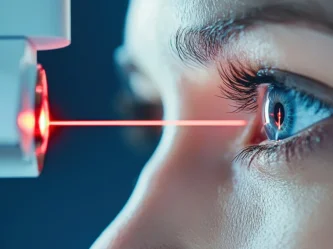
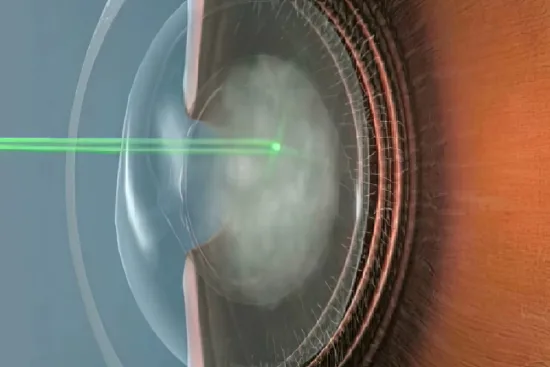
Laser technology has evolved dramatically over the past decade. Contemporary methods such as LASIK surgery, PRK, and ReLEx SMILE deliver durable, predictable results, though outcomes naturally vary based on initial corneal anatomy, surgeon experience, and patient compliance during recovery. What makes these approaches effective is their precision: computer-guided laser systems adjust the corneal profile to micrometre tolerances, targeting the exact refractive error unique to each eye.

When is refractive surgery a good option?

Refractive surgery isn't appropriate for everyone. Eligibility depends on a constellation of anatomical, physiological, and clinical factors, which is precisely why thorough preoperative assessment matters so much.

Age is the starting point. Candidates must be at least 18 years old (some surgeons prefer 21) with a stable refraction for at least 12 months. Why? Because the eyes continue changing during teenage years, and operating on an unstable prescription often leads to disappointing outcomes.

A comprehensive preoperative evaluation goes far beyond a standard eye exam. It includes corneal pachymetry (measuring corneal thickness),topography (mapping the corneal surface),wavefront analysis, and detailed medical and ocular history. This evaluation assesses:

  • Overall eye health and presence of pathologies such as cataracts, glaucoma, or retinal conditions.
  • Corneal integrity: thickness, curvature, and absence of ectatic conditions.
  • Refractive stability: whether myopia, hyperopia, or astigmatism has plateaued.

Your ophthalmologist will discuss candidacy candidly. They explain not just the benefits, freedom from corrective lenses, often within 24 hours, but realistic risks and whether alternative approaches (such as refractive lens exchange or intraocular lens implants for certain presbyopia cases) might suit your situation better.

What are the contraindications?

Certain eye and systemic conditions make refractive surgery temporarily or permanently unsuitable. Understanding these contraindications helps explain why not every person with refractive error qualifies for laser correction.

  • Corneal conditions linked to autoimmune disease, rheumatoid arthritis, psoriasis, Crohn's disease, or structural abnormalities such as keratoconus. These compromise healing and increase regression risk.
  • Ocular surface disease in its severe form, particularly dry eye syndrome. Laser surgery worsens ocular dryness temporarily and sometimes persistently.
  • Active ocular pathology: uncontrolled glaucoma, dense cataracts, or advanced macular degeneration. Surgery won't help if the retina itself is damaged.
  • Systemic illness poorly controlled, unmanaged diabetes, for example, impairs corneal healing and increases complication rates.
  • Pregnancy or breastfeeding.** Vision naturally fluctuates during pregnancy; surgery is deferred until refractive stability resumes (typically 3 months postpartum).
  • Unrealistic expectations. Patients expecting 20/10 vision or perfect night driving may experience disappointment even with successful surgery.

Common refractive surgery techniques

Multiple surgical approaches exist for vision correction. The surgeon selects one based on your refraction strength, corneal anatomy, and lifestyle needs. Broadly speaking, they fall into three categories, each with distinct mechanics and recovery profiles.

Surface ablation techniques

These reshape the cornea directly using excimer laser energy. Speed and safety distinguish them, though healing takes slightly longer than flap-based methods.

  • LASIK: The most performed technique globally. A microkeratome or femtosecond laser creates a corneal flap, the underlying tissue is reshaped, and the flap is repositioned. Recovery to functional vision occurs within 24 hours in most cases.
  • PRK (photorefractive keratectomy): The corneal surface layer is gently ablated before laser reshaping. No flap means stronger corneal architecture post-op, useful for thin-cornea patients, though visual recovery spans 3 to 7 days.
  • LASEK: A hybrid approach. The epithelium is loosened with alcohol, lifted aside, the stroma is reshaped, and the epithelium is repositioned. It offers better corneal strength than LASIK with faster recovery than PRK, approximately 4 to 5 days.
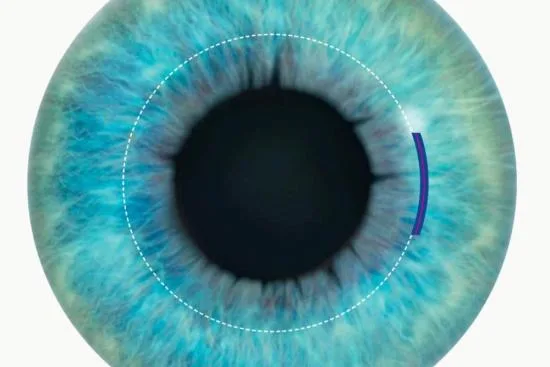
  • SMILE (ReLEx SMILE): A femtosecond laser creates a lenticule (a small disc of corneal tissue) within the cornea. It's extracted through a 2 to 3 mm incision. Less invasive, minimal flap trauma, increasingly popular for high myopia correction.

Intraocular implant techniques

These place a synthetic lens inside the eye, ideal for severe refractive errors or when surface techniques are unsuitable. Recovery is measured in weeks rather than days.

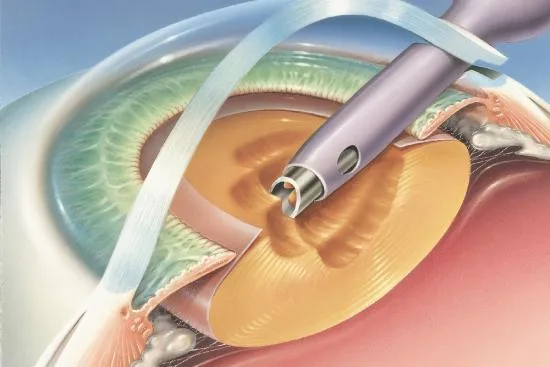
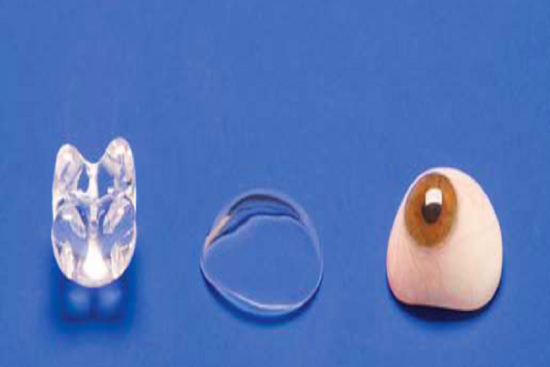
  • RLE (Refractive Lens Exchange): The eye's natural lens is surgically removed and replaced with a custom intraocular implant. Highly effective for high hyperopia and presbyopia; irreversible but solves multiple problems (cataract prevention included).
  • Corneal inlay implantation: A microscopic ring or disc is positioned within the cornea to alter optical properties. Used selectively for presbyopia correction or moderate refractive errors.
  • ICL (Implantable Collamer Lens): A phakic implant placed in front of the natural lens. Preserves accommodation and allows explantation if needed, advantages for younger patients with extreme myopia.

Obsolete or rarely used methods

Some older techniques have largely been abandoned due to unpredictability or complications. They appear occasionally in specific niche cases, but modern surgeons prefer newer alternatives.

  • Radial keratotomy: Radial incisions were made in the peripheral cornea to flatten the center. Results were inconsistent, and many patients developed progressive hyperopia decades later.
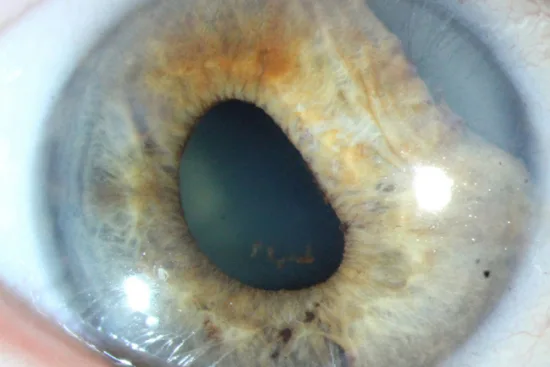
  • Intrastromal corneal ring segments: Small rings inserted into the corneal stroma to reshape it. Limited predictability compared to laser methods; still occasionally used for keratoconus management.

Selecting the right technique requires discussion with your refractive surgeon. They evaluate corneal thickness, anterior chamber depth, pupil size, and visual goals to recommend the safest and most effective option for your unique anatomy.

The refractive surgery process

Preparation begins before surgery day. Stop wearing contact lenses 48 hours prior (or longer if recommended),this lets your cornea return to its natural curvature, ensuring accurate measurements.

On the morning of your procedure, both eyes are typically corrected in a single session. You receive topical anesthesia (numbing drops) and possibly mild sedation for relaxation. Local anesthesia means you remain awake but completely comfortable.

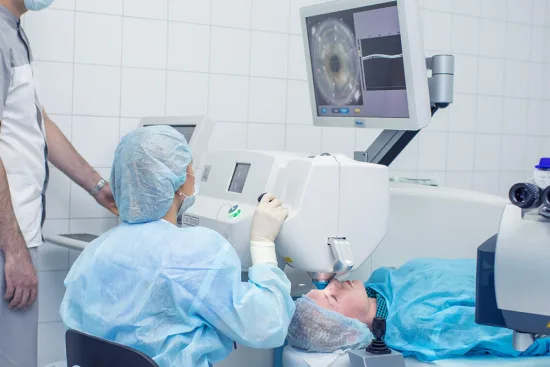
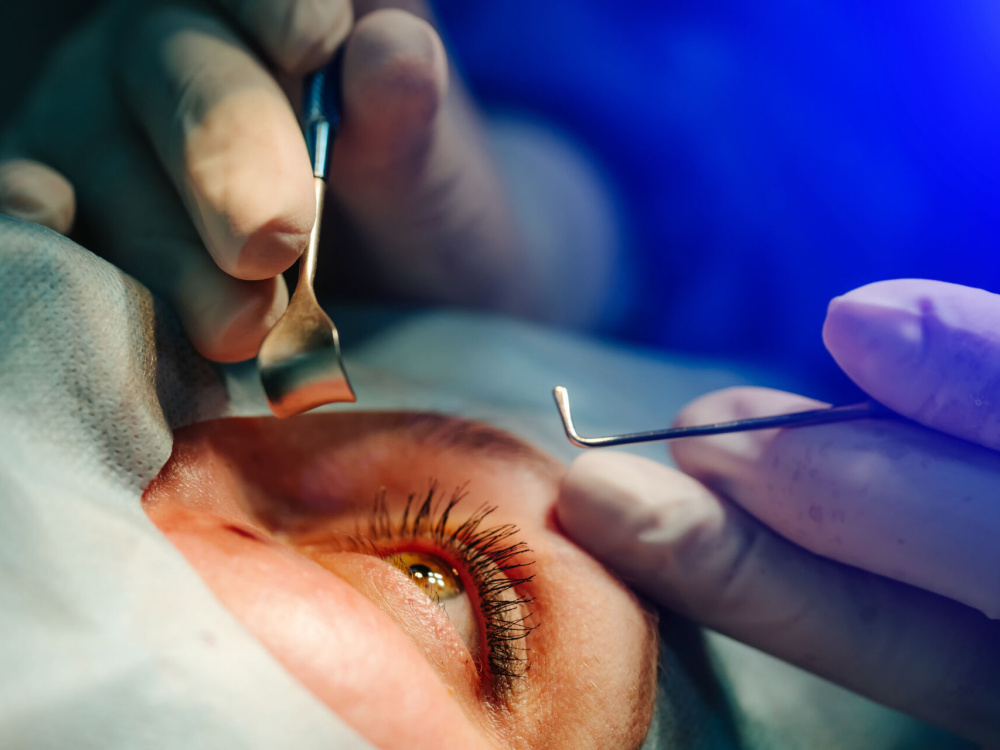
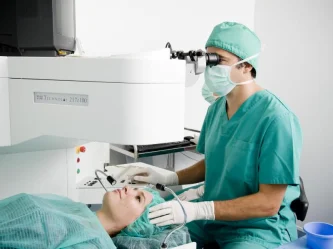
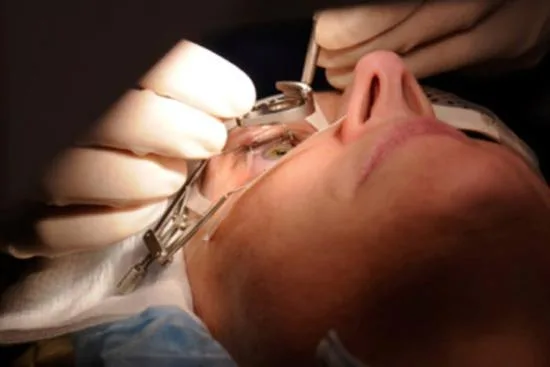
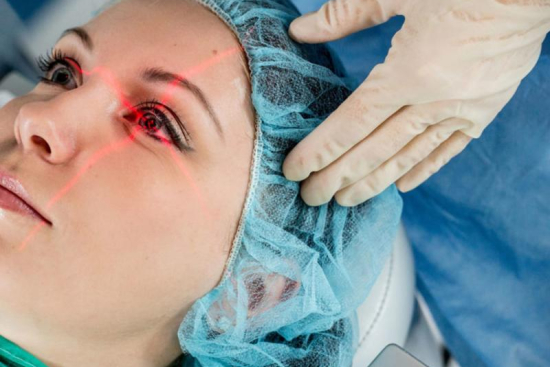
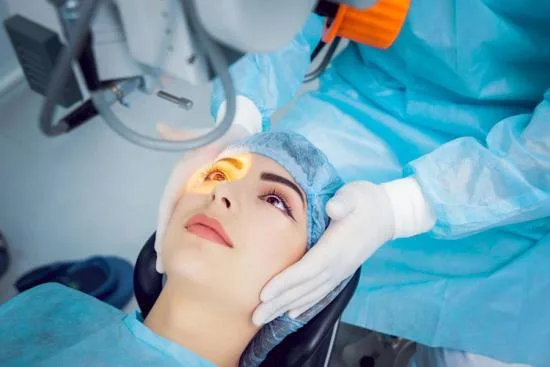
During surgery, usually 10 to 15 minutes per eye, a speculum holds your eyelids open. You focus on a target light while the surgeon positions the laser. Computer guidance tracks your eye's position thousands of times per second, ensuring precision even if your eye moves slightly. The laser fires in programmed pulses, gradually reshaping corneal tissue. You may notice a faint smell; this is normal tissue vaporization.

Once laser ablation finishes, a protective contact lens is placed on your eye to shield it during initial healing. You'll be given detailed aftercare instructions: eye drops on a strict schedule (usually every 15 to 30 minutes for the first day),activity restrictions for 3 to 7 days depending on the technique, and scheduled follow-up visits at 24 hours, 1 week, 1 month, and 3 months post-op.

Risks and potential side effects

Refractive surgery ranks among the safest elective procedures, with serious complications affecting fewer than 1% of patients. That said, temporary and occasionally persistent side effects do occur, understanding them helps set realistic expectations.

Early, reversible effects

Most patients experience mild discomfort during the first week. These typically resolve completely within days to weeks:

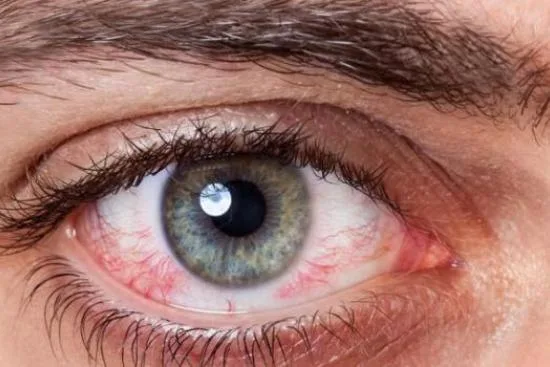
  • Dry eyes: Grittiness, sandy sensation, or foreign body feeling, extremely common. Artificial tears (preservative-free) usually provide relief within 2 to 4 weeks as tear production normalizes.
  • Light sensitivity and glare: Discomfort in bright environments, halos around lights, or starbursts around car headlights at night. Sunglasses help; symptoms fade as the cornea stabilizes.
  • Fluctuating or blurred vision: Vision may shift hourly during the first 24 hours, then gradually sharpen. Avoid reading or screen time initially.
  • Tearing and mild discomfort: Often worse within 8 to 12 hours, then improves rapidly with prescribed drops.

Longer-term considerations

In the weeks and months following surgery, some patients notice:

  • Night halos and glare: Particularly after correction of high myopia. The effect usually diminishes as the cornea continues healing, though mild halos may persist in a small percentage of patients (approximately 5 to 10%).
  • Refractive regression: Very rarely, mild myopia gradually returns over months or years. A second treatment (enhancement) can address this, though most surgeons wait at least 3 to 6 months before retreatment.
  • Residual astigmatism: Occasionally, slight astigmatism remains or develops. Glasses or contact lenses correct it, or enhancement surgery is considered.

LASIK-specific complications

Because LASIK involves flap creation, flap-related issues can occur, though they're uncommon with modern femtosecond laser technology:

  • Flap-related complications: Delayed epithelialization, striae (wrinkles),or debris under the flap, managed conservatively or by flap repositioning.
  • Diffuse lamellar keratitis (DLK): Inflammation in the flap interface, causing grittiness and blurred vision. Diagnosed by slit-lamp examination and treated with intensive steroid drops over 1 to 2 weeks.

  • Epithelial ingrowth: Surface cells migrate under the flap. Rare, but detected early via follow-up exams and managed by flap lifting and careful cleaning.

Serious vision-threatening complications (infection, corneal scarring, ectasia) remain exceptionally rare when performed by experienced surgeons using modern equipment and proper patient selection.
Refractive surgery FAQ in Turkey

How long do you need to stay in Turkey for refractive surgery?

A stay of 3 to 5 days is generally sufficient to perform the procedure, complete immediate postoperative check-ups, and ensure a safe return.

What is the age limit for refractive surgery?

Refractive surgery is generally recommended from the age of 18, once vision has stabilized. There is no strict upper age limit, but older patients must be evaluated for conditions such as presbyopia or cataracts before the procedure.

Can all ophthalmologists perform eye surgery?

No, only ophthalmologists specialized in eye surgery and trained in specific techniques are qualified to perform surgical procedures. 

Turquie Santé will guide you to the most reputable ophthalmologists in Turkey to ensure safety and quality of care.

What is the risk percentage of becoming blind after refractive surgery?

The risk of total blindness after refractive surgery is exceedingly rare, with no reported cases of total blindness directly caused by the procedure itself, especially when performed by an experienced surgeon in a recognized clinic.

What precautions should be taken before eye surgery?

Before refractive eye surgery, it is important to stop wearing contact lenses, undergo a complete ophthalmological examination, avoid makeup and alcohol before the procedure, and strictly follow the surgeon’s instructions to ensure safety and success.

Procedures available for this specialty

Share this page

Our assistants help you to get the best options in Refractive surgery