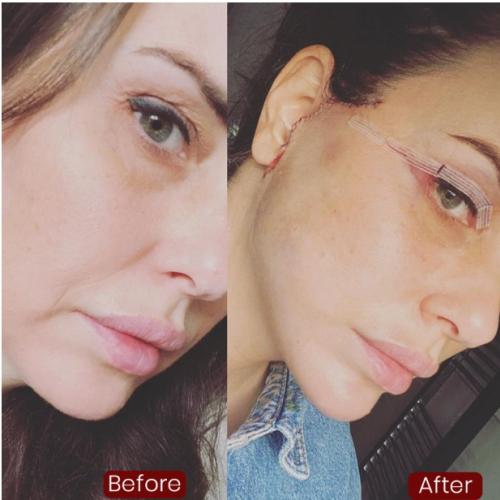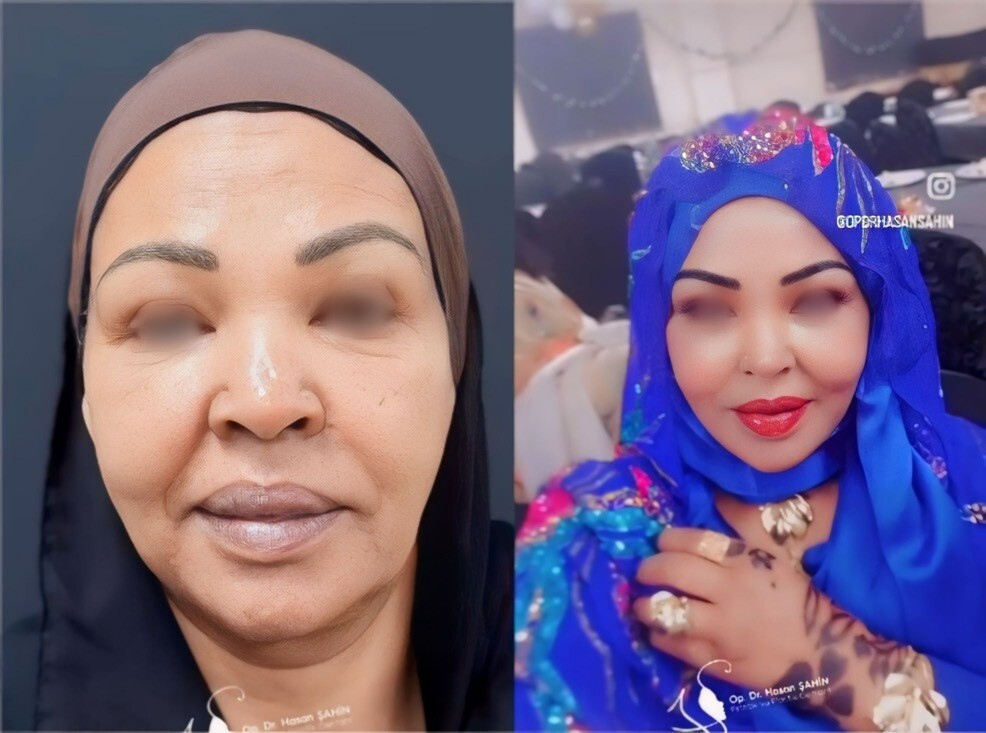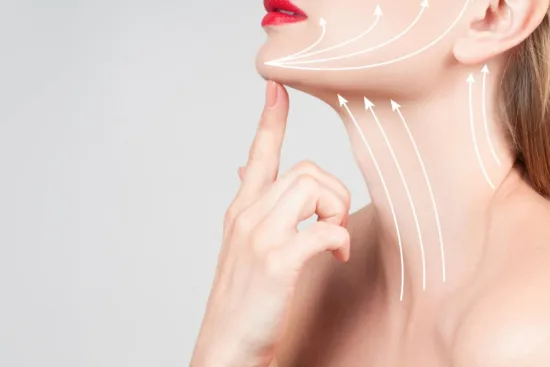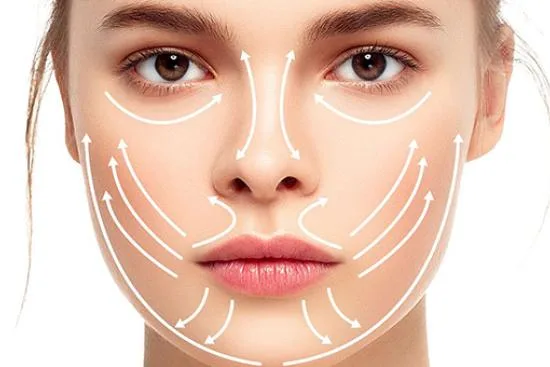



The ponytail lift is a minimally invasive facial rejuvenation technique that repositions the tissues of the face and neck upward using sutures, tensor threads and sometimes filler injections. The name comes from the effect you get when you pull your hair back tightly. It is done as an outpatient procedure under local anesthesia and takes 45 minutes to 2 hours.
Unlike a full surgical facelift, it does not stretch the skin heavily: the effect is more subtle and natural. It is aimed at patients of about 35 to 65 with moderate laxity (dropping cheeks, slight neck sagging, deep nasolabial folds). There is no fixed price: the cost depends on the area treated, the type of threads, the amount of filler and the clinic, and a written quote is sent after your file is reviewed.
Main risks: bruising, swelling and slight asymmetry; more rarely hematoma, infection, wider scars, or a visible or palpable thread; exceptionally nerve injury or skin necrosis. Results appear in 2 to 3 weeks and refine up to 2 to 3 months; the effect is estimated at 3 to 5 years depending on the patient, and touch-ups may be needed. The surgeon decides the right technique after examination.
Turquie Santé has your file reviewed by a specialist and sends you a detailed quote from its partner clinics.
How much does a ponytail facelift cost in Turkey?
No fixed price can be given for a ponytail lift without an examination. The cost depends on the area treated, the type of threads, the amount of filler injected and the clinic.
Turquie Santé has your file reviewed by a specialist and then sends you a detailed, personalized written quote with no obligation.
The effect stabilizes after 2 to 3 months; touch-ups (for example injections) may extend the result depending on how the skin evolves.
Risks and Side Effects
- Frequent and temporary: bruising, swelling, local tenderness, slight asymmetry.
- More rare: hematoma (may need drainage),infection, visible or widened scars, palpable or visible thread.
- Exceptional: temporary or lasting nerve injury, skin necrosis.
- Contraindications: poorly controlled autoimmune disease, clotting or healing disorders, active smoking not stopped.