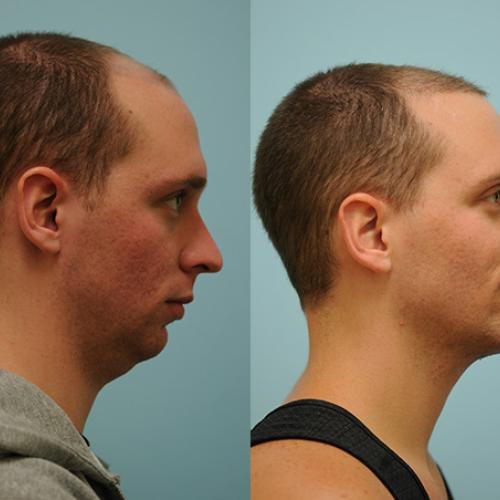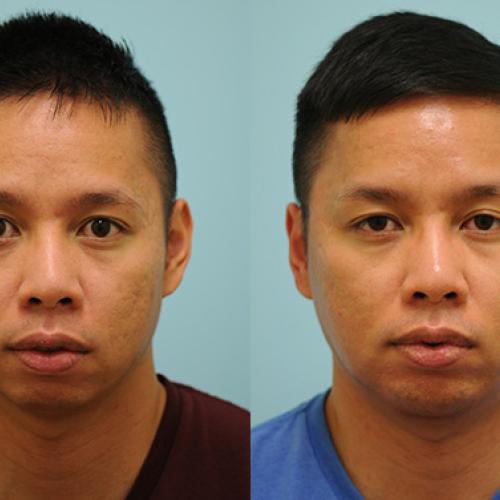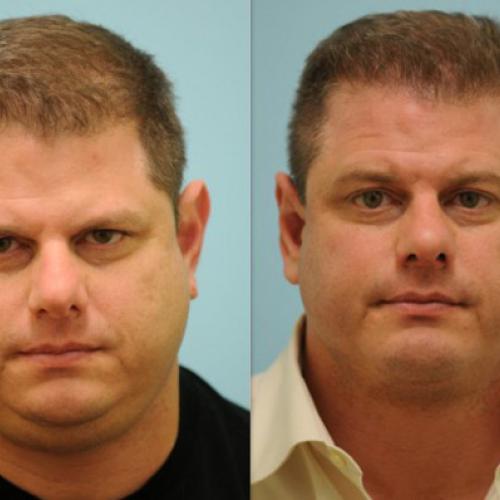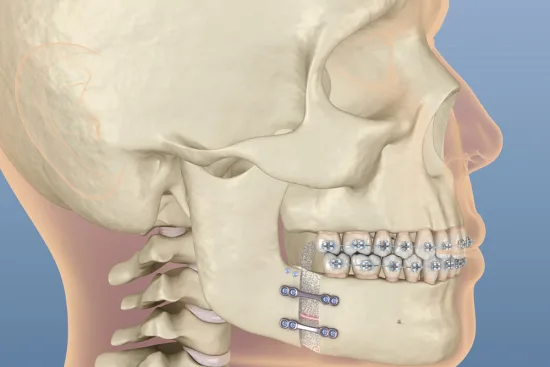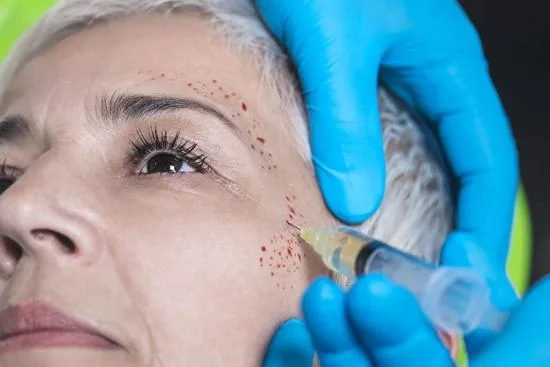



Chin augmentation (mentoplasty) projects a receding or weak chin forward to rebalance the facial profile, using a silicone implant, hyaluronic acid filler or lipofilling. The implant is placed through a small incision inside the mouth or under the chin, in 1 to 2 hours under general anesthesia, usually as an outpatient. Swelling subsides over the first weeks and the final result is visible at around 6 months. In Turkey the average price is about $2,900, depending on the technique.
Fillers are temporary and typically last about 6 to 18 months depending on the product, which lets you test a result before considering surgery; fat transfer can be partly reabsorbed over time. Which technique suits you depends on how much projection you need and on your facial structure, assessed by the surgeon.
Prices of chin augmentation in Turkey
The average cost of chin augmentation in Turkey is approximately $2,900, depending on the chosen technique (filler, implant or fat transfer) and individual requirements. The “package price” shown at the top of the page is an indicative average, not a fixed price: ask that your quote states the technique, the type of anesthesia and what is included.
After the teleconsultation, the surgeon provides a written estimate of fees, including pre- and post-operative care; only that quote is binding. During the consultation, you can:
- Discuss your aesthetic goals and expectations in detail.
- Get an assessment of your chin and its morphology.
- Receive a personalized quote.
Risks and Side Effects
All techniques:
- Swelling, bruising and redness.
- Asymmetry or an unsatisfactory result, sometimes requiring correction.
- Infection at the treatment site.
Chin implant (surgery):
- Injury to the mental nerve, causing numbness or altered sensation of the lower lip and chin, usually temporary but sometimes lasting.
- Hematoma, implant displacement or, rarely, rejection; gradual bone changes under the implant.
- Scarring (visible only if an under-chin incision is used) and risks of general anesthesia.
Hyaluronic acid filler:
- Lumps, delayed inflammatory reactions or nodules.
- Rare but serious: injection into a blood vessel (vascular occlusion),which can cause skin necrosis and requires immediate care. Hyaluronic acid can be dissolved with hyaluronidase if needed.
Fat transfer: partial reabsorption, lumps or fat necrosis, and bruising at the donor site.
Not recommended with an active infection, pregnancy or breastfeeding, known allergy to the product or anesthetic, or uncontrolled illness, until the surgeon confirms it is safe.