

Turquie Santé
Last update : 18/11/2026

Endometrial biopsy | Diagnosis of uterine problems in Turkey

Access care from specialist doctors in Turkey, at prices generally lower than those in Europe.

Free Medical Opinion
Biopsy of the endometrium Turkey
795+
patient reviews
across all procedures

When facing abnormal uterine bleeding, pelvic pain, or postmenopausal bleeding, an accurate diagnosis is paramount. An endometrial biopsy, also known as an endometrial sampling or uterine lining biopsy, is a crucial diagnostic procedure that evaluates the uterine lining to identify or rule out conditions like endometrial hyperplasia and uterine cancer.

In Turkey, particularly in cities like Istanbul, highly skilled gynecologists perform this minimally invasive diagnostic tool with precision. Turquie Santé connects you with leading clinics and supports you from your initial consultation to receiving your final results, ensuring comprehensive care for your gynecological health.

Endometrial biopsy costs in Turkey

For an endometrial biopsy in Turkey, including in cities like Istanbul, indicative prices range from about $400 to $800, covering the consultation, the biopsy procedure and the histological analysis. Prices are indicative; only the personalized quote is binding, and the final cost can vary depending on the clinic and any additional tests required.

With Turquie Santé, you benefit from personalized support throughout your treatment, from the initial consultation and cost estimate to post-procedure follow-up, with care tailored to your needs.

Contact our team today to receive a personalized quote and discuss your procedure with gynecologists in Turkey.

Risks and Side Effects

  • Mild cramping or pain, usually temporary.
  • Light bleeding or spotting, usually resolving within a few days.
  • Pelvic infection (rare),which may present as fever, severe lower belly pain, or foul-smelling vaginal discharge.
  • Rarely, uterine wall perforation.

Why choose Biopsy of the endometrium with Turquie Santé ?

Chirurgien icon

Accredited surgeons and hospitals (JCI, ISO)

Économie icon

Indicative prices, often lower than in Western Europe depending on the case

Organisation icon

Medical stay organized from A to Z

Prix icon

Detailed quote (included / not included) before your stay

Résultat icon

Free review of your file

All about your Biopsy of the endometrium in Turkey
Overview
Alternative care
Benefits
Payment

Intervention or treatment's duration :

  • The biopsy takes about 10 minutes.
  • Results are usually available within several days to about two weeks, depending on the laboratory and any additional tests.

Recovery time :

  • Most women can resume usual activities quickly, as the procedure is short; light bleeding generally settles within a few days.

Alternative treatments
  • Transvaginal ultrasound.
  • Hysteroscopy (with or without targeted biopsy).
  • Dilation and curettage (D&C) in some cases.

Highly qualified professionals in accredited institutions.


We assist you before, during, and after your trip


A detailed quote is presented to you before your stay. Our support is free for the patient and any fees are specified in advance.

You will pay your clinic directly using these available methods:
Transfer
Emily White : Medical Content Team Manager at Turquie Santécheck

Written by

Emily White

This content complies with Turquie Santé's editorial policy. It was written by Emily White, Head of the Editorial Team, who coordinates content creation and updates. She has 11 years of experience in medical communications and supporting international patients in Turkey.

Op. Dr. Elif Esra UYARcheck

Medically reviewed by : Op. Dr. Elif Esra UYAR

Specialty : Gynecology
Diploma no. (TTB) : 104905

Medical review does not replace an individual consultation.

How it works ?

2
Services
We look for the best option for your case & budget
3
Hospital
Evaluating a care plan with the best quote
4
airplane
Making appointments & Organization of your trip
5
Health care
Ongoing support until you return home

Get a free medical opinion on Biopsy of the endometrium with our recognized clinics

Certifications :

JCI - Joint Commission International MEMORIAL Şişli
International Organization for Standardization (ISO) MEMORIAL Şişli
MEMORIAL Şişli
Istanbul, Turkey
Grand Hospital founded in 1999 200 Beds 53,000 square meters  
4.5 / 5
4.5(34 Reviews)

Certifications :

International Organization for Standardization (ISO) LIV Vadistanbul
JCI - Joint Commission International LIV Vadistanbul
LIV Vadistanbul
Istanbul, Turkey
Assoc. Prof. Dr. Çağlar Çetin

Assoc. Prof. Dr. Çağlar Çetin

15 years of experience
Main Specialty : Gynecology and ObstetricsYears of Experience : 15 years.Notable Trainings : Atatürk University Faculty of Medicine-Bachelor’s Degree, Abant İzzet Baysal University Faculty of Medicine Obstetrics and Gynecology- Specialty, Bezmialem Vakıf ... Read more
Op. Dr. Asena Ayar Madenli

Op. Dr. Asena Ayar Madenli

21 years of experience
Main Specialty : Gynecology and ObstetricsYears of Experience : 21 years.Notable Trainings : Ian Donald School Course on Perinatology WCPM Belgrade 2017, Training Course in Advanced Gynaecological Minimal Invasive Surgery, University of Oldenburg, Germany ... Read more
4.4 / 5
4.4(11 Reviews)

Certifications :

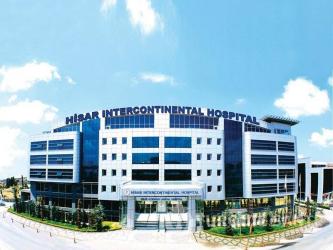
International Organization for Standardization (ISO) HISAR INTERCONTINENTAL
JCI - Joint Commission International HISAR INTERCONTINENTAL
HISAR INTERCONTINENTAL
Istanbul, Turkey
Dr. Fulya Gökdağlı SAĞIR

Dr. Fulya Gökdağlı SAĞIR

13 years of experience
Main Specialty: Gynecology-Obstetrics and Reproductive MedicineYears of Experience: 13 years as a specialist (since 2013).Notable Training: MD, Istanbul University-Cerrahpaşa (2006); OB/GYN residency, Istanbul Medeniyet University (2007-2013); observership ... Read more
Esra TUŞTAŞ HABERAL, MD

Esra TUŞTAŞ HABERAL, MD

29 years of experience
Main specialty: Gynecology and obstetrics Years of experience: Over 25 years Notable training: Medical degree, University of Istanbul (1997); specialization in gynecology-obstetrics, University of Istanbul, Cerrahpaşa Notable achievements: Winner of ... Read more
4.4 / 5
4.4(222 Reviews)

Certifications :

International Organization for Standardization (ISO) LOKMAN HEKIM ISTANBUL
JCI - Joint Commission International LOKMAN HEKIM ISTANBUL
LOKMAN HEKIM ISTANBUL
Istanbul, Turkey
Assoc. Prof. Dr. Ünal İSAOĞLU

Assoc. Prof. Dr. Ünal İSAOĞLU

18 years of experience
Main Specialty : Gynecology Years of Experience : 18 years. Notable Education : MD, Ataturk University, School of Medicine (2002),Obstetrics and Gynecology Residency, Ataturk University (2008) Mastered Techniques : Gynecologic Oncology, Ovarian Cyst, Myoma, ... Read more
4.7 / 5
4.7(70 Reviews)

Certifications :

International Organization for Standardization (ISO) LIV Ulus
JCI - Joint Commission International LIV Ulus
LIV Ulus
Istanbul, Turkey
Assoc. Prof. Dr. Miraç Özalp

Assoc. Prof. Dr. Miraç Özalp

8 years of experience
Main Specialty : Gynecology Years of Experience : 8 years. Notable Trainings : Subspecialty in Perinatology, Karadeniz Technical University (2018 - 2021); Residency in Obstetrics and Gynecology, Health Sciences University, Istanbul Prof. Dr. Cemil ... Read more
Op. Dr. Selin Çetinkal

Op. Dr. Selin Çetinkal

9 years of experience
Main Specialty : Gynecology Years of Experience : 9 years. Notable Training : Specialization, Süleymaniye Training and Research Hospital (2017),İstanbul University, İstanbul Faculty of Medicine (2010) Mastered Techniques : Obstetrics and Delivery, ... Read more
4.7 / 5
4.7(1 Reviews)
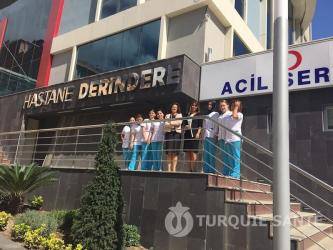
DERINDERE
Istanbul, Turkey
Multispeciality Hospital 150 Beds Opened in 2015
4.0 / 5
4.0(2 Reviews)

Certifications :

JCI - Joint Commission International HIZMET By Memorial
International Organization for Standardization (ISO) HIZMET By Memorial
HIZMET By Memorial
Istanbul, Turkey
Multi-specialty hospital of good reputation 7 operating rooms Capacity of 77 beds
4.0 / 5
4.0(2 Reviews)

You have consulted 7 / 31 Hospitals

🩺 Medical note — The content of this page is provided for information purposes and in accordance with our medical charter. It does not constitute medical advice and does not replace a consultation with a healthcare professional. Prices are indicative and will be specified in a personalized quote after reviewing your file. Any treatment must be assessed and approved by a qualified doctor.

Endometrium: Definition and structure

The endometrium is the inner lining of the uterus, and it plays a central role in reproduction. It has two layers:

  • The basal layer: composed of epithelial cells and connective tissue, it houses the uterine glands and serves as the basis for mucosal regeneration.

  • The functional layer: develops during the menstrual cycle and plays an essential role in embryo implantation and the onset of menstruation.

This lining is tightly regulated by the hormones estrogen and progesterone, which control its thickness and blood supply. When this balance is disrupted, for example by a hormonal imbalance, an infection, or abnormal cell growth, it often shows up as unusual bleeding or pain, which is exactly what an endometrial biopsy helps investigate.

What conditions can affect the endometrium?

An endometrial biopsy allows your gynecologist to analyze tissue samples from the uterine lining to identify the root cause of abnormal bleeding or pelvic symptoms.

Key conditions identified via endometrial biopsy:

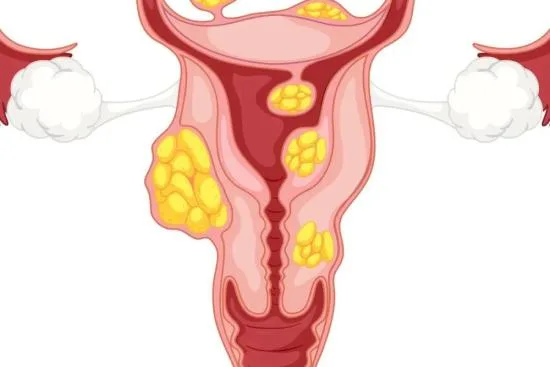
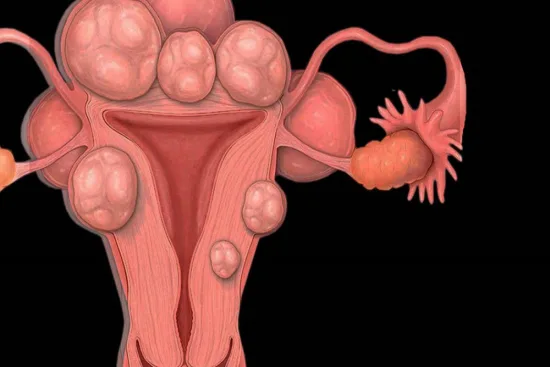
  • Endometrial hyperplasia: Abnormal thickening of the uterine lining, which can sometimes be a precursor to cancer if unmonitored.
  • Endometrial Polyps: Small, usually benign growths attached to the inner uterine wall that can cause irregular bleeding.
  • Endometrial cancer: Malignant growth within the lining (most commonly adenocarcinoma),predominantly affecting postmenopausal women.
  • Endometritis: Inflammation or infection of the endometrial tissue, often leading to pelvic discomfort or abnormal discharge.
  • Hormonal imbalances & anovulation: Irregular shedding of the lining caused by hormonal fluctuations, common during perimenopause.

Are you concerned about your gynecological health? Schedule an appointment with one of our partner specialists for an accurate diagnosis and personalized care.

What is an endometrial biopsy?

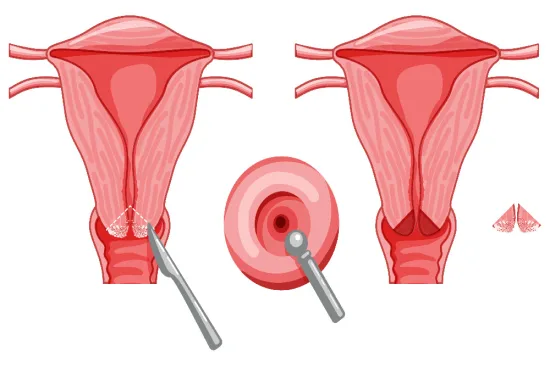
It is a minimally invasive diagnostic procedure in which a small sample of the uterine lining is removed and examined under a microscope. It is used to evaluate the structure of the endometrium, identify abnormal cells, and check for infection. In some fertility work-ups, it is used to study the lining and its synchronization with the menstrual cycle, although its usefulness in this setting is still debated and depends on each case.

There are two main sampling methods, depending on your situation:

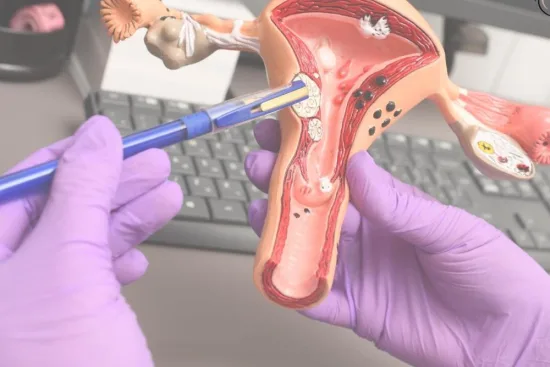
  • Office aspiration biopsy (Pipelle biopsy): a thin, flexible tube is inserted through the cervix to gently suction a small tissue sample. No incision is needed, and it's typically done during a regular gynecological exam, without general anesthesia.
  • Hysteroscopy-guided biopsy: a thin camera (hysteroscope) is used to directly visualize the uterine cavity before taking the sample, recommended when a more targeted biopsy is needed, for example if polyps or localized abnormalities are suspected.

Once collected, the tissue sample undergoes:

  • Histopathological examination: Evaluates cell architecture, screens for atypical changes, and checks whether the tissue matches the phase of the cycle.
  • Microbial culture: Performed when chronic endometritis or pelvic infection is suspected to identify specific bacterial pathogens.

When is an endometrial biopsy recommended?

An endometrial biopsy is indicated across several clinical scenarios, ranging from urgent oncological rule-outs to routine reproductive evaluations:

  • Postmenopausal bleeding: Any uterine bleeding following menopause requires immediate investigation. While most cases stem from benign endometrial atrophy, postmenopausal bleeding remains the primary early warning sign of endometrial cancer and must never be ignored.
  • Abnormal uterine bleeding (AUB) in reproductive years: Heavy, prolonged, frequent, or irregular bleeding outside the expected menstrual cycle, as well as intermenstrual spotting.
  • Fertility assessment & assisted reproduction: Used to verify endometrial receptivity, confirm hormonal synchronization before IVF or artificial insemination, or investigate unexplained implantation failure.
  • Hormone replacement therapy (HRT) monitoring: Evaluating the endometrial response in women undergoing long-term estrogen or combined hormone replacement therapy.
  • Suspected structural or infectious pathology: Investigating persistent endometrial thickening seen on ultrasound, chronic endometritis, or focal lesions such as polyps and submucosal fibroids (often combined with hysteroscopy for targeted sampling).

How accurate is an endometrial biopsy?

Endometrial biopsy is a well-established diagnostic tool and is commonly used to detect or rule out endometrial cancer, particularly in postmenopausal women.

That said, no diagnostic test is perfect: an aspiration biopsy can occasionally miss small, localized abnormalities like polyps, since it doesn't visualize the entire uterine cavity directly. If your symptoms persist despite a normal biopsy result, or if a more targeted sample is needed, your gynecologist may recommend a hysteroscopy-guided biopsy for a more complete picture.

An endometrial biopsy samples the lining of the uterus: it does not diagnose endometriosis, in which endometrial-like tissue grows outside the uterus. Endometriosis is assessed by your gynecologist with examination, imaging and sometimes laparoscopy.

Alternatives and complementary diagnostic tools

While an office endometrial biopsy is often the initial diagnostic step, it is frequently combined with, or supplemented by, other gynecological investigations to ensure a complete evaluation:

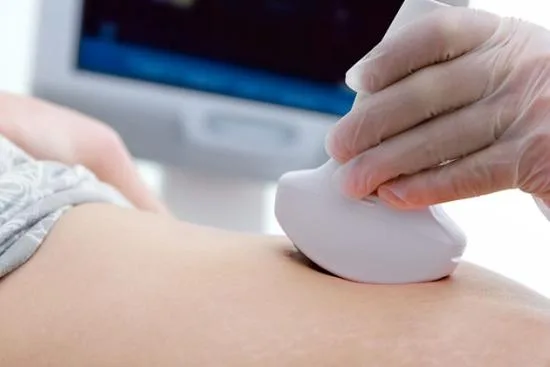
  • Transvaginal ultrasound (TVUS): A non-invasive imaging tool used to measure endometrial thickness (a thickened lining in postmenopausal women usually warrants further investigation) and identify structural changes like fibroids or focal thickening.
  • Hysteroscopy with targeted biopsy: Allows direct visual inspection of the uterine cavity using a miniature camera. This approach is preferred when polyps, focal hyperplasia, or submucosal lesions are suspected, enabling targeted tissue sampling rather than blind sampling.
  • Dilation and curettage (D&C): A minor surgical procedure performed under sedation or light anesthesia to gently scrape tissue from the uterine lining. D&C is recommended when an office biopsy is inconclusive, technically unfeasible (e.g., due to cervical stenosis),or when heavy acute bleeding requires immediate therapeutic intervention.

What are the contraindications?

An endometrial biopsy is not recommended in certain situations:

  • Pregnancy: the procedure could harm the pregnancy.
  • Active acute gynecological infection: needs to be treated first.
  • Significant uterine abnormalities: certain anatomical conditions may make the procedure riskier or less reliable.

Your gynecologist will review your medical history and, if needed, perform an ultrasound before confirming that a biopsy is the right next step for you.

What does the procedure involve, and does it hurt?

The biopsy itself takes about 10 minutes and is usually performed during a routine gynecological exam. Most patients describe the sensation as similar to menstrual cramps; local anesthesia can be offered for added comfort if needed.

Mild, temporary side effects are common and expected:

  • Light vaginal bleeding or spotting for a day or two.
  • Abdominal cramping, usually resolving within a few hours.

Less common risks:

RiskNotes
InfectionRare; contact your doctor if you develop fever or worsening pain after the procedure
Heavier bleedingUncommon; usually manageable and short-lived
Uterine perforationVery rare; more likely in specific anatomical situations, which your gynecologist screens for beforehand

When and how do I get my results?

A pathologist examines the tissue sample and prepares a detailed report describing the cells' shape, structure, and any abnormal features. Results are typically available within several days to about two weeks, depending on the laboratory, the complexity of the analysis and, for international patients, coordination with your care team back home.

If your results show an abnormality, Turquie Santé's team helps you understand what it means and coordinates next steps with your gynecologist, whether that's further testing, a treatment plan, or a follow-up consultation.

How long do I need to stay in Turkey for an endometrial biopsy?

For most patients, a short stay of 1 to 2 days is often enough: the consultation and biopsy can frequently be done on the same day, or over two consecutive days if additional tests (like an ultrasound) are needed first. Since results can take up to about two weeks, you do not necessarily need to remain in Turkey until they're ready: your report can be prepared, translated if needed, and sent to you digitally, with a teleconsultation available to review the findings with your gynecologist.

If your biopsy is part of a broader fertility treatment plan or a more extensive diagnostic work-up, your medical coordinator will confirm a schedule tailored to your specific care plan.

Other procedures in this specialty

Share this page

Our assistants help you to get the best options in Biopsy of the endometrium