


Turquie Santé
Last update : 16/11/2026

Thyroid biopsy in Turkey: Procedure, Bethesda results & costs

Access care from specialist doctors in Turkey.

Free Medical Opinion
Thyroid Biopsy Turkey
795+
patient reviews
across all procedures

As part of a thyroid nodule evaluation, a thyroid biopsy, usually a fine needle aspiration (FNA),is a short ultrasound-guided test that tells you whether a thyroid nodule is benign or needs treatment. Most nodules turn out to be harmless: in published studies, roughly 80% to 85% of biopsied nodules are benign.

The test takes about 30 minutes, needs no anesthesia and feels much like a blood draw. At our partner hospitals in Istanbul, an endocrinologist or radiologist guides the needle by ultrasound and a cytopathologist reads the sample. Turquie Santé coordinates your journey from the first teleconsultation to the pathology report, which usually arrives within one to two weeks.

Being told you need a biopsy is unsettling, and that is a normal reaction. The sections below explain, step by step, what happens before, during and after the test, and how to read a Bethesda result.

How much does a thyroid biopsy cost in Turkey?

The cost of a standard thyroid biopsy in Turkey typically ranges from $550 to $1,300, depending on whether your case includes ultrasound guidance and specialized cytopathology review. This price is indicative: only the personalized quote is binding.

In the quotes we prepared for patients over the last 36 months, the median was about €900, with a range of €635 to €1,361.

What can change the price:

  • Whether the biopsy is ultrasound-guided.
  • The number of nodules sampled and the type of cytopathology review.
  • The consultation, blood tests and imaging included in the package.
  • The clinic and the specialist.

Ask the quote to state exactly what is included. Contact us today for a personalized, no-obligation quote and schedule your free initial teleconsultation with an experienced specialist.

Risks and Side Effects

  • Mild bruising or a small hematoma at the needle site.
  • Temporary soreness or neck tension, usually gone within two days.
  • A low risk of bleeding or infection at the puncture site.
  • A non-diagnostic sample (not enough cells),which may mean repeating the biopsy.

People who take blood thinners or have a bleeding disorder need advice from their doctor before the test. Seek urgent care for fever, worsening pain, increasing swelling or bleeding that will not stop.


Why choose Thyroid Biopsy with Turquie Santé ?

Médecin icon

Specialist doctors and internationally certified hospitals

Avis icon

Free medical opinion before you travel

Organisation icon

Medical stay organized from A to Z

Prix icon

Detailed quote (included / not included) before your stay

Résultat icon

Free review of your file

All about your Thyroid Biopsy in Turkey
Overview
Alternative care
Benefits
Payment

Intervention or treatment's duration :

  • 30 minutes

Recovery time :

  • You can usually leave as soon as the procedure is complete and go back to normal activities.
  • Mild soreness or neck tension is normal and usually fades within two days.
  • Results usually take one to two weeks.

Alternative treatments
  • Monitoring with periodic ultrasound, which your doctor may suggest for some low-risk nodules instead of an immediate biopsy.
  • Repeat biopsy or molecular testing when a result is indeterminate (Bethesda III or IV).
  • Surgery, usually only after a biopsy result points to it.

Highly qualified professionals in accredited institutions.


We assist you before, during, and after your trip


A detailed quote is presented to you before your stay. Our support is free for the patient and any fees are specified in advance.

You will pay your clinic directly using these available methods:
Transfer
Emily White : Medical Content Team Manager at Turquie Santécheck

Written by

Emily White

This content complies with Turquie Santé's editorial policy. It was written by Emily White, Head of the Editorial Team, who coordinates content creation and updates. She has 11 years of experience in medical communications and supporting international patients in Turkey.

Assoc. Prof. Dr. Alaattin Ozturk m.dcheck

Medically reviewed by : Assoc. Prof. Dr. Alaattin Ozturk m.d

Specialty : Colorectal surgery
Diploma no. (TTB) : 75378

Medical review does not replace an individual consultation.

How it works ?

2
Services
We look for the best option for your case & budget
3
Hospital
Evaluating a care plan with the best quote
4
airplane
Making appointments & Organization of your trip
5
Health care
Ongoing support until you return home

Get a free medical opinion on Thyroid Biopsy with our recognized clinics

Certifications :

JCI - Joint Commission International MEMORIAL Şişli
International Organization for Standardization (ISO) MEMORIAL Şişli
MEMORIAL Şişli
Istanbul, Turkey
Prof. Dr. Başak KARBEK BAYRAKTAR

Prof. Dr. Başak KARBEK BAYRAKTAR

13 years of experience
Main Specialty : Endocrinology, Diabetes and Metabolic Diseases Key education: Medical degree from Ankara University; specialization in Internal Medicine at Ondokuz Mayıs University; subspecialty in Endocrinology at Dışkapı Yıldırım Beyazıt ... Read more
4.5 / 5
4.5(34 Reviews)

Certifications :

International Organization for Standardization (ISO) HISAR INTERCONTINENTAL
JCI - Joint Commission International HISAR INTERCONTINENTAL
HISAR INTERCONTINENTAL
Istanbul, Turkey
ASSOC. PROF. SÜLEYMAN İPEKÇİ, M.D.

ASSOC. PROF. SÜLEYMAN İPEKÇİ, M.D.

27 years of experience
Main specialty: Endocrinology and metabolic diseases Years of experience: Over 27 years Notable training: Degree in medicine and specialization in internal medicine at Istanbul University, fellowship in endocrinology at Selçuk University Notable ... Read more
4.4 / 5
4.4(222 Reviews)

Certifications :

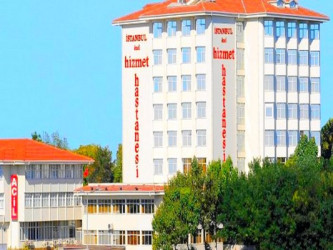
International Organization for Standardization (ISO) HIZMET By Memorial
JCI - Joint Commission International HIZMET By Memorial
HIZMET By Memorial
Istanbul, Turkey
Multi-specialty hospital of good reputation 7 operating rooms Capacity of 77 beds
4.0 / 5
4.0(2 Reviews)

Certifications :

JCI - Joint Commission International ACIBADEM
International Organization for Standardization (ISO) ACIBADEM
ACIBADEM
Istanbul, Turkey
Recognized worldwide for the excellence of its care and JCI-accredited, the Acibadem Group is the world's 2nd largest private hospital group, offering more than 30 medical specialties in Istanbul. Its teams treat over 25,000 international patients every year, notably in oncology, cardiology and orthopedic surgery.
4.6 / 5
4.6(183 Reviews)

Certifications :

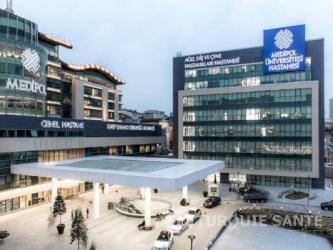
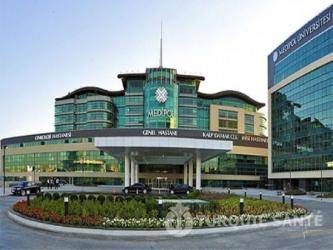
JCI - Joint Commission International MEDIPOL UNIVERSITY HOSPITAL
MEDIPOL UNIVERSITY HOSPITAL
Istanbul, Turkey
Multispeciality hospital. has 450 beds Specialized unities in NICU 25 operating rooms
4.0 / 5
4.0(1 Reviews)

Certifications :

JCI - Joint Commission International MEMORIAL ANKARA
International Organization for Standardization (ISO) MEMORIAL ANKARA
MEMORIAL ANKARA
Ankara, Turkey
Member of the American Hospital Association (AHA) Capacity of 230 beds The best hospital in Ankara
4.3 / 5
4.3(2 Reviews)

Certifications :

Leed Platinium Certificate MEMORIAL Bahçelievler
International Organization for Standardization (ISO) MEMORIAL Bahçelievler
JCI - Joint Commission International MEMORIAL Bahçelievler
MEMORIAL Bahçelievler
Istanbul, Turkey
Ultra Modern New Hospital Multispecialized hospital VIP class
4.3 / 5
4.3(23 Reviews)

You have consulted 7 / 31 Hospitals

🩺 Medical note — The content of this page is provided for information purposes and in accordance with our medical charter. It does not constitute medical advice and does not replace a consultation with a healthcare professional. Prices are indicative and will be specified in a personalized quote after reviewing your file. Any treatment must be assessed and approved by a qualified doctor.

What is a thyroid biopsy?

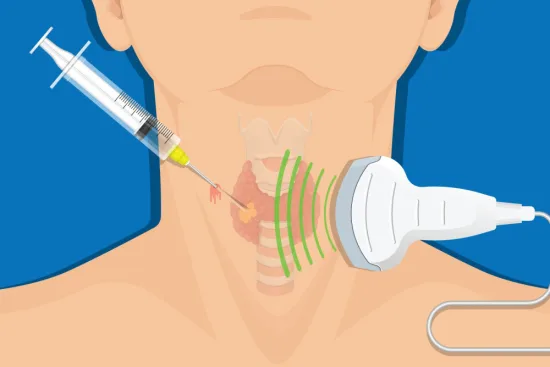
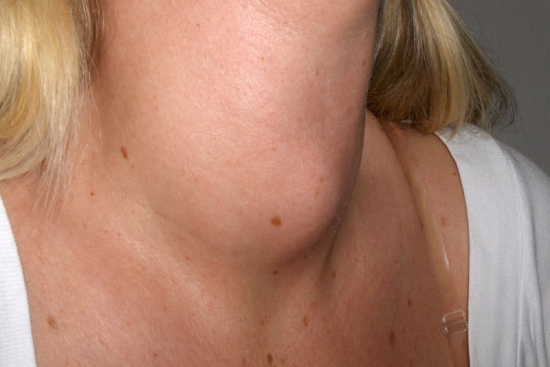
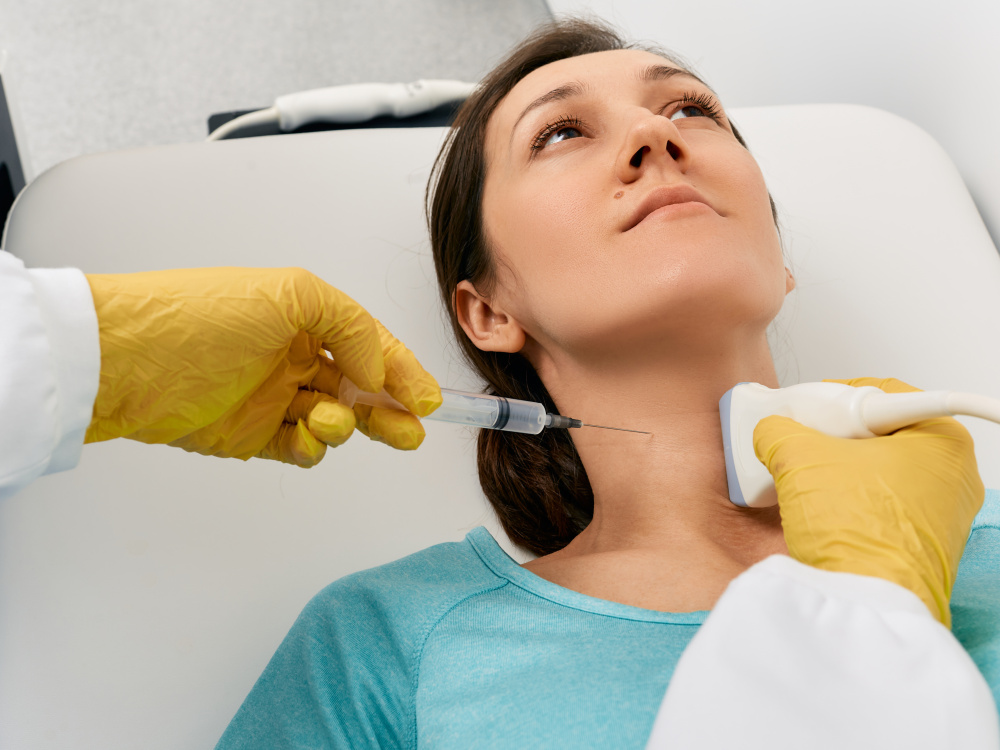
A thyroid biopsy is a quick, minimally invasive diagnostic test used to evaluate thyroid nodules. The standard technique is fine needle aspiration (FNA),in which a very thin needle, smaller than those used for routine blood draws, is guided into the nodule to collect a small sample of fluid and cells for cytological analysis.

A specialized cytopathologist then examines the sample under a microscope to determine whether the cells are benign, suspicious, or malignant.

Understanding thyroid nodules:

  • High prevalence: Thyroid nodules are extremely common. Many people develop them without experiencing any symptoms, often discovering them incidentally during routine neck exams, carotid ultrasounds, or CT scans.
  • Overwhelmingly benign: Across published clinical research, approximately 80% to 85% of biopsied thyroid nodules are entirely benign (non-cancerous),while only 5% to 10% turn out to be malignant.
  • Gold standard diagnostic tool: An ultrasound-guided FNA remains the most reliable, non-surgical method to determine the exact nature of a nodule and establish an appropriate care plan.

Why would you need a thyroid biopsy?

An ultrasound can show that a thyroid nodule is there, but imaging alone cannot rule cancer in or out. Your endocrinologist or radiologist will recommend a fine needle aspiration (FNA) when the ultrasound shows features linked to a higher risk of malignancy.

Main reasons to have a thyroid FNA:

  • Suspicious ultrasound features. These include microcalcifications (tiny calcium deposits),irregular or ill-defined borders, a darker appearance than the surrounding thyroid (hypoechogenicity),a "taller-than-wide" shape and increased internal blood flow.
  • Size and growth. Biopsy is generally advised for solid nodules of 1 cm or more with suspicious features, or for nodules over 1.5 to 2 cm even when they look low-risk, especially if follow-up scans show growth.
  • TI-RADS score. Radiologists score nodules with standard systems (EU-TIRADS or ACR TI-RADS). A high score leads directly to an FNA recommendation.
  • Clinical risk factors. Previous radiation to the neck, a family history of thyroid cancer or suspicious lymph nodes in the neck all lower the threshold for a biopsy.

In short, the biopsy turns an ultrasound observation ("this nodule deserves a closer look") into a precise diagnosis, and it helps avoid unnecessary thyroid surgery for harmless nodules.

Ultrasound-guided vs. palpation-guided biopsy: What's the difference?

Not all thyroid biopsies are performed the same way. The choice of technique directly impacts diagnostic accuracy, sample adequacy, and overall treatment planning:

TechniqueHow it worksReliability
Ultrasound-guided FNAThe doctor uses real-time ultrasound imaging to precisely guide the needle into the noduleHigher accuracy, particularly for smaller or harder-to-reach nodules; standard of care in most modern practice
Palpation-guided FNAThe doctor locates the nodule by feel alone, without imaging guidanceCan be sufficient for large, easily palpable nodules, but carries a higher risk of a non-diagnostic (inconclusive) sample

Today, most specialists recommend ultrasound guidance because of its accuracy. Ask your Turquie Santé coordinator which technique a given clinic uses for your case.

What happens before the biopsy?

A consultation with your physician comes first. During this visit, your doctor explains exactly how the biopsy will be performed and answers any questions you have. They'll also examine the nodule to determine the best approach for your case.

Be sure to mention:

  • Any allergies.
  • Any medications you're taking, especially blood thinners (anticoagulants, aspirin, anti-inflammatories).

No special preparation is needed the day of the biopsy, in fact, a light snack beforehand is recommended.

How does the thyroid biopsy procedure work in Turkey?

FNA biopsy is quick, minimally invasive, and generally well-tolerated. Here's what happens on the day:

  1. You lie comfortably on the exam table.
  2. The doctor uses a fine needle, guided by ultrasound in most cases, to collect three or four tissue samples from the nodule.
  3. A small bandage is applied to the puncture site, worn for a few hours.

The whole procedure takes about 30 minutes. No anesthesia is required; the sensation is similar to a routine blood draw, with a brief pinch as the needle is inserted. You may feel mild discomfort or a slight burning sensation in your neck for a few minutes afterward.

Pressure will be applied to the puncture site for a few minutes to minimize bleeding. You may leave as soon as the procedure is complete, though most patients do not need an escort home. In some cases, you may be monitored briefly to rule out any immediate complications.

Keep the dressing in place as directed. Some soreness at the biopsy site is normal and usually goes away within two days.

What do your thyroid biopsy results mean? Understanding the Bethesda system

Results are reported using the Bethesda System for Reporting Thyroid Cytopathology, a standardized, internationally recognized classification system used by pathologists worldwide, including those in Turkey. The system sorts results into six categories, each of which is linked to a different estimated risk of cancer and recommended next step.

Bethesda categoryWhat it meansApproximate malignancy riskTypical next step
I - NondiagnosticNot enough cells were collected for a clear readingRoughly 5-20%Repeat biopsy, usually with ultrasound guidance
II - BenignNo signs of cancer0-3%Routine follow-up with periodic ultrasound
III - AUS/FLUS (atypia/follicular lesion of undetermined significance)Some abnormal-looking cells, but not clearly cancerousRoughly 10-30%Repeat biopsy, molecular testing, or monitoring, depending on your case
IV - Follicular neoplasmCells suggest a growth that could be benign or malignantRoughly 25-35%Often further testing or surgical removal (lobectomy) to confirm
V - Suspicious for malignancyStrong features suggestive of cancer, though not fully conclusiveRoughly 65-85%Surgery is usually recommended
VI - MalignantCancer cells clearly identifiedNearly 97-100%Surgical treatment (thyroidectomy or lobectomy)

Most patients fall into category II (benign) and simply need routine monitoring. Categories III and IV, sometimes called "indeterminate", can feel frustrating because they don't give a clear yes or no, but they don't mean cancer either; they simply call for a closer look, sometimes with molecular testing, before deciding on next steps. Your physician will walk you through exactly what your specific result means for you.
Results typically take one to two weeks to come back, and your report is sent directly to your treating physician, who will discuss next steps with you, whether that's routine monitoring, a repeat biopsy, or a referral for thyroid surgery.

What are the risks and side effects of a thyroid biopsy?

A thyroid biopsy is a low-risk procedure. Possible side effects include:

  • Mild bruising or a small hematoma at the needle site.
  • Discomfort similar to a routine blood draw.
  • Temporary neck tension or soreness, usually gone within two days.
  • A low risk of bleeding or infection at the puncture site.

Contact your doctor immediately if you experience:

  • Fever.
  • Pain at the biopsy site that worsens or isn't controlled by medication.
  • Swelling that increases rather than subsides.
  • Bleeding that doesn't stop despite pressure and a bandage.
Related medical articles

Thyroid Biopsy FAQ

Does a thyroid biopsy hurt?

Most people describe it as a brief pinch, similar to a blood draw. No anesthesia is needed. You may feel mild discomfort or a slight burning in the neck for a few minutes afterward, and some soreness at the site that usually fades within two days.

How long do thyroid biopsy results take, and what happens next?

Results usually come back in one to two weeks. The cytopathologist grades the sample on the Bethesda scale (categories I to VI),and the report goes to your treating physician. Depending on the category, the next step is routine monitoring with ultrasound, a repeat biopsy, molecular testing or a surgical opinion. Most patients fall into category II (benign) and only need follow-up.

What happens if my thyroid biopsy result is indeterminate (Bethesda III or IV)?

An indeterminate result means the cells look unusual but are not clearly cancerous, so it does not mean you have cancer. Depending on your case, your doctor may suggest repeating the biopsy, using molecular testing on the sample to refine the cancer risk, or monitoring with ultrasound. For Bethesda IV (follicular neoplasm),further testing or removal of part of the thyroid (lobectomy) is often discussed to reach a definite diagnosis. Availability of molecular tests varies between centers, so ask your Turquie Santé coordinator what the clinic offers.

How much does a thyroid biopsy cost in Turkey and what affects the price?

A standard thyroid biopsy in Turkey typically costs $550 to $1,300. In the quotes we prepared over the last 36 months, the median was about €900, with a range of €635 to €1,361. The price depends on whether the biopsy is ultrasound-guided, the type of cytopathology review, how many nodules are sampled and what the package includes. Only your personalized quote is binding.

Is a thyroid biopsy the same as thyroid cancer screening?

No. A thyroid biopsy is not a screening test for people without symptoms. It is used after a thyroid nodule has been found, usually on ultrasound, to find out whether that specific nodule is benign or needs treatment. Your doctor decides whether a biopsy is needed from the ultrasound features, the size of the nodule and your risk factors. Many nodules are simply monitored.

Other procedures in this specialty

Share this page

Our assistants help you to get the best options in Thyroid Biopsy