Eye inflammation can strike suddenly, leaving patients with redness, pain, and blurred vision. Anterior uveitis, affecting the iris and ciliary body, ranks among the most common forms of intraocular inflammation, with published studies reporting it accounts for anywhere between 30% and roughly 90% of all uveitis cases depending on the population studied, rather than a single fixed figure. In Turkey, ophthalmologists employ a multimodal approach combining topical corticosteroids, cycloplegic agents, and targeted systemic therapy when underlying causes (infectious, autoimmune, or idiopathic) are identified.
Certified facilities offer same-day slit lamp examination, anterior chamber imaging, and rapid laboratory screening for systemic diseases (tuberculosis, syphilis, HLA-B27 positivity) that often trigger inflammation. Early intervention within 48 hours of symptom onset is generally associated with a lower risk of posterior synechiae, cataract formation, and secondary glaucoma. Treatment packages, including specialist consultations, imaging, and initial medication protocols, typically range from 800 to 2,200 euros, compared to 2,500 to 6,000 euros in Western Europe, reflecting operational efficiency rather than compromised standards.
Why choose Treatment of uveitis with Turquie Santé ?
Expert surgeons and internationally certified hospitals
Substantial savings compared with European prices
Medical stay organized from A to Z
Transparent pricing, itemised before your stay
Free assistance
All about your Treatment of uveitis in Turkey
Benefits
Payment
Highly qualified professionals in accredited institutions.
We assist you before, during, and after your trip
Book with full transparency, no hidden fees or commissions.
You will pay your clinic directly using these available methods:
Honestly, it was an amazing experience for me — everything was perfect from the moment I arrived. The care was excellent; I have nothing negative to say. If I were to have another surgery, I would choose Turquie Santé without hesitation.
Bálint
12/07/2026
An excellent experience from start to finish. From the very first moment we felt accompanied and cared for in every detail, as if we were the protagonists of a well-organized film where nothing was left to chance. I write this review in detail because I believe anyone considering it deserves to know not only that everything went well, but why.
COORDINATION: From the beginning Emily coordinated everything for us—always attentive, approachable, and available for any question. In addition, throughout the process we had an online assistant who guided us continuously. We had all the necessary information at our disposal, both to find our way and for our comfort. At no point did we feel lost.
TRANSFERS: Impeccable. We never had to wait even once. The quality and treatment were exceptional; the transfer vehicle itself was on the level of a luxury hotel. Transfers to follow-up appointments were also always punctual and in clean vehicles.
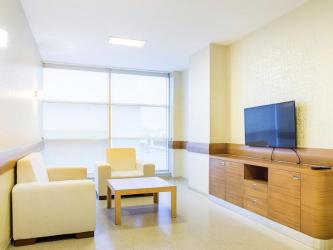
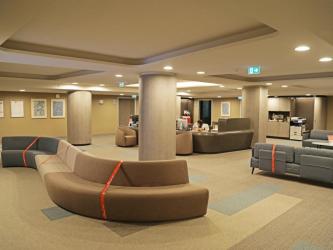
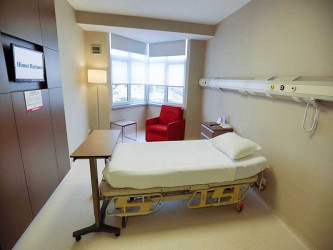
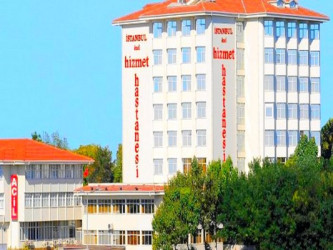
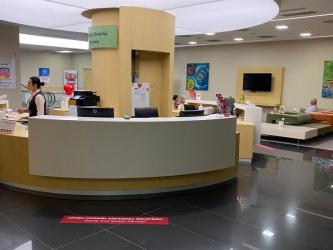
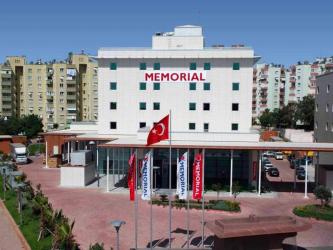
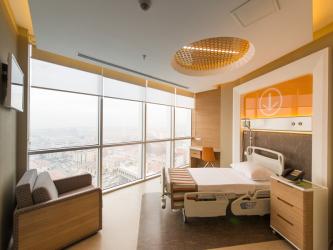
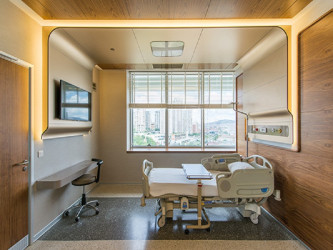
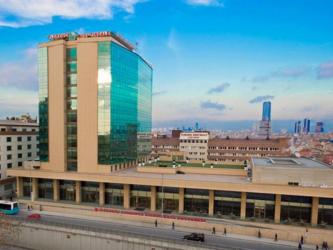
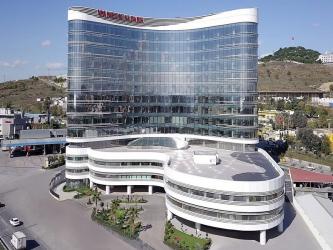
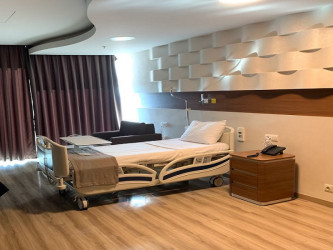
THE HOSPITAL: A modern, attractive building with top-level staff and equipment. The room was comparable to a luxury hotel. The stay includes full board, with three substantial meals a day for both the patient and the companion. The hospital even has its own café.
THE PROCESS: We spent 3 nights in the hospital (plus the night of arrival, since we landed after 8 p.m.). That first night they carried out all the preparatory tests without delay. The next morning we met the doctor and everything proceeded as planned, precisely on time. The doctor worked excellently and was very kind. Recovery was quick, painless, and without complications.
OUR LOCAL ASSISTANT, ISMAEL: He deserves a special mention. He helped us with everything and was always available when we needed him. It makes a real difference to feel that someone is looking out for you at all times.
THE SURROUNDINGS: Around the hospital there are shops, a pharmacy, and green areas with parks where the companion can relax. If desired, you can also get to know some of the local culture.
THE HOTEL: After the hospital we were moved for 3 nights to a lovely, quiet, and clean 4-star hotel, ideal for the recovery period. The food was delicious, varied, and of good quality. Less than 500 meters away there were shops and restaurants, so everything needed was within easy reach.
THE CARE: Everyone was very kind, including people on the street. Before we left they gave us all the information about the medication, and contact remains ongoing: if you have any doubts, they help immediately.
In short: professionalism, warmth, and impeccable organization at every stage. Thanks to Emily and the whole team at Turquie Santé. I recommend them wholeheartedly.
InTHE Era
28/06/2026
This is the best Hospital for all your needs, and it exceeds my expectations. Bravo to the entire team that made this trip for me seamless. From the driver to the Doctor, everyone was extremely welcoming and managed my condition well. All were well prepared despite certain hiccups along the way, but they rectified everything swiftly. No other complaints. Thank you so much, and I can't wait to come back for my review soon.
Achraf Noufile
17/06/2026
Very satisfied, thank you for your professionalism.
Tevaearai Klint
06/05/2026
Hello,
I had a nasal reconstruction and I'm torn between being "happy with the result" and "disappointed with the result" because, aesthetically, the nose looks good but when I touch it a piece of bone hasn't fully integrated — it cracks and you can feel it move when I touch my nose. Also, around the nostrils the nose is very hard because the doctor added cartilage horizontally without asking me.
I therefore have to have another surgery to remove that cartilage and reinforce the part that keeps cracking.
Carly PETIT
20/04/2026
Very good care. Very well organized, no unpleasant surprises. I am very satisfied.
Shanel Lebegge
17/04/2026
Hospital!!!! LOKMAN HEKIM ISTANBUL!!! AVOID!!! I took my direct return flight and left that hospital — they did a blood draw. They paralyzed my hand. Terrible reception, they only talk about money and they treat you like crap. I went back home, and don't anyone try to tell me otherwise, because I have proof: my hand was all blue and paralyzed from a simple blood draw. My cousin and I bailed!! Don't make the mistake of going there! We arrived; I was supposed to be fasting. I didn't even get a drop of water, and when I asked, they grumbled!!!
Edwon Freitas
16/01/2026
I’m very grateful from start to finish communication and for the care I received during my operation. The medical team was professional, kind, and reassuring throughout the entire process. Everything was clearly explained, and my recovery has been going well. Thank you for the excellent care.
Elisabeth OGRODZKI
14/11/2025
I had an exceptional experience with Turquie-santé for my eye surgery in Turkey. They offer very competitive prices, and I would especially like to thank Nassim. His professionalism and availability were remarkable, and he brilliantly corrected the mistakes of his predecessor. I highly recommend their services!
jolie mbuyi
14/11/2025
I would like to thank all the staff at this hospital for their excellent welcome and impeccable care. A special thank you to Emily, who demonstrated great efficiency, genuine understanding, and immense availability. She listened attentively and supported us from beginning to end; she is a truly lovely woman. Don't hesitate to trust them; you will be in good hands!
Kevin Amrani
11/11/2025
Go there with your eyes closed, stop listening to what they tell you in France.
The service is so impeccable, not a single misstep, from the airport pick-up upon arrival in Turkey to the return to the airport after the operation.
The medical staff is very kind, the surgeon is extremely competent, a brand new 4-star hotel with a Turkish breakfast. A 24-hour translator, a rate two and a half times cheaper than in France... I'll stop there, no need to go any further.
This content complies with the editorial policy of Turquie Santé. It was written by Emily White, Head of the Editorial Team, who has over 11 years of experience in scientific research and clinic management in Turkey. She ensures the reliability of medical information while making complex data accessible to everyone.
Main Specialty : OphthalmologyYears of Experience : 10 years.Notable Education : Gazi University Faculty of Medicine, Çanakkale 18 Mart University Faculty of MedicineMastered Techniques : Cataract surgery, blepharoplasty, treatment of refractive errors, ... Read more
Op. Dr. Faruk Eroglu
Main specialty: OphthalmologyYears of experience: Over 31 years since 1993Notable training: Medical degree, University of Istanbul (1993); specialization in ophthalmology, University of IstanbulNotable achievements: Over 10,000 argon laser procedures, 5,000 ... Read more
Main Specialty: OphthalmologyYears of Experience: 25 years.Notable Trainings: İstanbul University (1994 – 2000),Beyoğlu Eye Training and Research Hospital (2001 - 2005)Mastered Techniques: Cataract, Refractive Surgery, Oculoplasty, Strabismus, Glaucoma, ... Read more
Main Specialty : OphthalmologyYears of Experience : 16 years.Notable Education : PhD in Biomedical Engineering, Master of Science in Biomedical Engineering, Doctorate of Medicine, Residency in OphthalmologyMastered Techniques : Lasers, cataract and refractive ... Read more
Prof. Dr. İhsan Yılmaz
Main Specialty : Ophthalmology Years of Experience : 17 years. Notable Trainings : Uludag University, Bursa; Kartal Training and Research Hospital, Istanbul; Vance Thompson Vision Center, SD, USA; Beyoglu Eye Training and Research Hospital, Istanbul Mastered ... Read more
Main Specialty : Ophthalmology Years of Experience : 15 years. Notable Training : Marmara University Faculty of Medicine, Istanbul, 2005; Istanbul Göztepe Training and Research Hospital, Medical Specialization, 2011; FEBO (May 2018); FICO (November 2018); ... Read more
Prof. Dr. Osman Murat Uyar
Main specialty : Ophthalmology Years of experience : 35 years. Notable training : Hacettepe University Faculty of Medicine, Specialist training at SSK Istanbul EH Ophthalmology Clinic Techniques mastered : Intravitreal injection, LASER photocoagulation and ... Read more
Main specialty: Ophthalmology, cataract and refractive surgery
Years of experience: Over 30 years
Notable training: Graduated from Hacettepe (1980),ophthalmology specialization Çukurova (1986)
Professional background / Notable achievements: Over ... Read more
Prof. ATILLA BAYER, MD
Main specialty: Ophthalmology
Years of experience: Over 30 years
Notable training: Graduated from the GATA Military Medical School in 1988, specialized in ophthalmology at the same institution in 1994, and specialized training in glaucoma at Wills Eye ... Read more
Main Specialty : Ophthalmology Years of Experience : 24 years. Notable Training : Specialization in ophthalmology at the Ankara Education and Research Hospital (1999-2002),Medical training at Ankara University (1992-1998). Notable Achievements : Publications ... Read more
Main Specialty : Ophthalmology Years of Experience : 16 years. Notable Education : Medical degree from Istanbul University, specialization in ophthalmology at Dr. Lütfi Kırdar Kartal City Hospital. Mastered Techniques : Cataract surgery, refractive surgery, ... Read more
Main specialty: Ophthalmology
Years of experience: Over 28 years
Notable training: Graduate of Hacettepe Faculty of Medicine (1996),ophthalmology specialization at Ankara Numune Hospital (2000),cornea fellowship at Wills Eye Hospital, USA ... Read more
Main specialty: Ophthalmology (surgery and medicine of the eyes)
Notable training: Graduated in medicine from the Faculty of Medicine of Izmir (1988),residency in ophthalmology at the Ulucanlar Training and Research Hospital (2013–2017),... Read more
Op.Dr.Hakan Sivrikaya
Main Specialty : Ophthalmology Years of Experience : 28 years. Notable Education : Istanbul University, Istanbul School of Medicine (1988-1994),Russian Medical Academy, Eye Hospital - Moscow (1994-1998) Mastered Techniques : Phacoemulsification, LASIK, ... Read more
Main Specialty : Ophthalmology Years of Experience : 25 years. Notable Training : 1997 - 2001 Istanbul University Çapa Faculty of Medicine Eye Department of Diseases, 1991 - 1997 Istanbul University Cerrahpaşa Faculty of Medicine Languages Spoken : English ... Read more
Prof. Dr. Ceyhun Arıcı
Main specialty: Ophthalmology (oculoplastic surgery, strabismus surgery, ocular aesthetics)
Years of experience: 22 years
Notable training: Graduated in medicine from Istanbul University (1996),specialization in ophthalmology at Istanbul ... Read more
Main specialty : OphthalmologyYears of experience : 11 years.Notable training : Ankara University, Yıldırım Beyazit University Ataturk Training and Research HospitalsMastered techniques : FFA – ICG (Eye Angio),Cataract surgery, Corneal and conjunctival ... Read more
Asso.Prof. Dr. Mehmet YAKIN
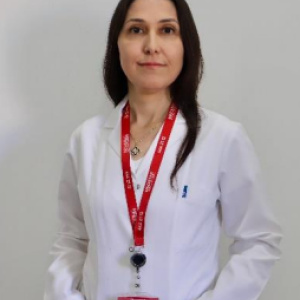
Main Specialty : OphthalmologyYears of Experience : 13 years.Notable Education : Hacettepe University, Faculty of Medicine (2002-2008); Ankara Training and Research Hospital, Ophthalmology Residency (2009-2013).Mastered Techniques : Uveitis and ocular ... Read more
Types of Uveitis: Understanding the Classification
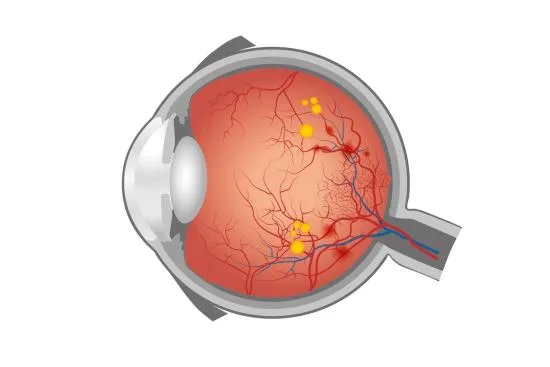
Uveitis presents in four distinct anatomical patterns, each with different clinical implications and treatment strategies.
Anterior uveitis: inflammation confined to the iris (iritis) or iris plus ciliary body (iridocyclitis). Cells and flare appear in the anterior chamber on slit lamp examination. This form accounts for roughly 73% of cases and typically responds well to topical therapy within 2 to 4 weeks.
Intermediate uveitis: affects the ciliary body and vitreous base, often presenting with floaters and blurred vision. Recovery may require 6 to 12 weeks.
Posterior uveitis: involves the choroid and retina, potentially causing permanent vision loss if untreated. Systemic immunosuppression is frequently necessary.
Panuveitis: inflammation spans all three uveal layers, representing the most severe form. Requires aggressive multimodal therapy and close monitoring for complications.
Turkish ophthalmologists use anterior segment optical coherence tomography (AS-OCT) and ultrasound biomicroscopy to differentiate these types rapidly, enabling targeted treatment protocols from day one.
Anterior Uveitis Symptoms: What Patients Experience
Symptoms emerge suddenly, often within hours. Patients describe a spectrum of discomfort that varies by severity and underlying cause.
Symptom
Anterior Uveitis
Severity
Timeline
Eye pain
Sharp, throbbing, worse with light exposure
Moderate to severe
Onset within 24 hours
Photophobia
Extreme light sensitivity, difficulty opening eye
Severe
Immediate
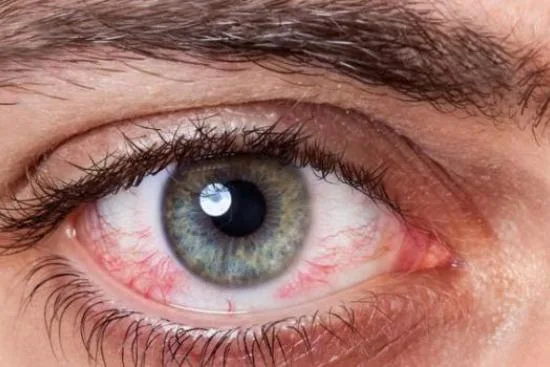
Redness
Circumcorneal injection (ring around iris)
Visible
Within 12-48 hours
Blurred vision
Due to aqueous humor inflammation and cells
Mild to moderate
Progressive over days
Floaters
Small dark spots from inflammatory cells
Mild
Variable onset
Tearing
Excessive lacrimation from irritation
Mild
Immediate
Many patients (though not all) report that symptoms worsen in the morning or after prolonged reading. Early recognition and same-day ophthalmology consultation in Turkish clinics can prevent complications such as posterior synechiae, where the iris adheres to the lens, or secondary glaucoma from elevated intraocular pressure.
Ophthalmologic Examination Findings in Anterior Uveitis
Slit lamp biomicroscopy remains the gold standard for diagnosis and monitoring. Turkish specialists employ standardized grading systems to quantify inflammation severity and track response to therapy.
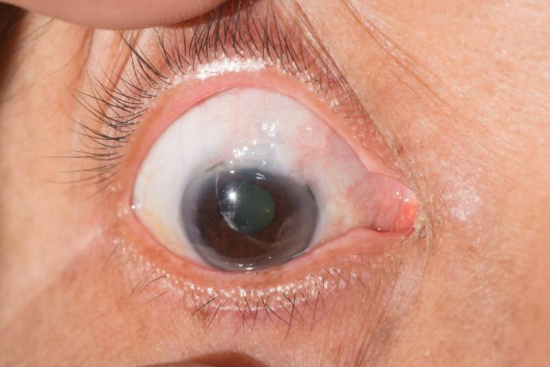
Anterior chamber cells and flare: white blood cells and protein exudation visible under magnification. Grading ranges from trace (barely visible) to 4+ (hypopyon, a white fluid level at the chamber base). Most acute anterior uveitis cases present with 2+ to 4+ cells within 24 hours of onset.
Keratic precipitates (KPs): inflammatory cell deposits on the corneal endothelium. Fine, granulomatous, or mutton-fat KPs suggest different underlying etiologies (infectious vs. autoimmune).
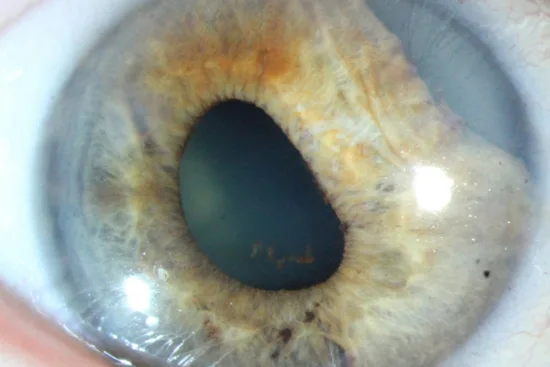
Iris changes: swelling, color change, loss of detail, or posterior synechiae (adhesions to the lens). These develop over days if inflammation remains uncontrolled.
Pupillary response: mid-dilated, sluggish pupil due to ciliary body inflammation. Mydriatic drops help assess the degree of ciliary involvement.
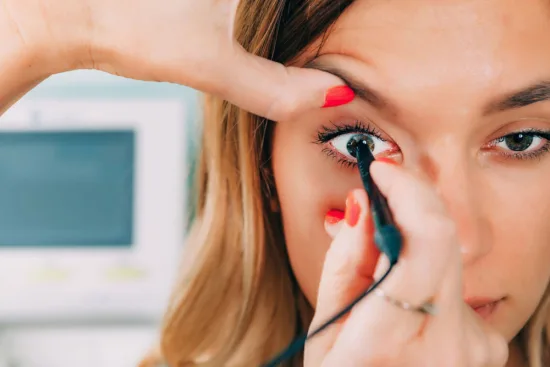
Intraocular pressure (IOP) measurement: elevated IOP (>21 mmHg) occurs in 25 to 50% of anterior uveitis cases, requiring additional glaucoma therapy.
Imaging modalities such as anterior segment OCT and ultrasound biomicroscopy provide objective documentation of inflammation depth and extent, enabling precise treatment adjustments.
Causes of Anterior Uveitis: Systemic and Local Triggers
Anterior uveitis rarely occurs in isolation. Identifying the underlying cause is essential for preventing recurrence and managing associated systemic disease.
Infectious causes: herpes simplex virus (HSV),varicella-zoster virus (VZV),syphilis, tuberculosis, toxoplasmosis, and Lyme disease. Viral anterior uveitis often presents unilaterally with keratic precipitates and elevated IOP.
Autoimmune and systemic conditions: ankylosing spondylitis (HLA-B27 positive),reactive arthritis, Behçet disease, sarcoidosis, inflammatory bowel disease, and systemic lupus erythematosus. These account for roughly 40 to 50% of anterior uveitis cases in developed countries.
Idiopathic uveitis: no identifiable cause despite comprehensive investigation. Represents 25 to 35% of cases; many resolve spontaneously within 6 to 12 weeks.
Traumatic anterior uveitis: follows blunt or penetrating eye injury. Inflammation typically peaks within 24 to 48 hours and subsides with corticosteroid therapy.
Drug-induced: certain medications (bisphosphonates, topiramate, sulfonamides) rarely trigger anterior uveitis.
Tumor-associated: intraocular lymphoma or metastatic disease can masquerade as chronic anterior uveitis.
Turkish ophthalmology centers conduct systematic screening including chest X-ray, tuberculin skin test, rapid plasma reagin (RPR),HLA-B27 testing, and angiotensin-converting enzyme (ACE) levels to uncover hidden systemic disease. This diagnostic rigor, combined with affordable pricing (screening packages 400 to 800 euros),encourages comprehensive workup even in resource-limited settings.
Treatment of Anterior Uveitis in Turkey: Multimodal Approach
Turkish ophthalmologists follow evidence-based protocols adapted to each patient's clinical presentation and underlying etiology. Treatment is stepwise, escalating only if initial therapy fails.
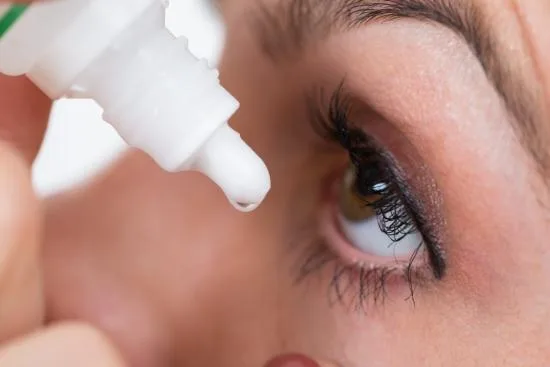
Topical corticosteroids: prednisolone acetate 1% or dexamethasone, instilled 4 to 6 times daily initially, then tapered over 4 to 8 weeks. Reduces anterior chamber inflammation rapidly; most patients show improvement within 48 to 72 hours. Risk: steroid-induced glaucoma in 5 to 10% of cases, requiring IOP monitoring.
Cycloplegic agents: cyclopentolate 1% or tropicamide 1%, three times daily. Relieves ciliary spasm, reduces pain, and prevents posterior synechiae formation. Pupil dilation is expected and temporary.
Systemic corticosteroids: oral prednisolone (0.5 to 1 mg/kg daily, tapered over 4 to 12 weeks) for severe cases, bilateral involvement, or systemic disease. Efficacy is high, but prolonged use carries metabolic risks.
Immunosuppressive agents: methotrexate, azathioprine, or mycophenolate mofetil for chronic or recurrent uveitis, particularly in autoimmune-driven cases. Onset of benefit: 4 to 12 weeks.
Antibiotic therapy: if infectious etiology is confirmed (HSV, VZV, syphilis, tuberculosis). Systemic antibiotics or antivirals replace or supplement topical corticosteroids.
Glaucoma management: topical beta-blockers, prostaglandin analogs, or carbonic anhydrase inhibitors if IOP exceeds 21 mmHg. Laser trabeculoplasty or filtering surgery is reserved for refractory cases.
Treatment costs in Turkey typically range from 800 to 2,200 euros for initial consultation, imaging, laboratory screening, and a 4 to 8-week medication protocol. This compares favorably to 2,500 to 6,000 euros in Western Europe, reflecting lower pharmaceutical and facility overhead rather than reduced clinical standards. Most patients achieve inflammation control within 2 to 4 weeks; however, 20 to 30% experience recurrence within 5 years, necessitating long-term surveillance and occasional prophylactic therapy.