

Turquie Santé
Last update : 05/02/2026

Stereotactic surgery in Turkey: Advanced brain treatment and costs

Access internationally recognized healthcare with substantial savings compared with European prices.

Get a free quote
Stereotaxic surgery Turkey
793+
patient reviews
across all procedures

Has your treatment plan reached a dead end? When tumors are deep, complex, or risky for conventional surgery, options can feel limited.

Stereotactic surgery offers a solution: precise, millimeter-by-millimeter treatment without a single incision. In Turkey, leading neurosurgery and oncology centers use this cutting-edge technique to target brain tumors, spinal lesions, and other neurological conditions, delivering high-dose radiation or precise intervention while sparing healthy tissue.

If traditional surgery isn't enough, stereotactic techniques are redefining what's possible. Let's explore how this advanced approach provides a viable pathway for patients seeking a precise, less invasive alternative.

Stereotactic surgery: Costs & care in Turkey

By choosing Turquie Santé for your procedure, you benefit from unparalleled surgical precision, the latest techniques, and state-of-the-art equipment. Our partner clinics ensure a targeted, personalized approach that minimizes risks and protects healthy brain tissue.

From your arrival in Turkey to your return home, a dedicated, multilingual medical team will guide and support you every step of the way. You'll enjoy peace of mind knowing that your care is coordinated and tailored to your needs.

The cost of stereotactic surgery in Turkey ranges from $3,300 to $16,500, depending on the complexity of your procedure.

Curious about your options? Contact us today for a free, personalized quote and learn how Turquie Santé can help you access world-class stereotactic surgery with confidence.

Risks and Side Effects

  • Damage to healthy tissue.
  • Risks associated with anesthesia.
  • Pathology-specific risks.
  • Neurological disorders.
  • Lesion recurrence.

Why choose Stereotaxic surgery with Turquie Santé ?

Chirurgien icon

Accredited surgeons and hospitals (JCI, ISO)

Économie icon

Indicative prices, often lower than in Western Europe depending on the case

Organisation icon

Medical stay organized from A to Z

Prix icon

Detailed quote (included / not included) before your stay

Résultat icon

Free review of your file

All about your Stereotaxic surgery in Turkey
Alternative care
Benefits
Payment
Alternative treatments

Highly qualified professionals in accredited institutions.


We assist you before, during, and after your trip


A detailed quote is presented to you before your stay. Our support is free for the patient and any fees are specified in advance.

You will pay your clinic directly using these available methods:
Transfer

Verified testimonials from our patients

Benchaieb N.
Verified review

the ambulance service did not follow the instructions

he wanted to do what suited him best in terms of timing and transport, without taking into account the state of health of the patient being transported to adapt the driving and speed


06/05/2026
This patient was treated for Neurosurgery
RETENO D.
Verified review

continued his care and continued care at the hospital


16/04/2026
This patient was treated for Neurosurgery
DIAW A.
Verified review

I received neurosurgical care at Hisar Intercontinental. The team seemed competent, and the treatment went well. Some aspects of the organization could be improved, but I’m satisfied with the medical care I received.


06/01/2026
This patient was treated for Neurosurgery
James T.
Verified review

I had been suffering from herniated discs for some time and, after thinking it over carefully, I decided to have surgery in Turkey. At first I had some doubts, but in the end I don't regret it at all. It all started on WhatsApp. Kevin replied quickly..Read more


01/01/2026
This patient was treated for Neurosurgery
Eric L.
Verified review

I’m simply sharing my positive experience with Turquie Santé and the whole team. I had a microvascular decompression in Turkey after years of pain from trigeminal neuralgia. Everything was organized from the start—transfers, hotel and appointments. O..Read more


03/11/2025
This patient was treated for Trigeminal neuralgia
Malek K.
Verified review

I was quite nervous before my neurosurgery, but the team helped put me at ease. The operation went well, and I appreciated the follow-up afterwards. The hospital was very clean. Overall, it was a good experience.


08/02/2025
This patient was treated for Neurosurgery
Emily White : Medical Content Team Manager at Turquie Santécheck

Written by

Emily White

This content complies with the editorial policy of Turquie Santé. It was written by Emily White, Head of the Editorial Team, who has over 11 years of experience in scientific research and clinic management in Turkey. She ensures the reliability of medical information while making complex data accessible to everyone.

Uzm. Dr. Hakan İLASLANcheck

Medically reviewed by : Uzm. Dr. Hakan İLASLAN

Neurosurgery Specialist

An expert in neurosurgery at Lokman Hekim University Hospital in Ankara, Dr. Hakan İlaslan specializes in complex brain and nerve surgery. His expertise covers spinal pathologies and high-precision microsurgical interventions. As a validator, he ensures the accuracy of surgical protocols and technological advancements.

Medical review does not replace an individual consultation.

Our doctors for your Stereotaxic surgery

Prof. Dr. Serdar Kahraman
Turkey, Istanbul
5.0
(1 reviews)
Lead doctor for your Stereotaxic surgery
37 years of experience
LIV Ulus
The clinic is certified:JCI - Joint Commission International LIV UlusInternational Organization for Standardization (ISO) LIV Ulus

Main Specialty : Neurosurgery Years of Experience : 37 years. Notable Training : Gülhane Military Medical Academy (GMMA),Ankara-Türkiye (1983-1989); Neurosurgical Training, GMMA, Ankara-Türkiye (1992-1997); Neuro & Spinal Endoscopy Clinical Fellow, Berlin Free University.… Read more

Op. Dr. Çağrı Canbolat
Turkey, Istanbul
4.4
(11 reviews)
Lead doctor for your Stereotaxic surgery
8 years of experience
LIV Vadistanbul
The clinic is certified:International Organization for Standardization (ISO) LIV VadistanbulJCI - Joint Commission International LIV Vadistanbul

Main Specialty : Neurosurgery Years of Experience : 8 years. Notable Training : Cumhuriyet University Faculty of Medicine Brain and Nerve Surgery / 2012-2018 Mastered Techniques : Neuro-Oncological Surgery, Skull Base Surgery, Neurovascular Surgery, Spinal Minimally Invasive… Read more

PROF. DR. Idris Altun
Turkey, Istanbul
4.4
(221 reviews)
Lead doctor for your Stereotaxic surgery
14 years of experience
HISAR INTERCONTINENTAL
The clinic is certified:JCI - Joint Commission International HISAR INTERCONTINENTALInternational Organization for Standardization (ISO) HISAR INTERCONTINENTAL

Main Specialty : Neurosurgery Years of Experience : 14 years. Notable Training : Residency at Kahramanmaraş Sütçü İmam University, training in endoscopic pituitary surgery at Kocaeli University, training at Barrow, Arizona, USA. Mastered Techniques : Brain tumor surgery, spinal… Read more

Assoc. Prof. Dr. Muhittin Emre Altunrende
5.0
(1 reviews)
Lead doctor for your Stereotaxic surgery
19 years of experience
LIV Ulus
The clinic is certified:JCI - Joint Commission International LIV UlusInternational Organization for Standardization (ISO) LIV Ulus

Main Specialty : Neurosurgery Notable Trainings : Istanbul University Cerrahpaşa Faculty of Medicine, Trakya University Faculty of Medicine Brain and Nerve Surgery Mastered Techniques : Functional Neurosurgery (Parkinson’s, Deep Brain Stimulation),Brain and Spinal tumors,… Read more

Assoc. Prof. Dr. İdris Sertbaş
4.4
(11 reviews)
Lead doctor for your Stereotaxic surgery
12 years of experience
LIV Vadistanbul
The clinic is certified:International Organization for Standardization (ISO) LIV VadistanbulJCI - Joint Commission International LIV Vadistanbul

Main specialty : Neurosurgery Years of experience : 12 years. Notable training : Medical degree from the Faculty of Medicine at Cumhuriyet University (1999-2005),Residency at Ankara Training and Research Hospital, Department of Neurosurgery (2009-2014) Techniques mastered :… Read more

Assoc. Dr. Tuncay Kaner
Turkey, Istanbul
5.0
(1 reviews)
Lead doctor for your Stereotaxic surgery
MEDICAL PARK PENDIK
The clinic is certified:JCI - Joint Commission International MEDICAL PARK PENDIK

Main specialty: Neurosurgery. Years of experience: 25 years. Key education: 1988 – Medical education at Istanbul University Cerrahpaşa Faculty of Medicine, Istanbul; 1996 – Neurosurgery specialist training at the Brain and Neurosurgery Clinic of Haydarpaşa Numune Training and… Read more

Get a free medical opinion on Stereotaxic surgery with our recognized clinics

Certifications :

International Organization for Standardization (ISO) MEMORIAL Şişli
JCI - Joint Commission International MEMORIAL Şişli
MEMORIAL Şişli
Istanbul, Turkey
Prof. Dr. Zafer Orkun TOKTAŞ

Prof. Dr. Zafer Orkun TOKTAŞ

23 years of experience
Main Specialty : Neurosurgery Years of Experience : 23 years. Notable Training : Doctorate in Medicine, specializing in Neurosurgery. Mastered Techniques : Brain surgery, spinal surgery, endoscopic techniques. Notable Achievements : Publication of several ... Read more
4.5 / 5
4.5(34 Reviews)

Certifications :

JCI - Joint Commission International LIV Vadistanbul
International Organization for Standardization (ISO) LIV Vadistanbul
LIV Vadistanbul
Istanbul, Turkey
Prof. Dr.Mete Karatay

Prof. Dr.Mete Karatay

25 years of experience
Main Specialty : NeurosurgeryYears of Experience : 25 years.Notable Education : Eskişehir Osmangazi University, Faculty of Medicine (1995-2001),Ankara Training and Research Hospital, Department of Neurosurgery (2002-2007),Johns Hopkins University, School ... Read more
4.4 / 5
4.4(11 Reviews)

Certifications :

JCI - Joint Commission International HISAR INTERCONTINENTAL
International Organization for Standardization (ISO) HISAR INTERCONTINENTAL
HISAR INTERCONTINENTAL
Istanbul, Turkey
Op. Dr. Ertuğrul PINAR

Op. Dr. Ertuğrul PINAR

14 years of experience
Verified CV: Neurosurgery. Graduated from Marmara University Faculty of Medicine (English program) in 2012; completed Neurosurgery specialization at the same university. Career: general practitioner in Çanakkale and Ağrı, then neurosurgery specialist in ... Read more
4.4 / 5
4.4(221 Reviews)

Certifications :

International Organization for Standardization (ISO) LOKMAN HEKIM ISTANBUL
JCI - Joint Commission International LOKMAN HEKIM ISTANBUL
LOKMAN HEKIM ISTANBUL
Istanbul, Turkey
Prof. Dr. Cahit Kural

Prof. Dr. Cahit Kural

21 years of experience
Main Specialty : NeurosurgeryYears of Experience : 21 years.Notable Education : Bachelor of Medicine (1998 - 2004),(Master's) PhD (2007 - 2012),Assoc. / Professor (2018)Techniques Mastered : Microdiscectomy, Herniated Disc, Neck Hernia, Spine Narrowing, ... Read more
4.7 / 5
4.7(69 Reviews)

Certifications :

International Organization for Standardization (ISO) LIV Ulus
JCI - Joint Commission International LIV Ulus
LIV Ulus
Istanbul, Turkey
Prof. Dr. Mehmet Volkan Aydın

Prof. Dr. Mehmet Volkan Aydın

27 years of experience
Main specialty : Neurosurgery Years of experience : 27 years. Notable training : Dokuz Eylul University Faculty of Medicine, Çukurova University Faculty of Medicine, Başkent University Faculty of Medicine, Fellowship at Oregon Health and Science University. ... Read more
Op. Dr. Mehmet Alpay Çal

Op. Dr. Mehmet Alpay Çal

15 years of experience
Main Specialty : Neurosurgery Notable Training : Istanbul University, Faculty of Medicine; Istanbul Okmeydani Training and Research Hospital Mastered Techniques : Neuro-oncological surgery; Spinal Surgery; Pediatric Neurosurgery; Peripheral Nerve Surgery; ... Read more
4.7 / 5
4.7(1 Reviews)
DERINDERE
Istanbul, Turkey
OP. DR. MEHMET YAVUZ ÇIRPICI

OP. DR. MEHMET YAVUZ ÇIRPICI

4.0 / 5
4.0(2 Reviews)

Certifications :

JCI - Joint Commission International HIZMET By Memorial
International Organization for Standardization (ISO) HIZMET By Memorial
HIZMET By Memorial
Istanbul, Turkey
4.0 / 5
4.0(2 Reviews)

You have consulted 7 / 31 Hospitals

🩺 Medical note — This information does not replace professional medical advice. Prices are indicative and confirmed in a personalized quote, and any treatment decision is made with a qualified doctor after reviewing your file.

The scope of stereotactic surgery: conditions treated in Turkey

Stereotactic surgery is defined by extreme precision, often accurate to less than a millimeter. This makes it an effective option for treating complex neurological conditions where conventional surgery may be too risky. In Turkey's advanced neurosurgical centers, its primary applications include:

Precision oncology: Targeting brain & spinal tumors

Stereotactic surgery is commonly used to treat benign and malignant brain or spinal tumors, especially when they are small, deep, or located near critical structures. This includes metastases, meningiomas, acoustic neuromas, and gliomas.

This approach allows doctors to target the tumor precisely while protecting healthy surrounding tissue.

Functional neurosurgery: Managing movement & chronic pain

The same targeting accuracy is used to modulate neural circuits for:

  • Movement disorders like Parkinson's disease, essential tremor, and dystonia.
  • Chronic pain syndromes resistant to medication, including severe neuropathic pain and cancer-related pain.

Evolving frontiers: Psychiatric & epilepsy disorders

In highly specialized, multidisciplinary settings, stereotactic techniques are also being applied to treat specific, medication-refractory psychiatric conditions (such as severe OCD) and certain forms of focal epilepsy.

Because symptoms can vary widely, ranging from headaches and movement difficulties to sensory or cognitive changes, a comprehensive diagnostic evaluation is essential. In Turkey, this detailed assessment is the first step in determining whether stereotactic surgery is the right foundation for a personalized treatment plan.

Diagnosis before stereotactic surgery in Turkey

Before any stereotactic procedure is performed, a precise and comprehensive diagnosis is essential. In Turkey, this evaluation is carried out through a combination of advanced imaging and detailed clinical assessment to ensure the treatment is both safe and effective.

Advanced medical imaging

High-resolution imaging is the cornerstone of stereotactic planning. It allows specialists to locate the lesion with extreme accuracy and understand its relationship to surrounding brain structures. Commonly used tests include:

  • MRI for detailed soft-tissue visualization
  • CT scans to map bone structures and guide surgical planning
  • Cerebral angiography, when vascular involvement needs to be assessed

These images are used to create a 3D map of the brain, which guides the stereotactic targeting process.

Comprehensive clinical evaluation

Imaging alone is not enough. A thorough clinical assessment helps define the treatment goals and confirm suitability for stereotactic surgery. This typically includes:

  • A detailed neurological examination
  • Neuropsychological testing to assess memory, cognition, or behavior, when needed
  • Psychiatric evaluation in functional or psychiatric indications

Together, these steps ensure that stereotactic surgery is recommended only when it offers the best balance between effectiveness and safety.

Understanding the two main types of stereotactic treatment

Stereotactic treatment isn't a single technique, it's a precision-based approach that can be delivered in two different ways, depending on your condition, location of the lesion, and treatment goals.

Some patients benefit from a minimally invasive surgical intervention, while others are best treated with highly focused radiation, without any incision at all. The table below clearly explains how these two stereotactic options differ, what they are used for, and how doctors in Turkey decide which approach is most appropriate.

AspectStereotactic neurosurgeryStereotactic radiosurgery
Type of treatmentMinimally invasive surgical procedure.Non-invasive radiation-based treatment.
Incisions requiredVery small (or needle-based access).None.
How it worksUses 3D imaging and computer-guided navigation to reach the target with sub-millimeter precision.Multiple focused radiation beams converge precisely on the target while sparing healthy tissue.
Main indicationsDeep or hard-to-reach brain tumors, biopsies, electrode implantation, chronic pain.

Brain tumors, metastases, AVMs, residual or inoperable lesions.

Conditions treatedParkinson's disease, essential tremor, chronic pain, selected tumors.Meningiomas, acoustic neuromas, brain metastases, AVMs.
Number of sessionsUsually one procedure.One session or several sessions, depending on the protocol.
Recovery timeShort, depending on the procedure.Minimal; most patients resume normal activity within 24–48 hours.
Key advantageDirect intervention with maximum precision.Effective tumor control without surgery.

This stereotactic approach allows doctors in Turkey to treat complex neurological conditions that are difficult or unsafe to operate on conventionally, while minimizing risks, recovery time, and impact on healthy brain tissue.

Course of stereotactic surgery in Turkey

Stereotactic surgery in Turkey is a minimally invasive neurosurgical procedure that allows doctors to treat complex brain conditions with extreme precision while preserving healthy tissue.

Here is how the procedure typically unfolds:

  1. Pre-procedure imaging and planning: High-resolution imaging tests such as MRI and CT scans are performed in advance. These images create a detailed 3D map of the brain, helping the medical team precisely locate the lesion and plan the safest treatment strategy.
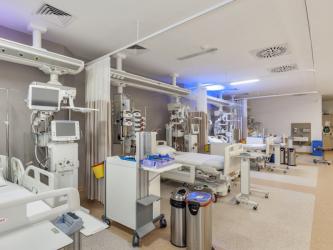
  2. Anesthesia and positioning: On the day of the procedure, the patient is placed under general anesthesia. The head is carefully stabilized using a stereotactic frame or frameless navigation system, which serves as a reference point for accurate targeting.
  3. Targeted surgical access: The neurosurgeon makes a small incision in the scalp and introduces specialized instruments through a carefully planned pathway. Computer-assisted navigation guides each movement in real time, ensuring sub-millimeter precision.
  4. Treatment of the targeted area: Depending on the condition, stereotactic surgery may be used to: Remove or biopsy a brain tumor; implant electrodes for Parkinson's disease, epilepsy, or movement disorders; Target specific brain regions involved in chronic pain or functional disorders
  5. Closure and recovery: Once the procedure is completed, the incision is closed, and a dressing is applied. The patient is transferred to a recovery area for close monitoring until fully awake. Recovery is generally faster and less demanding than traditional open brain surgery.

Recovery and expected results after stereotactic surgery in Turkey

Recovery from stereotactic surgery is notably faster than from traditional brain surgery, thanks to its minimally invasive precision.

Immediate post-procedure phase

Recovery begins immediately after the procedure. Patients are closely monitored in the recovery area, with vital signs, neurological status, and overall comfort carefully checked. Mild fatigue, slight headache, or minor swelling at the incision site (if any) are common but temporary.

Short-term recovery

Within 24–48 hours, most patients can resume light, non-strenuous activities. Discomfort is usually mild and manageable with standard medications.

In the first week, you may notice improvements related to your condition, such as fewer seizures, better motor control, or relief from chronic pain. Follow-up imaging is often scheduled to confirm accurate targeting and initial treatment success.

Full recovery and long-term results

Over the following weeks, recovery continues. For radiosurgery, symptom improvement may be gradual, while surgical interventions involve wound healing and adaptation to the treated area.

Thanks to the sub-millimeter precision of stereotactic techniques, healthy brain tissue is preserved, allowing patients to maintain or regain neurological function.

This streamlined recovery is supported by the integrated approach of leading Turkish neurosurgery centers, where advanced technology is matched with expert multidisciplinary post-operative care. This system is designed to maximize your recovery, minimize risks, and ensure the long-term success of your treatment.

Taking the first step with a consultation allows a Turkish neurosurgeon or neuro-oncologist to design a recovery plan fully personalized to your condition and health objectives.

Stereotaxic surgery FAQ

Can deep brain tumors be treated with stereotactic surgery?

Yes, stereotactic surgery is particularly suitable for brain tumors located in deep or hard-to-reach areas. Thanks to a highly precise 3D guidance system, it allows millimetric accuracy while preserving the surrounding healthy tissue.

What is the success rate of stereotactic surgery?

The success rate depends on the condition being treated (tumor, epilepsy, Parkinson’s disease, etc.). Thanks to its millimetric precision, stereotactic surgery generally provides high success rates with a reduced risk of complications.

Does stereotactic surgery leave visible scars?
It depends on the type of stereotactic procedure. Stereotactic radiosurgery (SRS, for example Gamma Knife or CyberKnife) is non-invasive and does not involve surgical incisions, so it leaves no surgical scar; with some systems a head frame is attached with pins, which can leave small, temporary marks at the pin sites, and the scalp may become temporarily red or irritated. Other stereotactic neurosurgical procedures, such as stereotactic biopsies or the implantation of deep brain stimulation (DBS) electrodes, are minimally invasive and use very small incisions or small burr holes. Scars are usually minimal, often hidden within the hair, and barely visible once healed. Your surgeon will explain what to expect for your specific procedure.
Is stereotactic surgery suitable for elderly patients?

Yes, stereotactic surgery can be considered for elderly patients due to its minimally invasive nature. However, a complete medical evaluation is necessary to assess the patient’s overall health and confirm eligibility for the procedure.

What are the possible risks and side effects?

Risks include infection, bleeding, edema, seizures, or rare neurological complications. A comprehensive preoperative evaluation helps minimize these risks.

Other procedures in this specialty

Share this page

Our assistants help you to get the best options in Stereotaxic surgery